

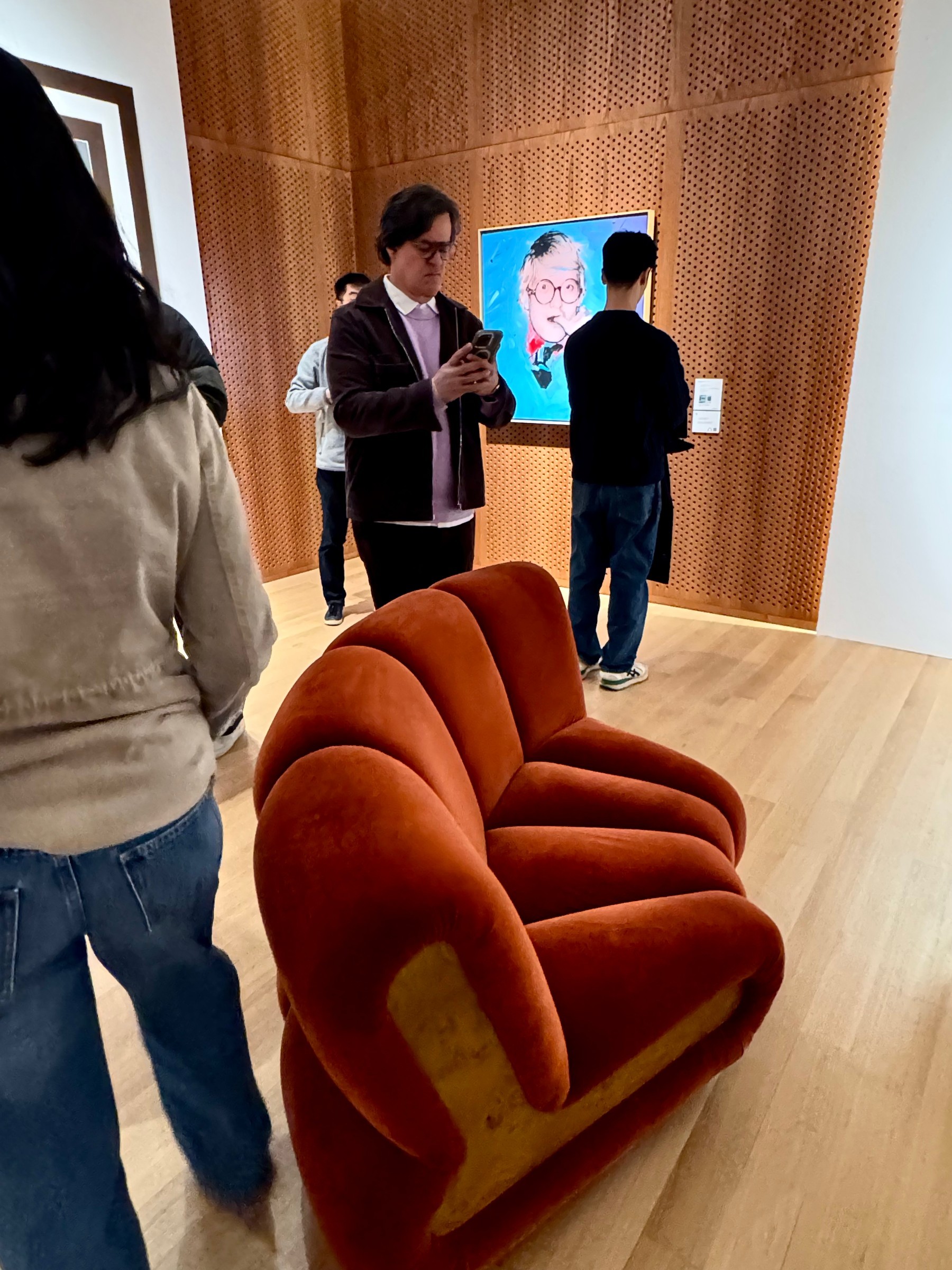
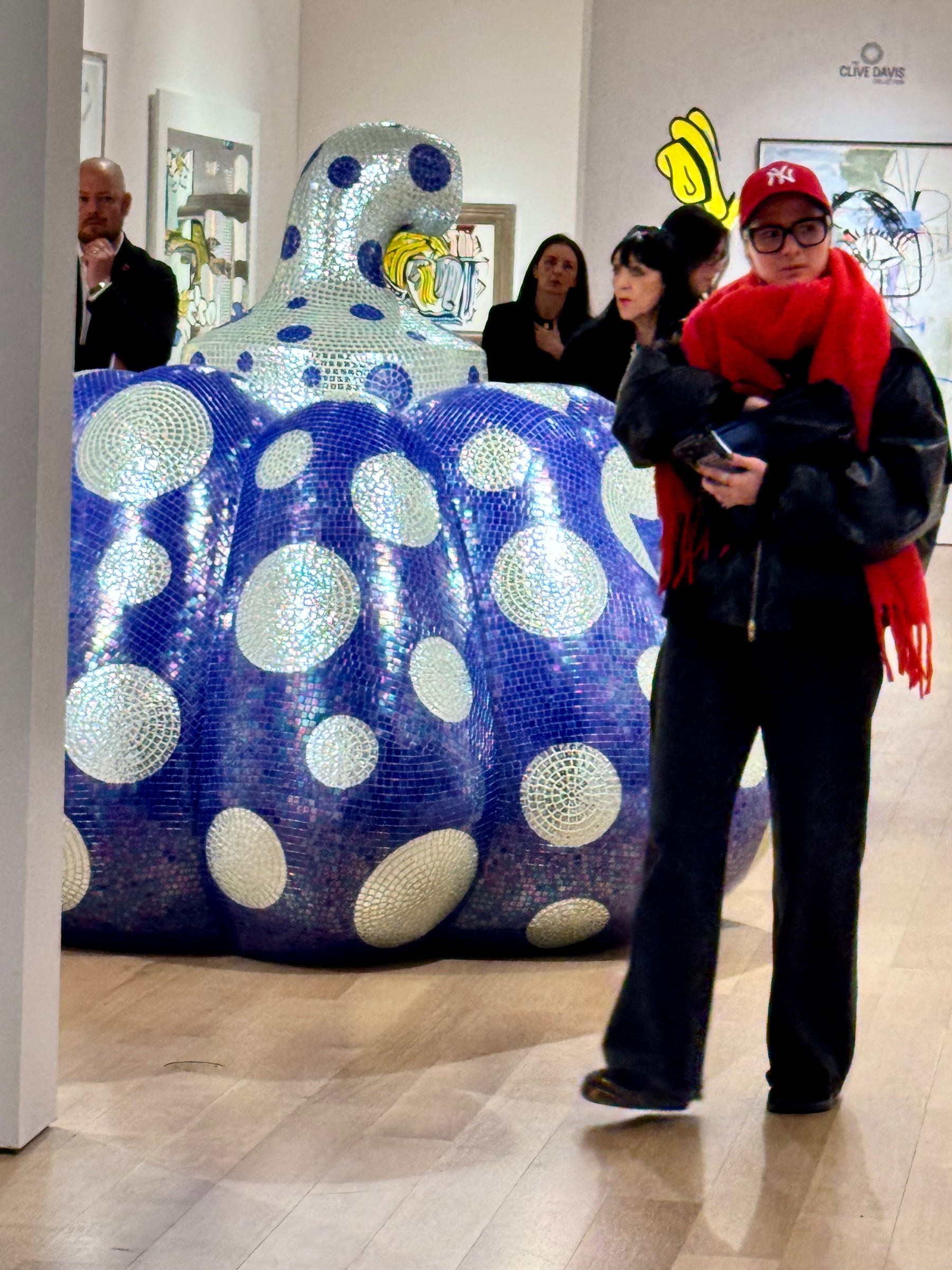
Nobody bids at a preview, yet everyone performs. Advisors whispered numbers to clients in cashmere. Dealers compared notes in corners, already counting the buyers. Artists stood at a polite distance from the canvases, studying the brushwork. Gallerists checked frames and wall labels the way chefs check a rival’s menu. Tourists filmed everything. A grandmother explained Picasso to two teenagers. For one week, the most exclusive market in the world is open to anyone who walks in.


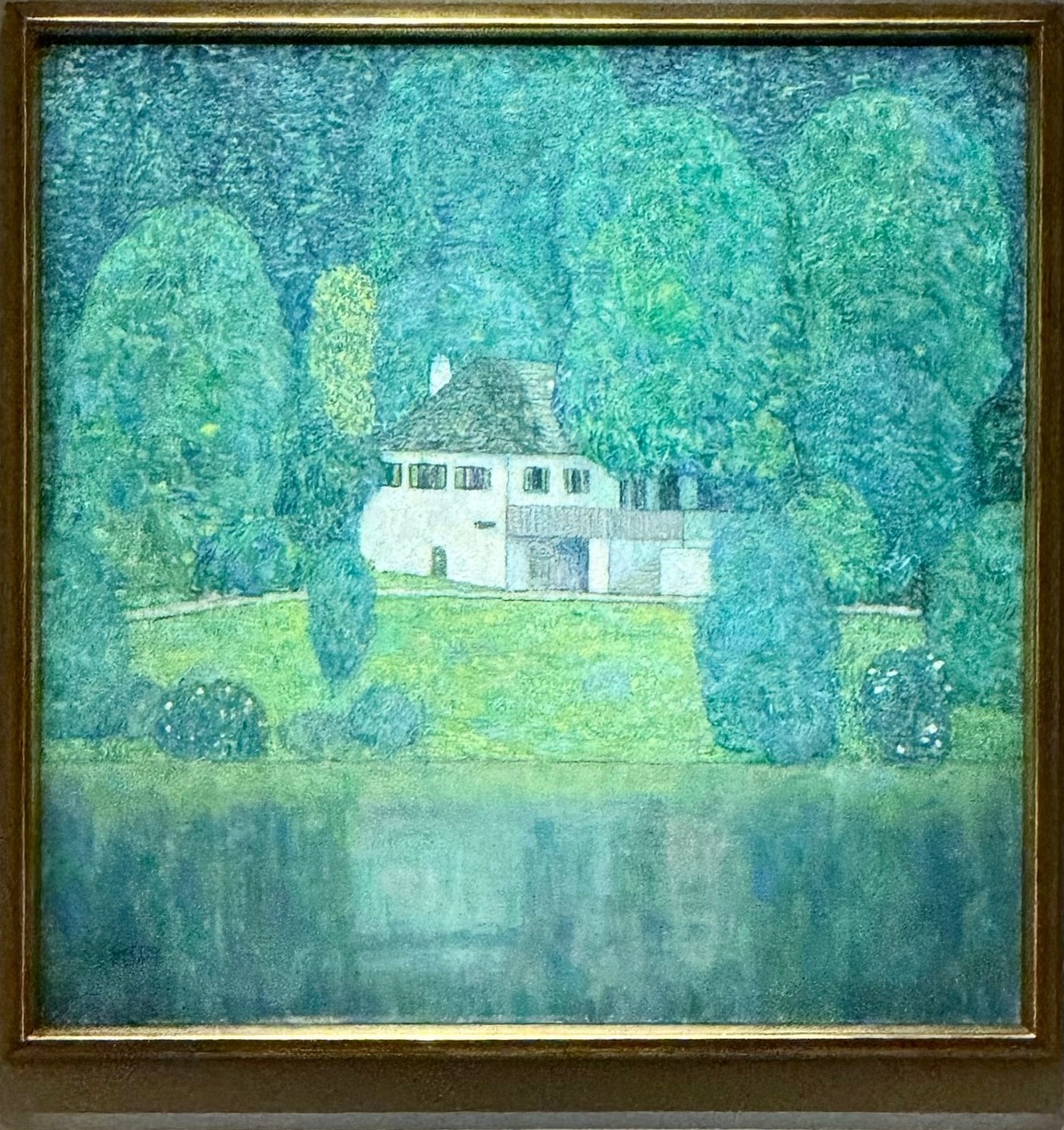
Klimt’s Litzlbergkeller is all interlocking greens, with no figure in sight. He painted the inn across Lake Attersee from the opposite shore, through a telescope, so the water and trees press flat against the surface like mosaic. Close up, the green is not one color but dozens. It carries the week’s top estimate, $60 to $80 million, shared with Kandinsky’s Betonte Ecken.
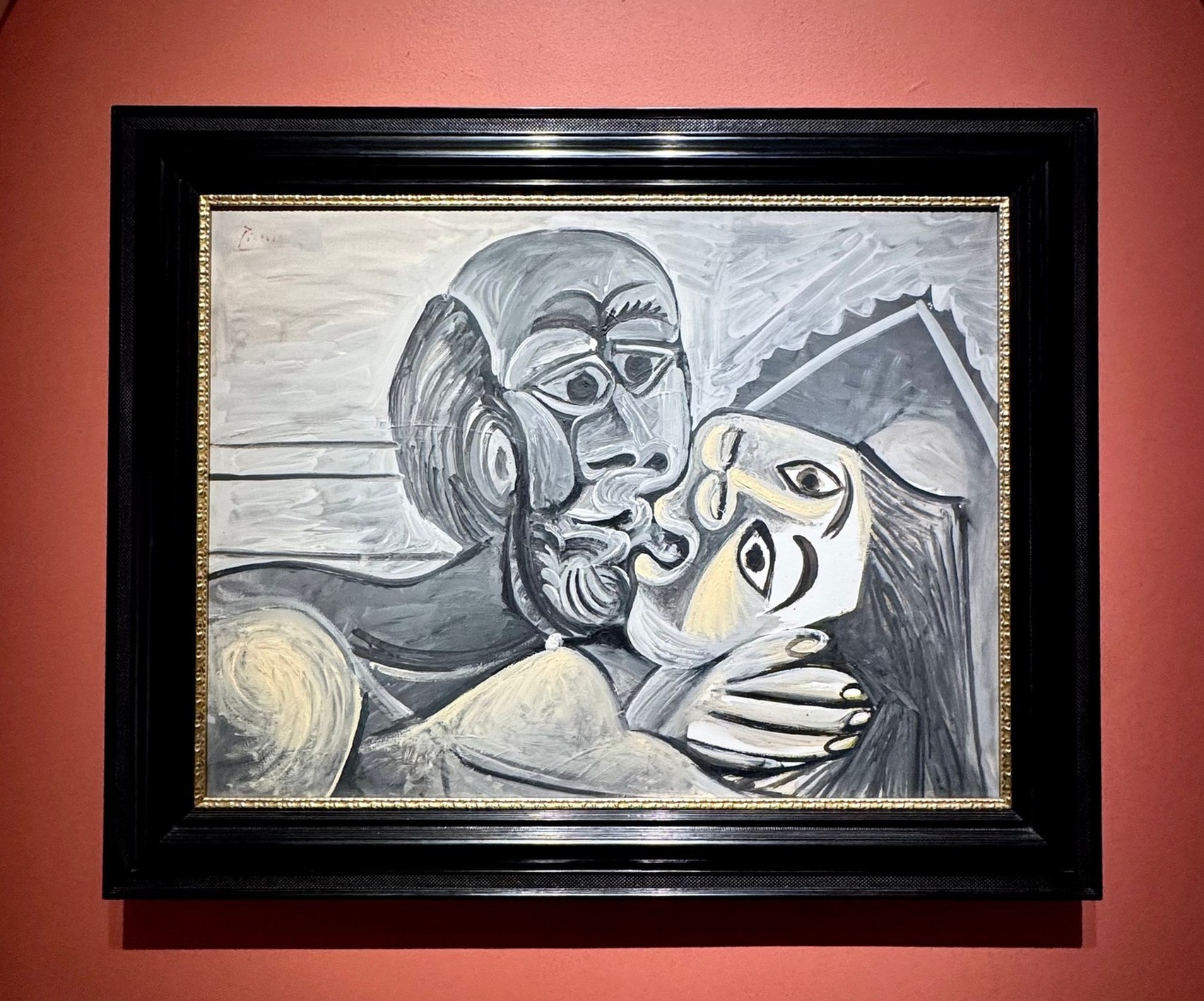
The Kandinsky looks like a diagram until you stand in front of it. Then the angles turn into rhythm. Hilla Rebay bought it for the collection that became the Guggenheim, and it has been off the market for sixty years. A few rooms away, Picasso’s Le Baiser from 1969, two faces fused into one, drew the longest line of phones in the building.
Picasso appears again and again in this sale, and almost every time he surprises. The earliest is a small watercolor head from 1908–09, from the Berggruen family collection. The face is cut into planes of green, ochre and blue, like an African mask seen in moonlight. Cubism had not yet been named.
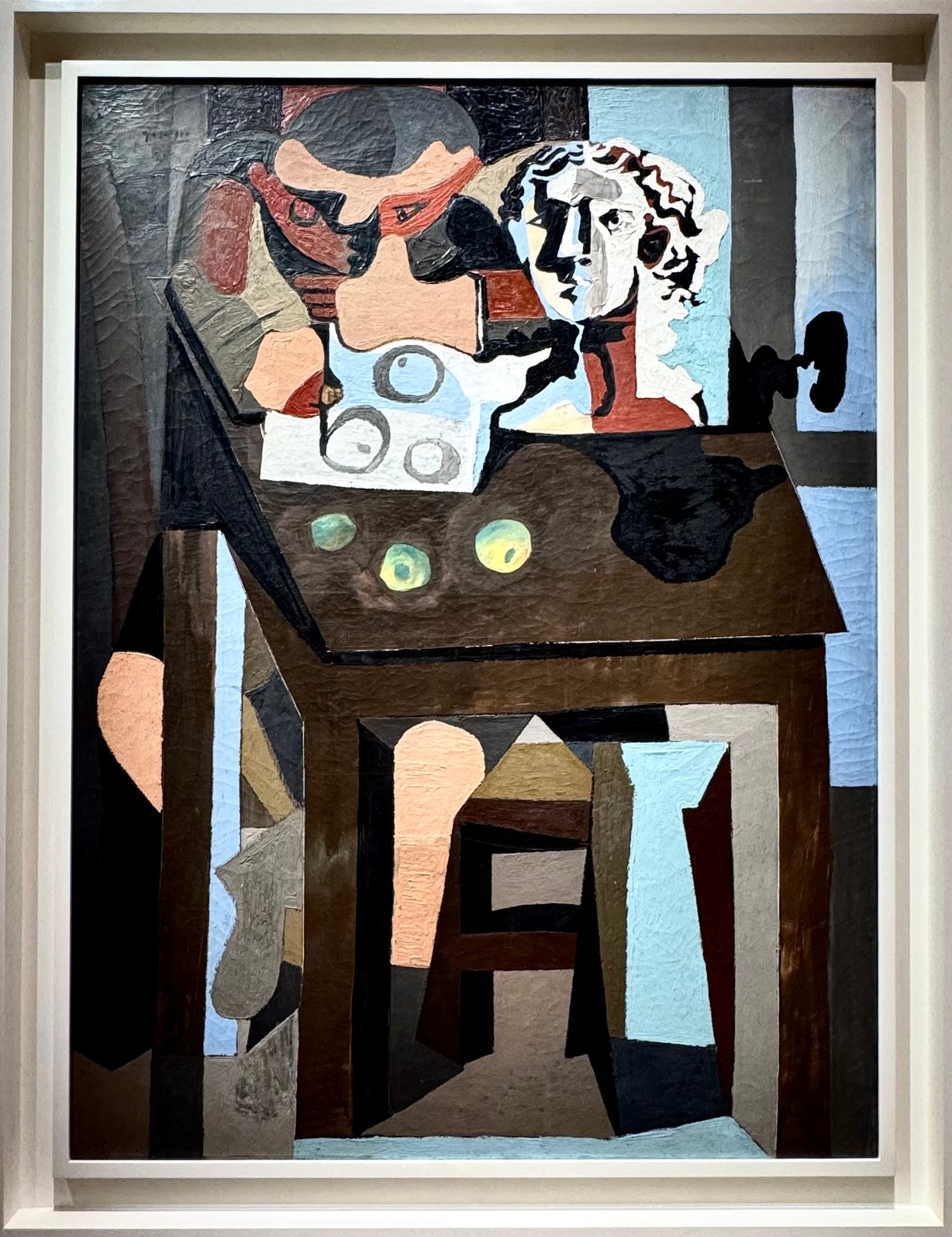
From 1925 comes La leçon de dessin, from the collection of Anne H. Bass, once on long loan to The Metropolitan Museum of Art. A child draws at a table beside a white plaster head. The palette is soft pink, brown and chalk, more classical than anything he painted before or after.
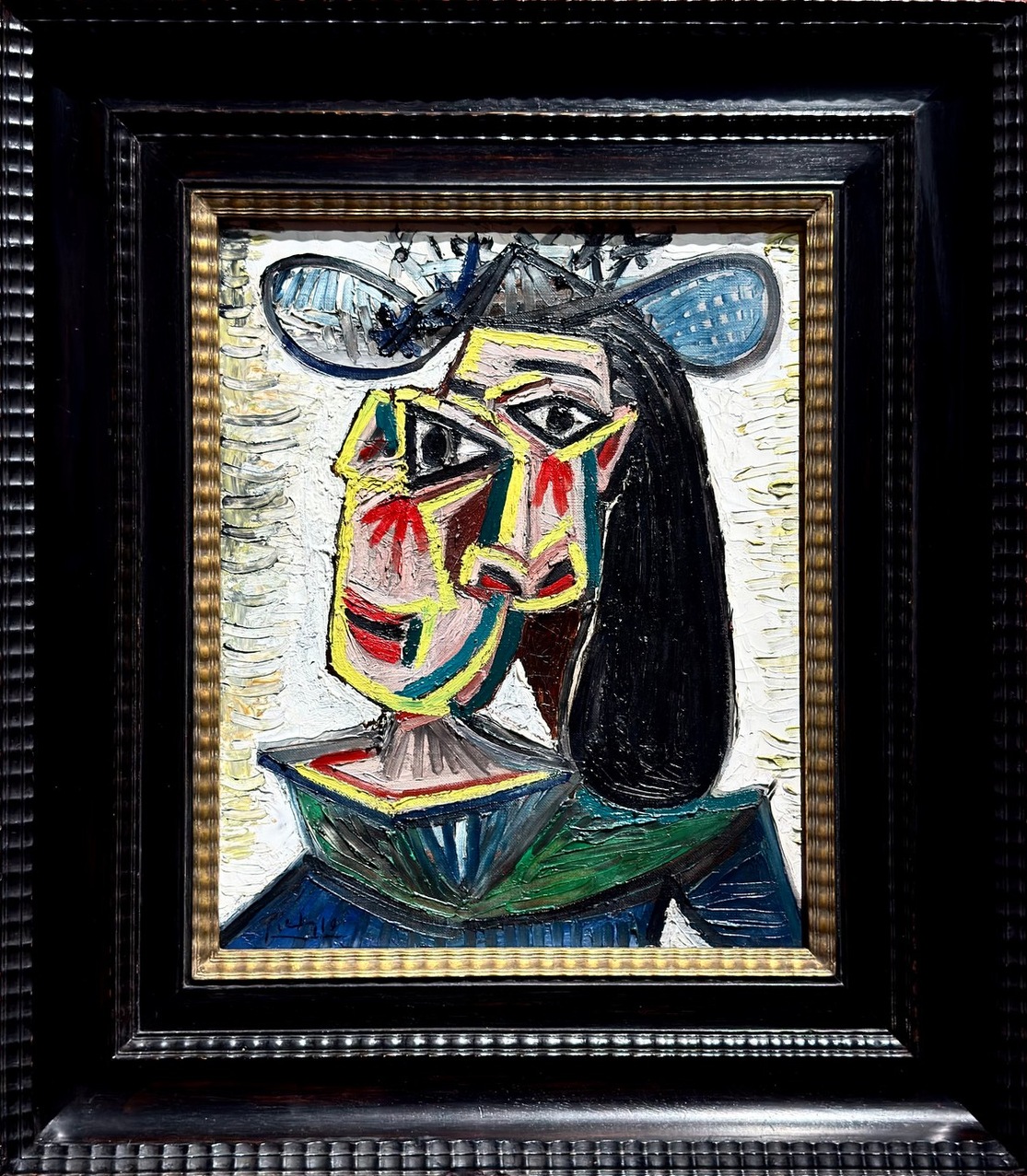
Then the war. Tête de femme (Dora Maar), painted on 25 May 1941, turns his muse’s face into sharp yellow and green angles slashed with red. It is estimated at $25 to $35 million. The terracotta walls and arched niches Christie’s built around it make the color burn even brighter.
The last room jumps to 1969. Le Baiser and Couple were painted a month apart, in October and November, when Picasso was 88. Lovers melt into one face, leaves sprout around a yellow hat, and a breast is painted in electric blue. These colors are loud, almost naïve, and completely free. They come from a single collection, sold together as “Heroes & Lovers,” with Le Baiser estimated at $40 to $60 million.
Even the ceramics were there: white plates with black bulls running across them. Few painters have ever been this many artists in one lifetime.
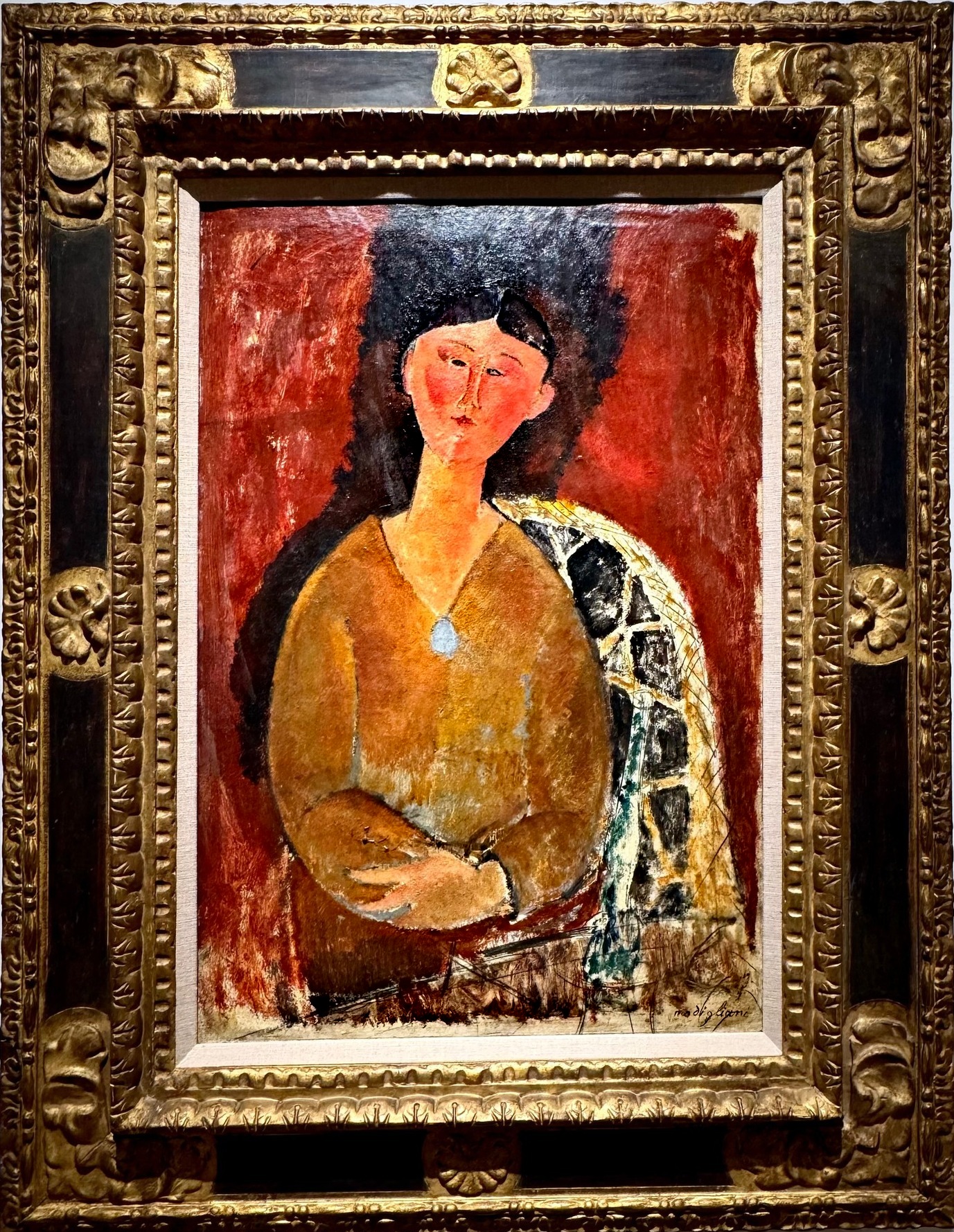
Away from the crowd, a smaller panel held me longest. In Beatrice Hastings assise (1915), Modigliani paints the British poet he loved in Paris against a red wall laid on in thick strokes, her hands folded, a blue pendant at her throat. The board is cradled, the gilt frame is carved, and the estimate is $5 to $7 million. In a sale of giants, it is the painting that feels like a conversation.
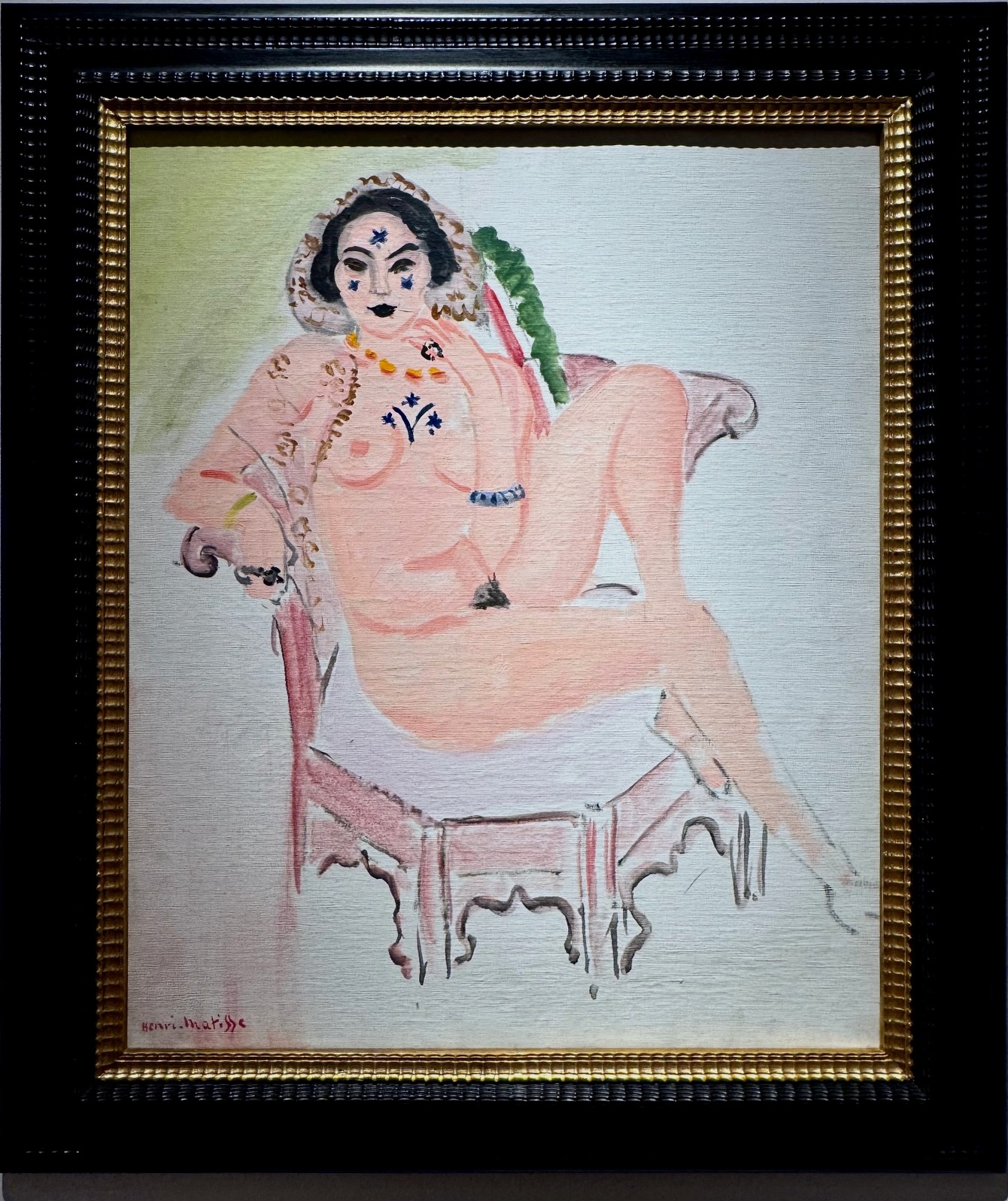
My other favorite hangs nearby: Matisse’s Jeune femme fardée à l’orientale (La Bayadère), painted in Nice in 1929, from the William I. Koch Collection, estimated at $5 to $7 million.
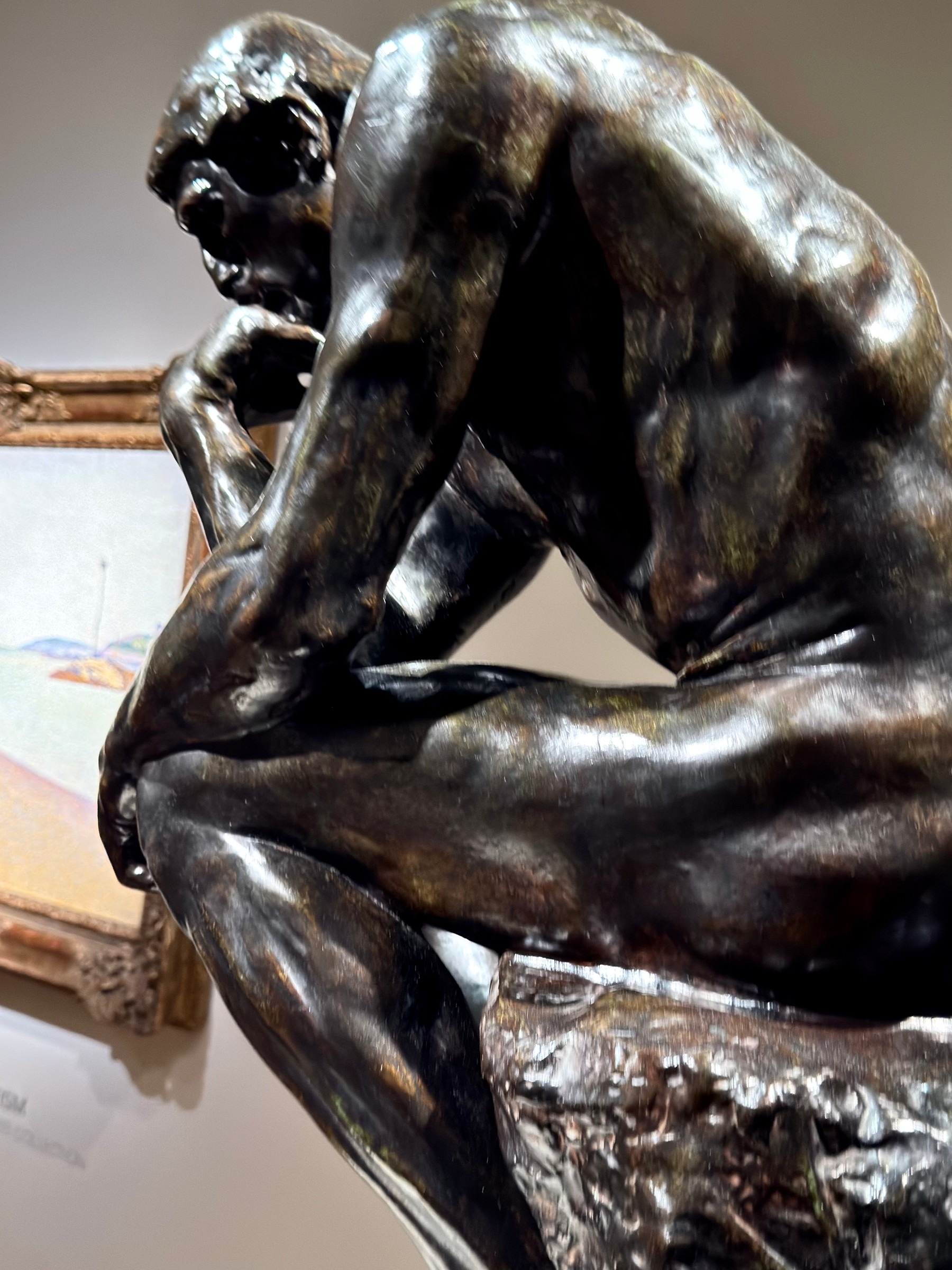
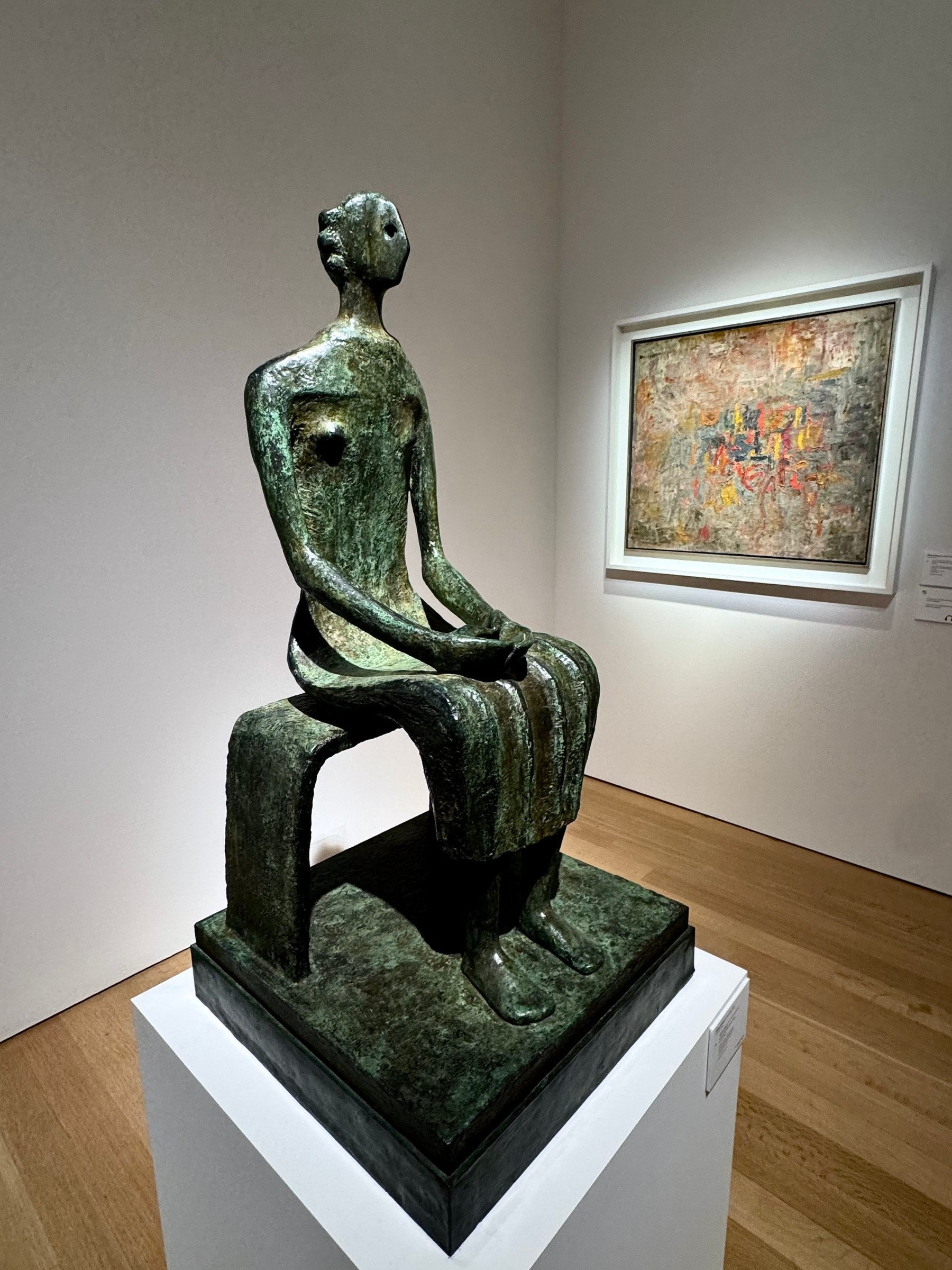
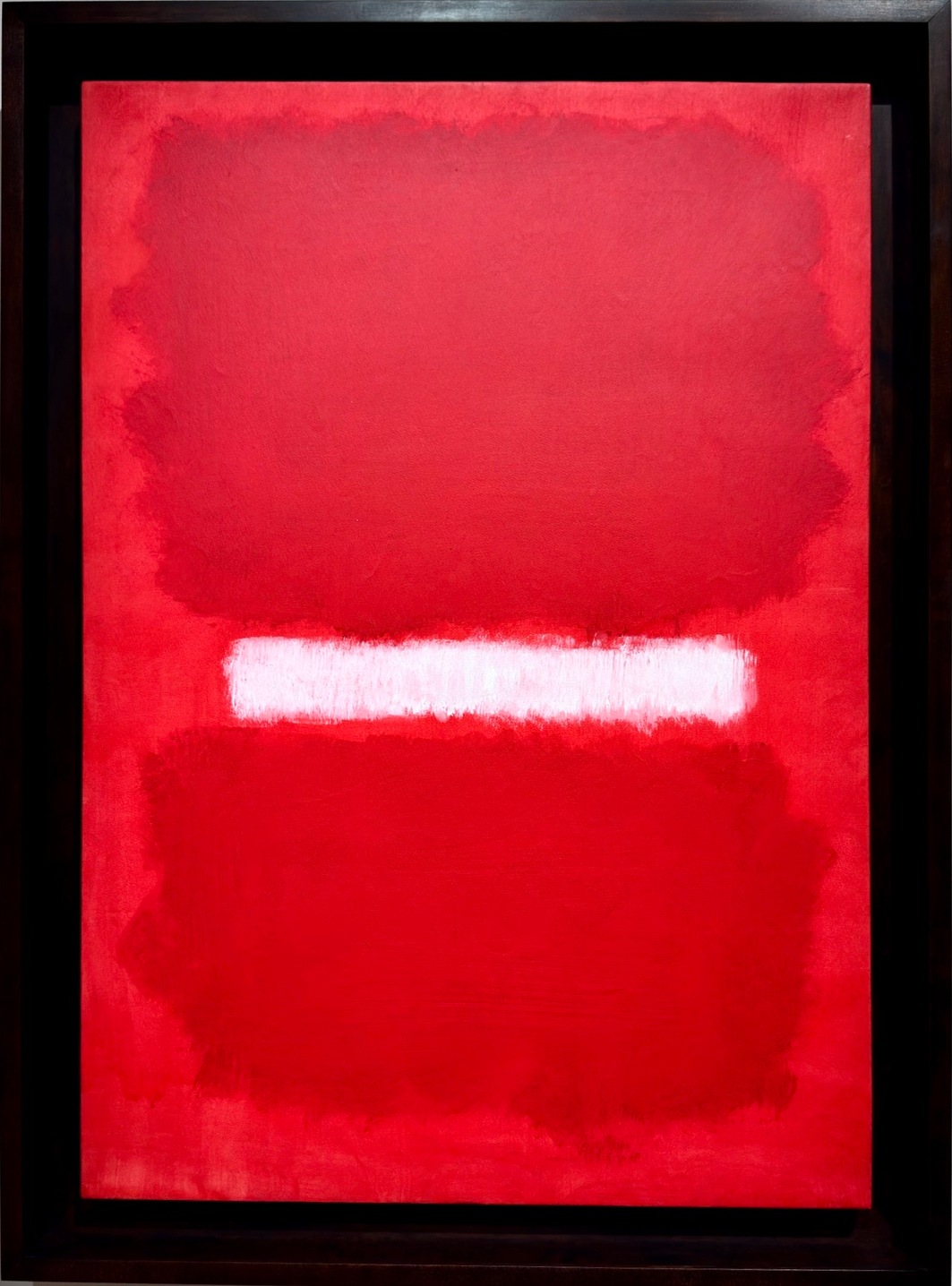
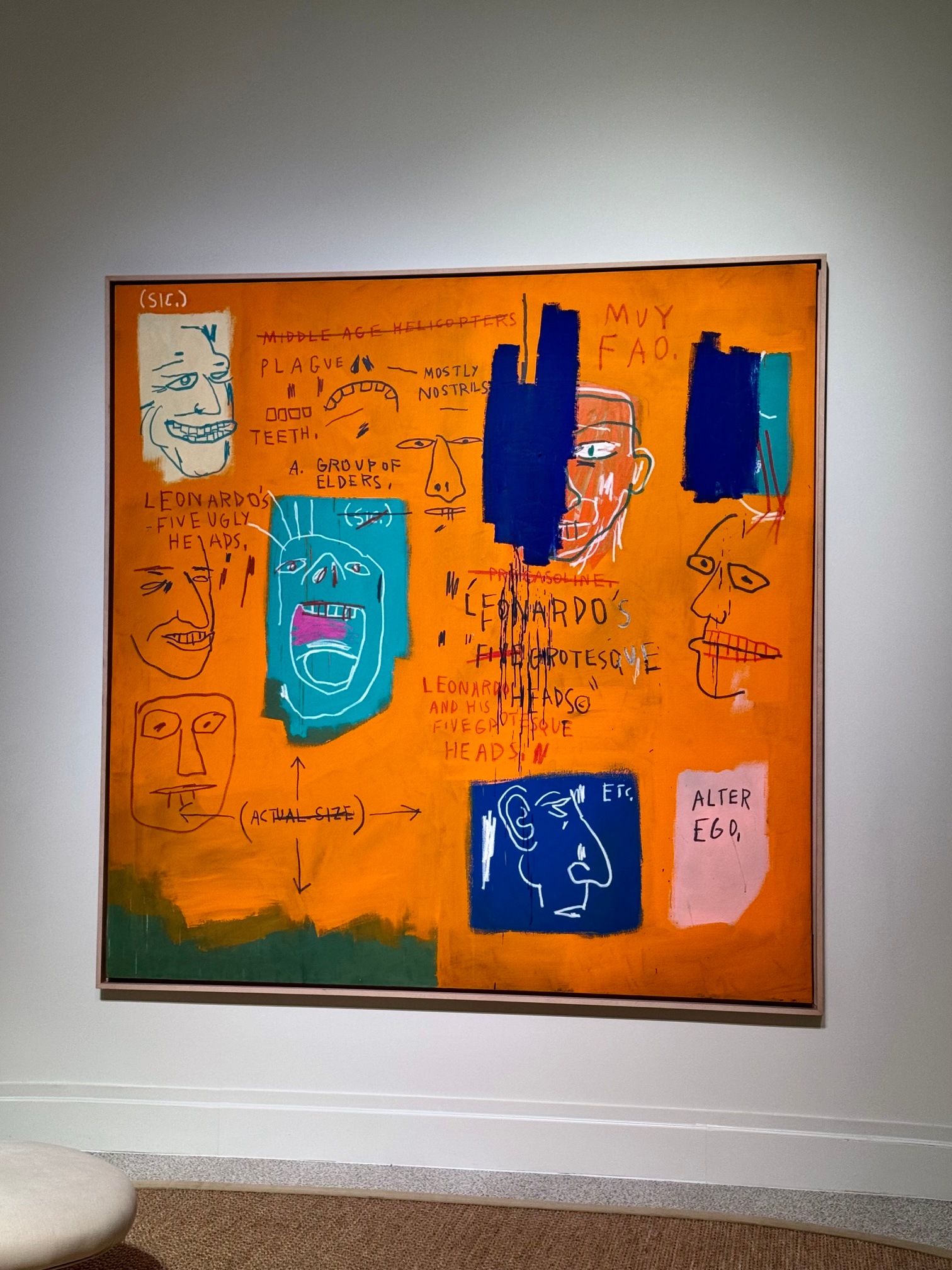
Rodin’s Thinker was circled from every angle, his patina catching the spotlights. Henry Moore’s seated figures held their ground in green bronze. Then Rothko, all red, one white band floating across the middle, and the room went quiet in front of it. Warhol’s Aretha Franklin glowed against perforated wood walls beside Basquiat. And a second Basquiat, all orange, scrawled with Leonardo’s grotesque heads and crossed-out words, read like a notebook left open on purpose.
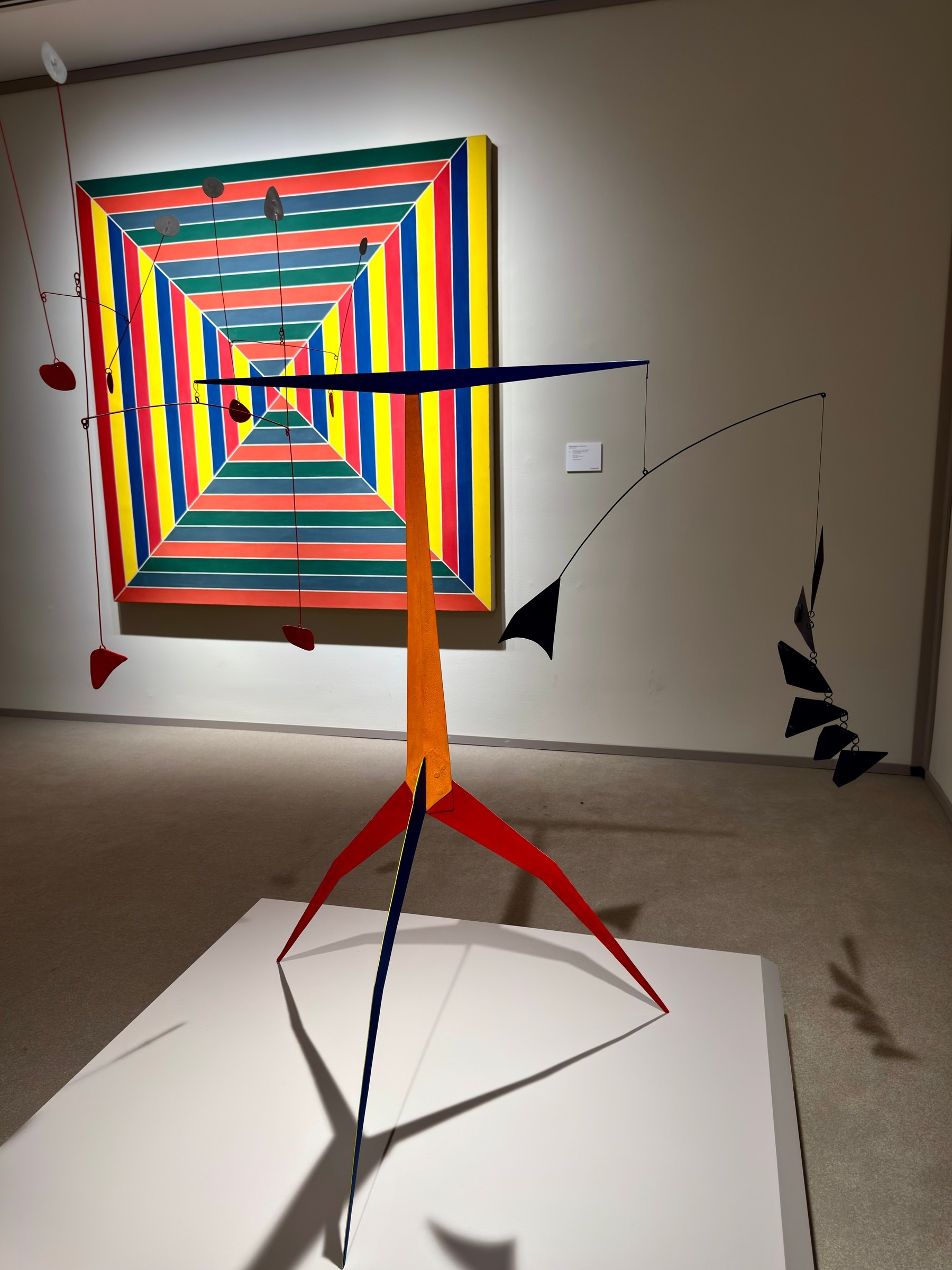
Then the room lightens. Calder needs no wall at all. Demi Gondola, a hanging mobile from 1951, carries his top estimate this week, $10 to $15 million, black sheet metal turning with every passing coat. An untitled standing mobile from around 1940, from the collection of the scholar Herbert Lust, is estimated at $4 to $6 million.
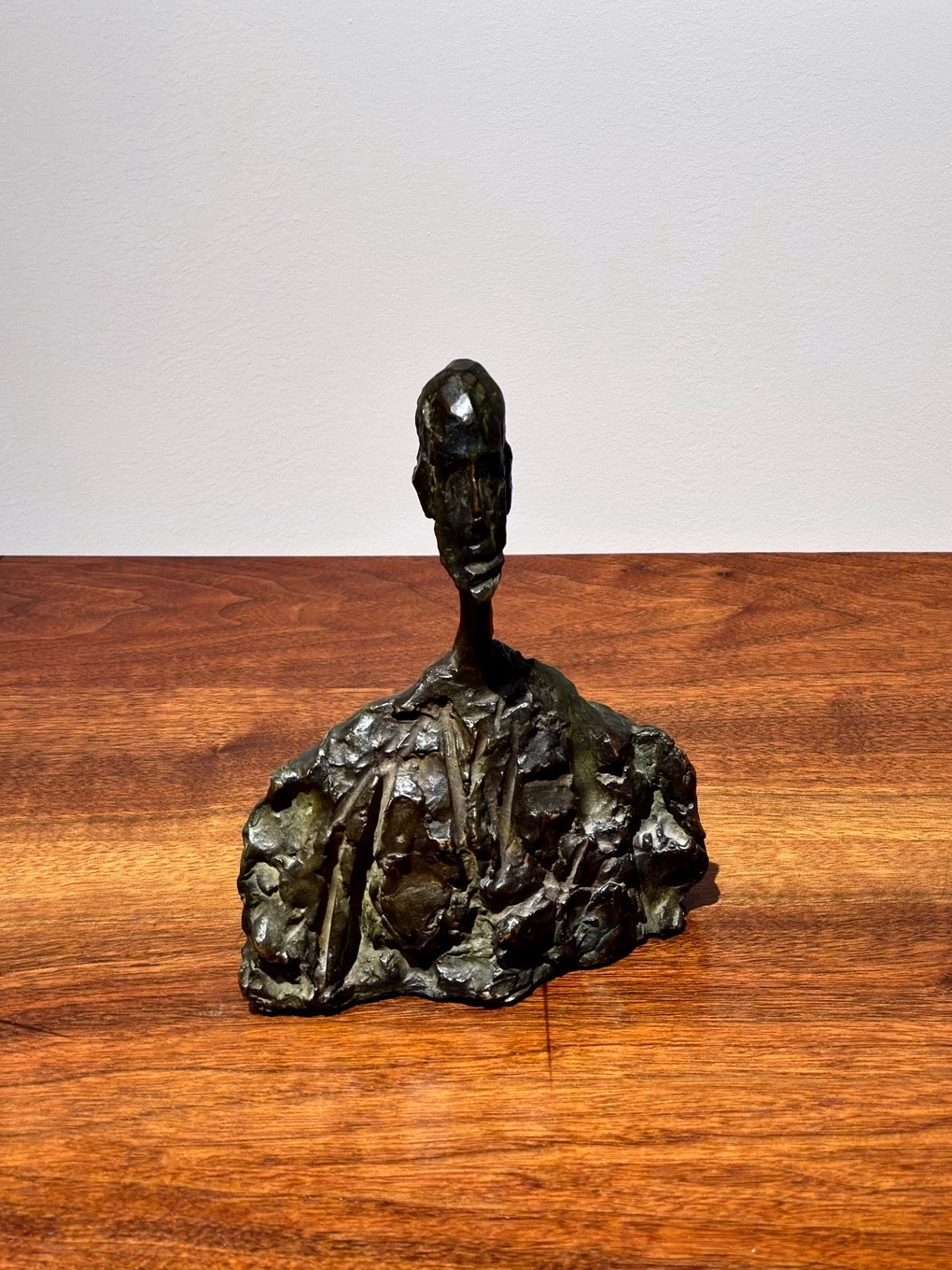
Calder’s red and blue balance in front of a painting of concentric stripes. Nearby, on a long wooden table, Giacometti’s Petit buste d’homme, barely eight inches tall, sits below a row of red paintings. It goes to the Impressionist and Modern Art Day Sale on November 18, estimated at $600,000 to $900,000. Color and shadow, both made of air.
The preview is free through November 17, the night of the 20th Century Evening Sale. The 21st Century Evening Sale follows on Thursday. No paddle is needed. Bring your eyes and stay a while.
Photos: Joelle Maslaton Oster
Auction house: Christie’s
Sales: 20th Century Evening Sale, November 17, 2026 · 21st Century Evening Sale, November 19, 2026
Venue: Christie’s, 20 Rockefeller Plaza, New York

Joelle Maslaton Oster
Founder of Joelle Magazine and Studio Joelle, an interior design practice in New York. She writes on art, design and the places in between.
DISCOVER THE CURATION
Read our Privacy PolicyAlso on Substack: Where Is Joelle?
This website uses cookies to improve your experience. We'll assume you're ok with this, but you can opt-out if you wish. Accept Read More