

In 1926, Constantin Brancusi arrived in New York and told a reporter he wanted to build his Endless Column in Central Park, “three times higher than your obelisk in Washington.” He looked at Manhattan the way he looked at his studio: shapes, volumes and proportions, waiting to be rearranged.
A century later, the Romanian sculptor is back in Manhattan, this time with an extraordinary selection of works and objects from his Paris atelier. Thanks to the Centre Pompidou’s renovation, MoMA’s sixth floor has become a temporary home for his sculptures, furniture, photographs and wonderfully eccentric universe.
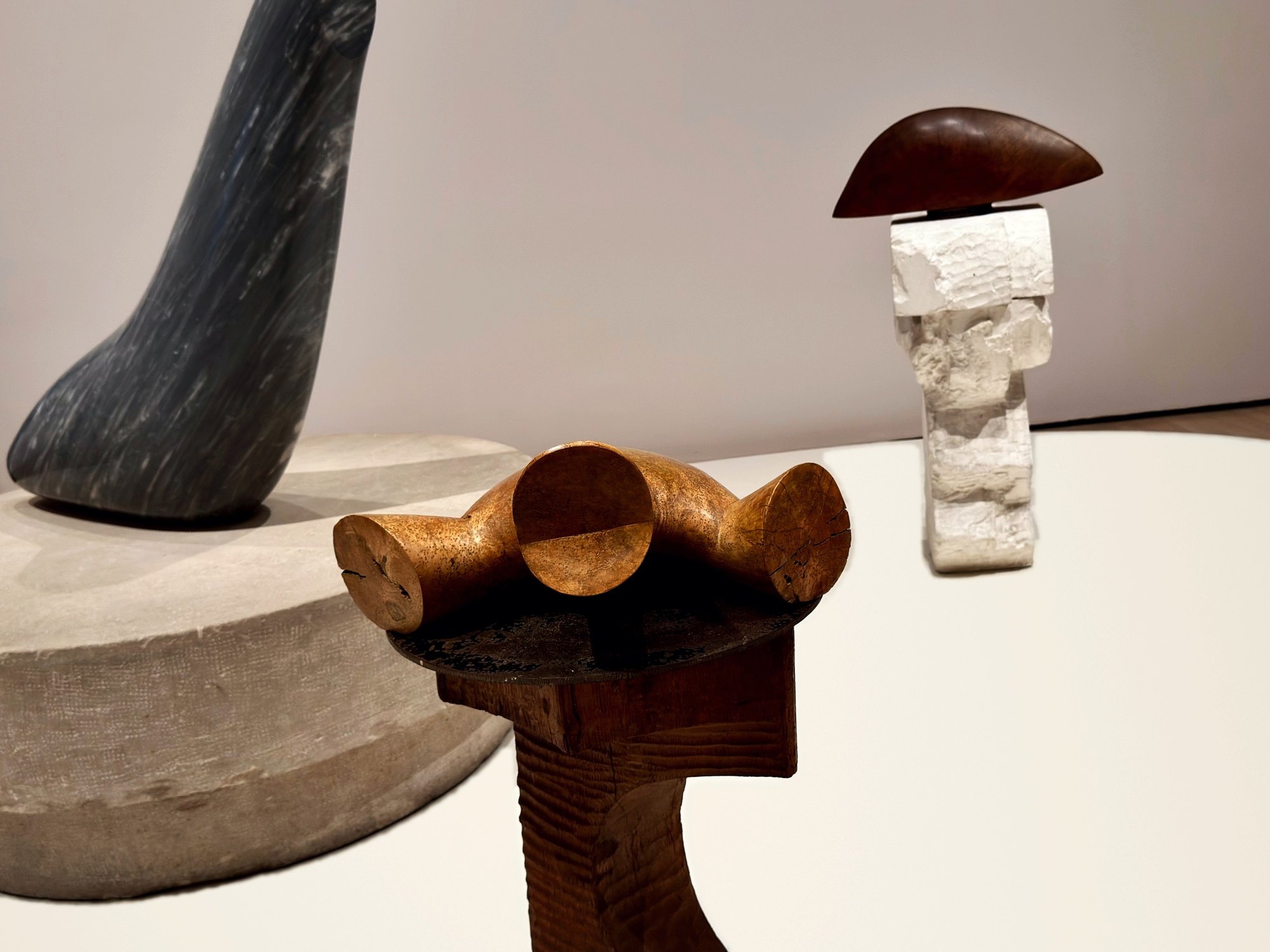
The numbers are serious: about 210 objects, many rarely allowed to leave Paris, in the first major Brancusi museum retrospective since 1995. Brancusi left his entire studio to the French state in 1957, on one condition: that it be rebuilt. It was, beside the Pompidou. Now, for once, it has traveled.
MoMA gives it room to breathe. High ceilings, white walls, pale wood floors. Sculptures stand on low white islands, and you walk around them the way he intended, from every side. Nothing is pushed against a wall. Every piece has its own air.
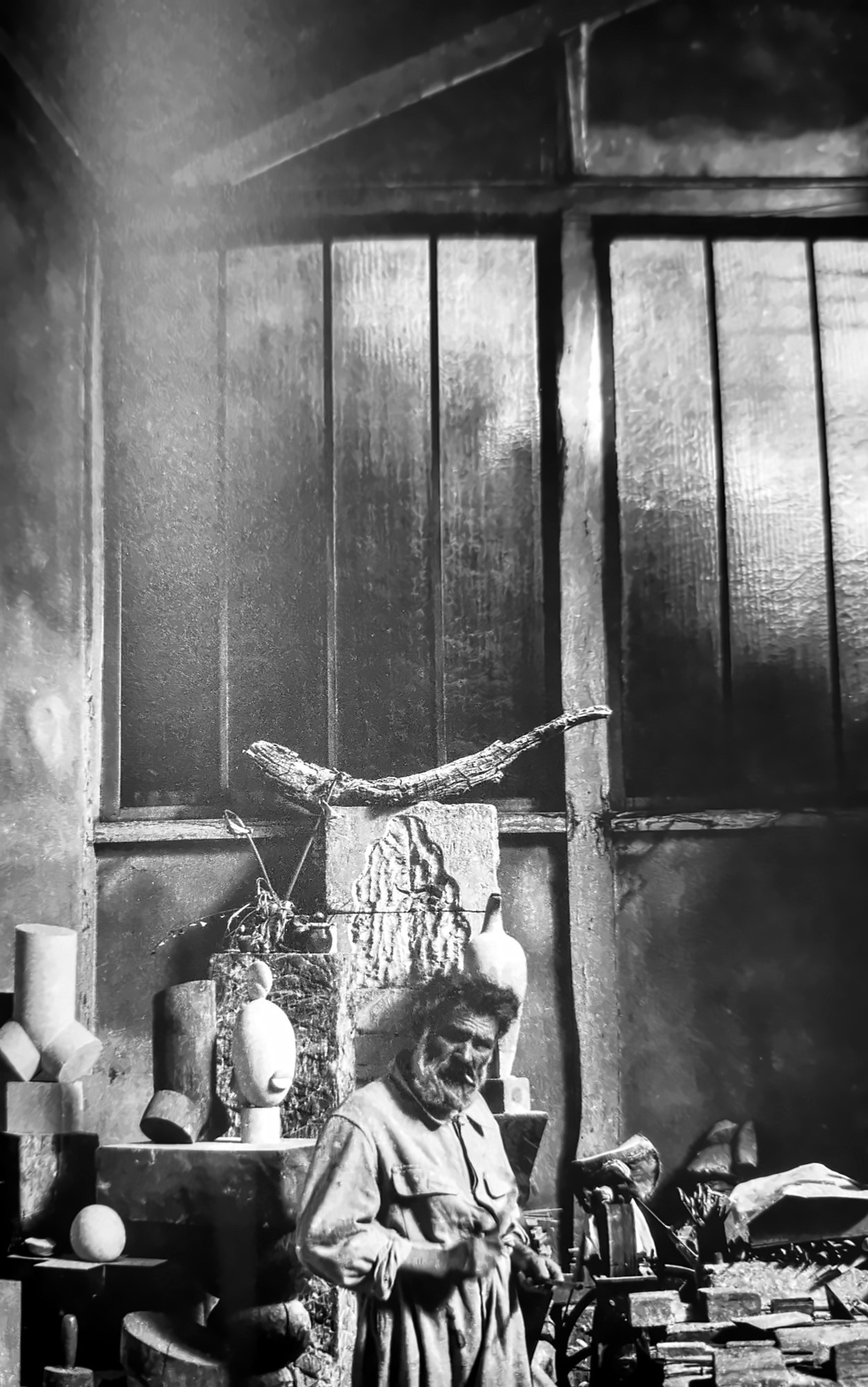
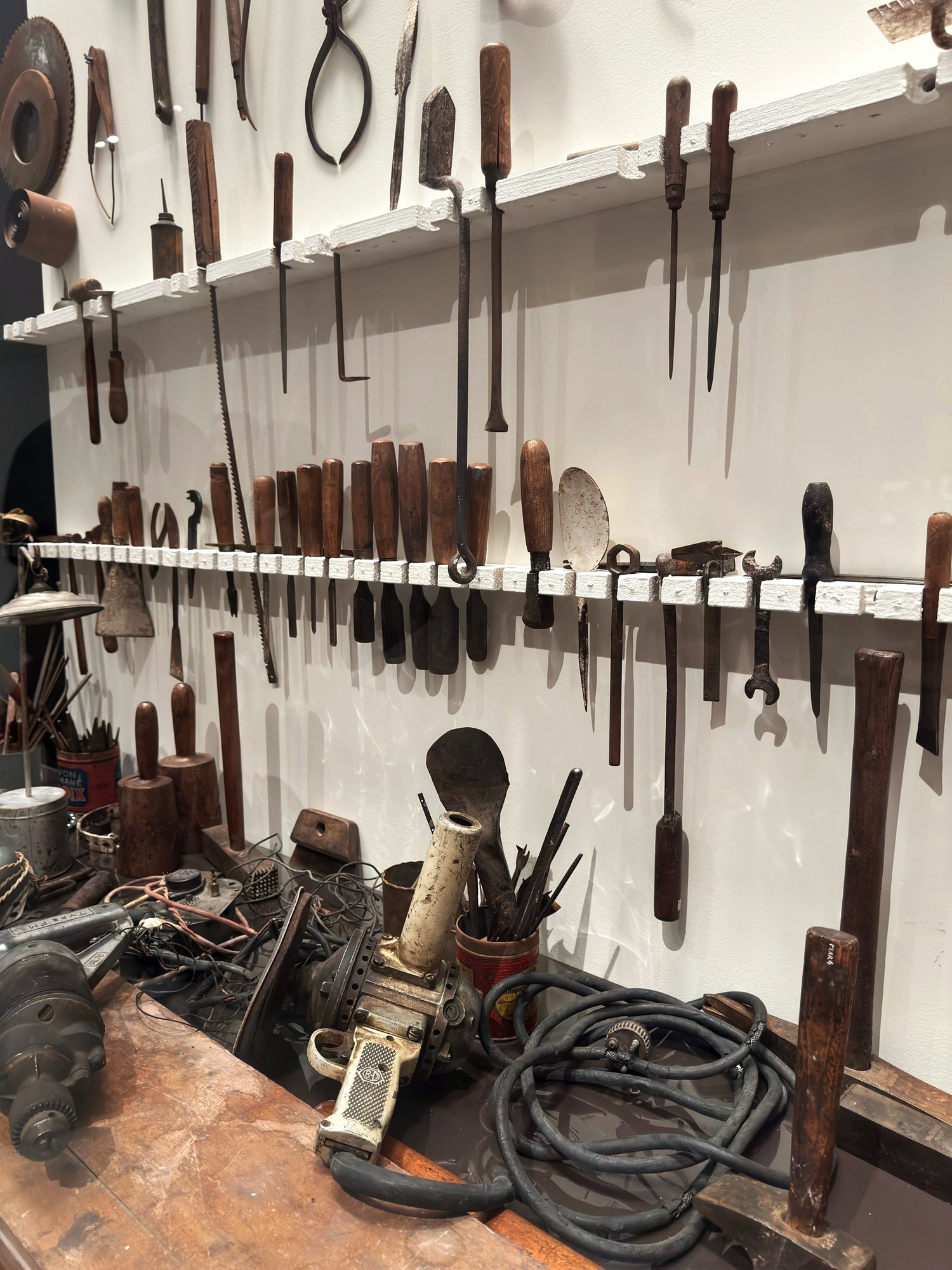
The show begins where the work began. Soon after settling at impasse Ronsin, Brancusi started carving directly into stone and wood with chisels, hatchets and saws, leaving the marks of the tools on the surface. The wall text quotes him: “Your hand thinks and follows the thoughts of the material.” Around him, the influences are spelled out without fuss: African masks and statuary that filled Paris at the time, Romanian folk art, and the carved wooden houses and gates of the village where he grew up.
I went expecting masterpieces. I found myself obsessing over what was underneath them.
The pedestals.
Yes, the pedestals. Stay with me.
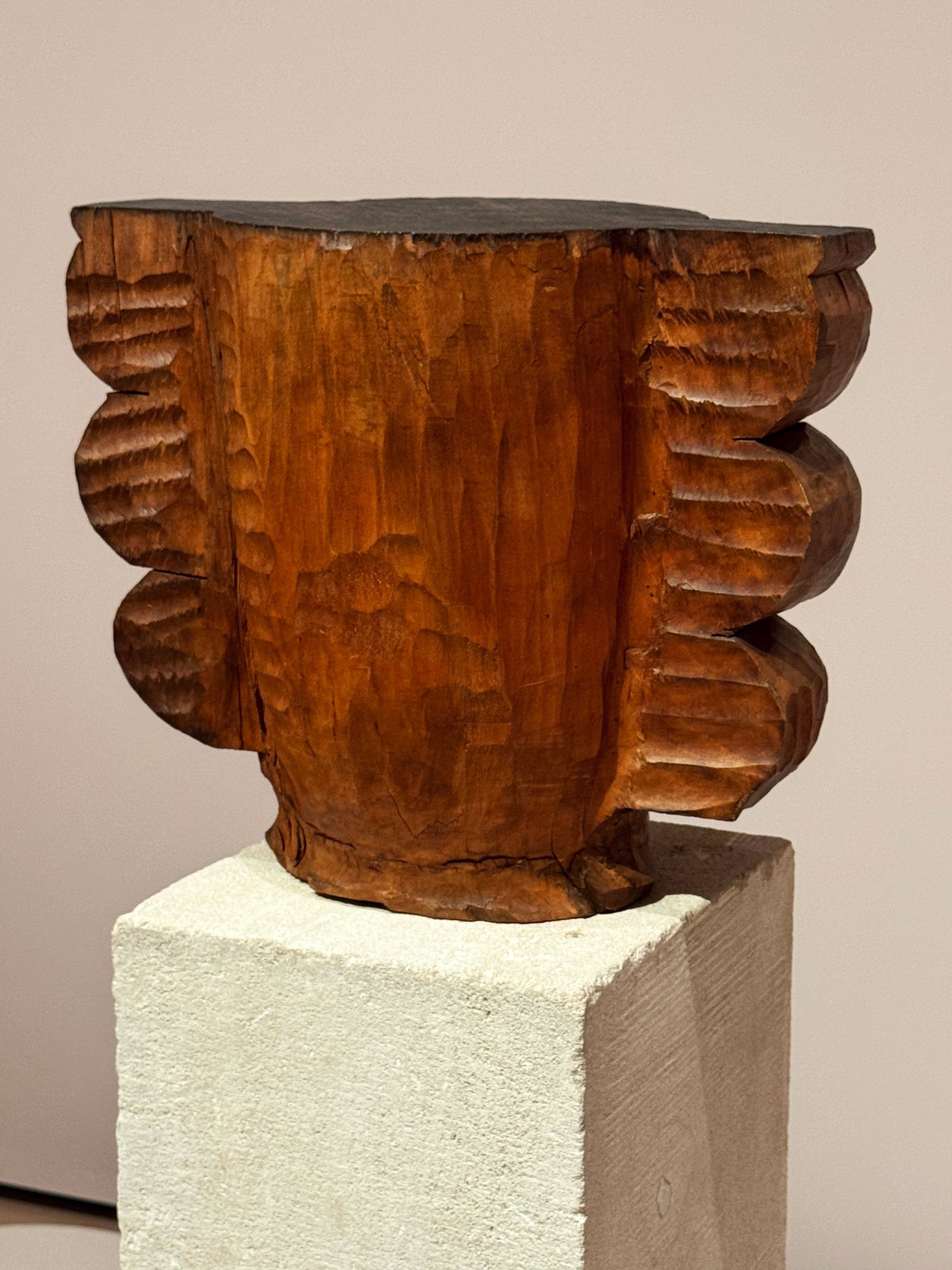
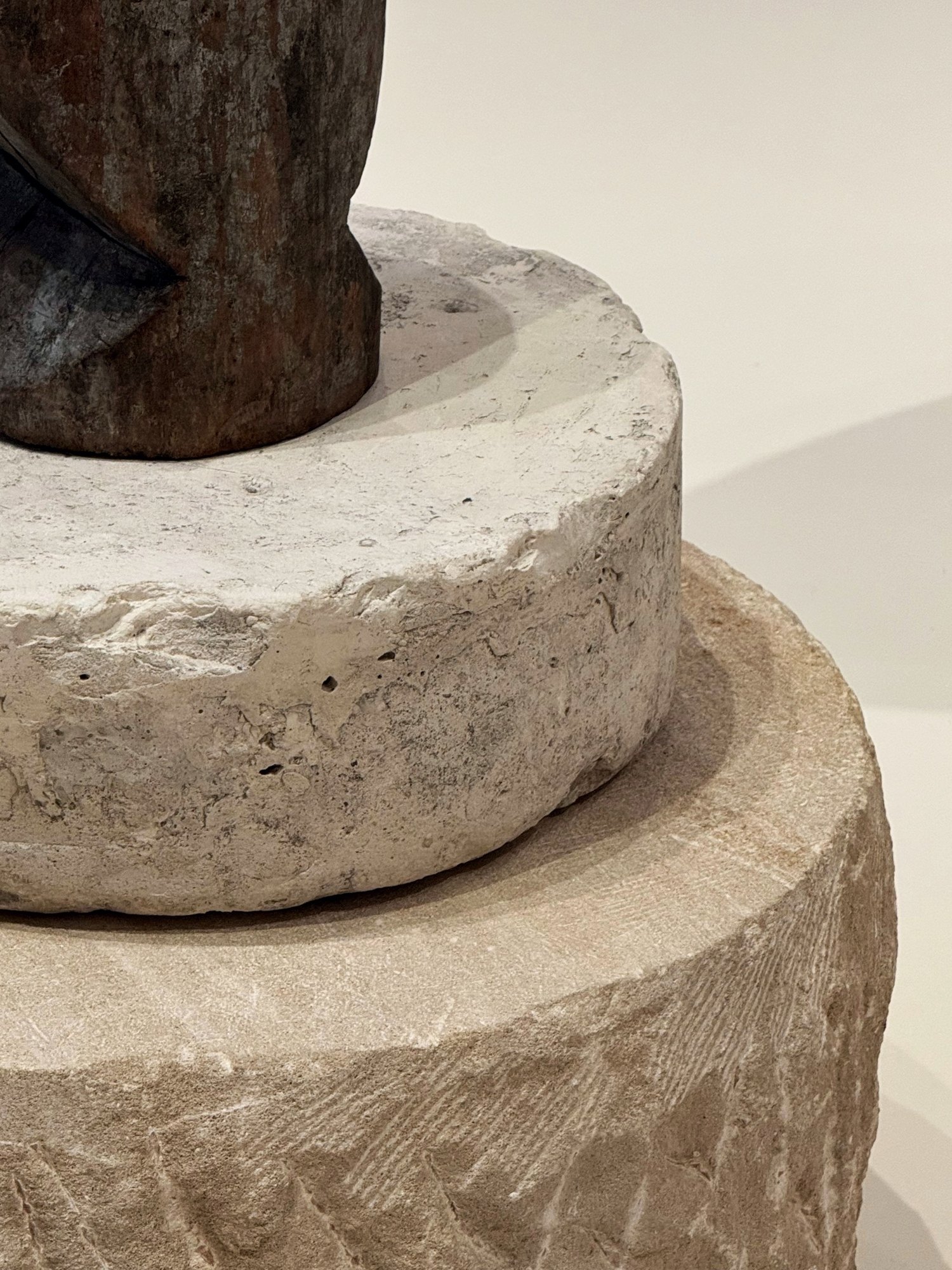
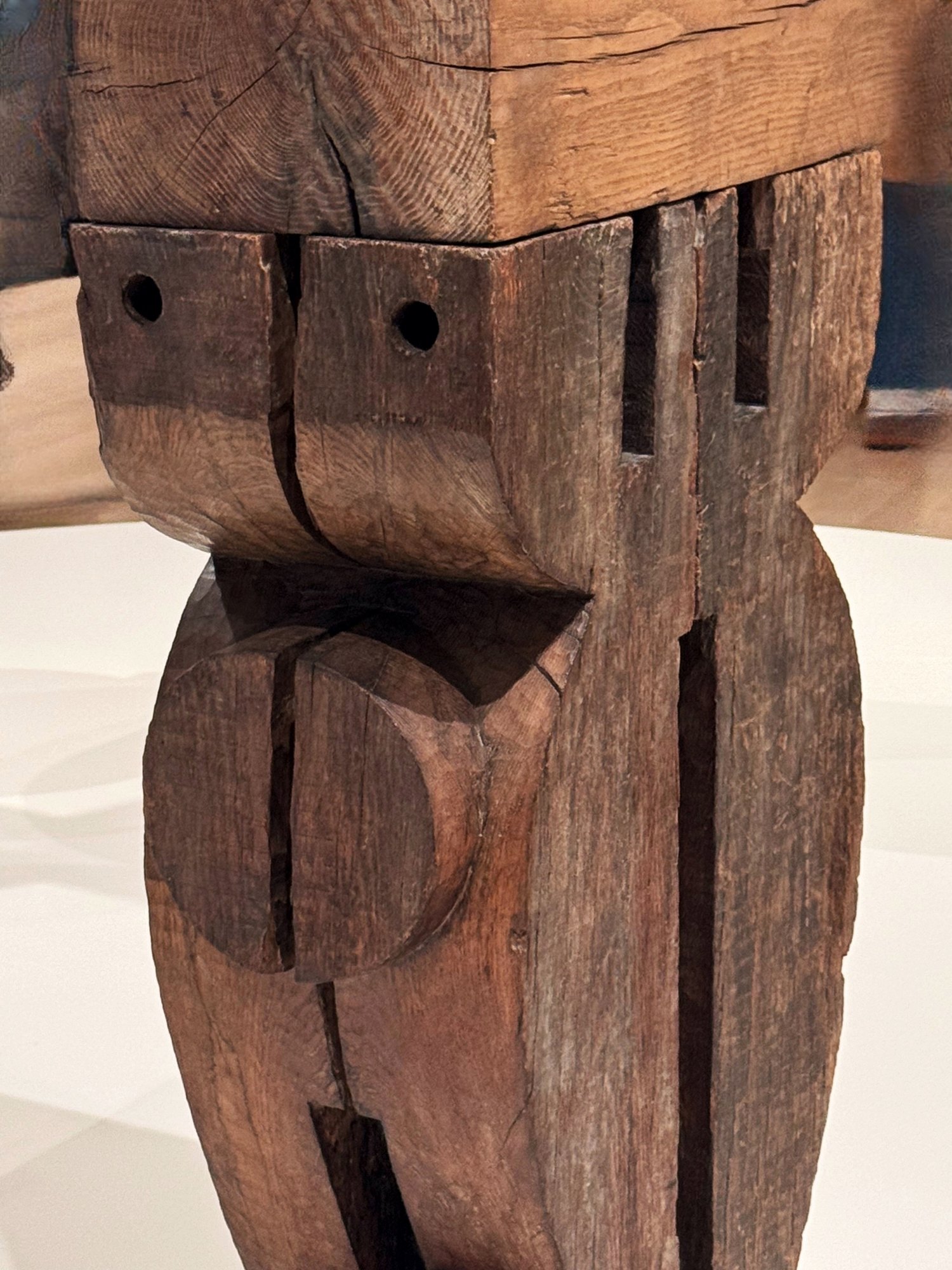
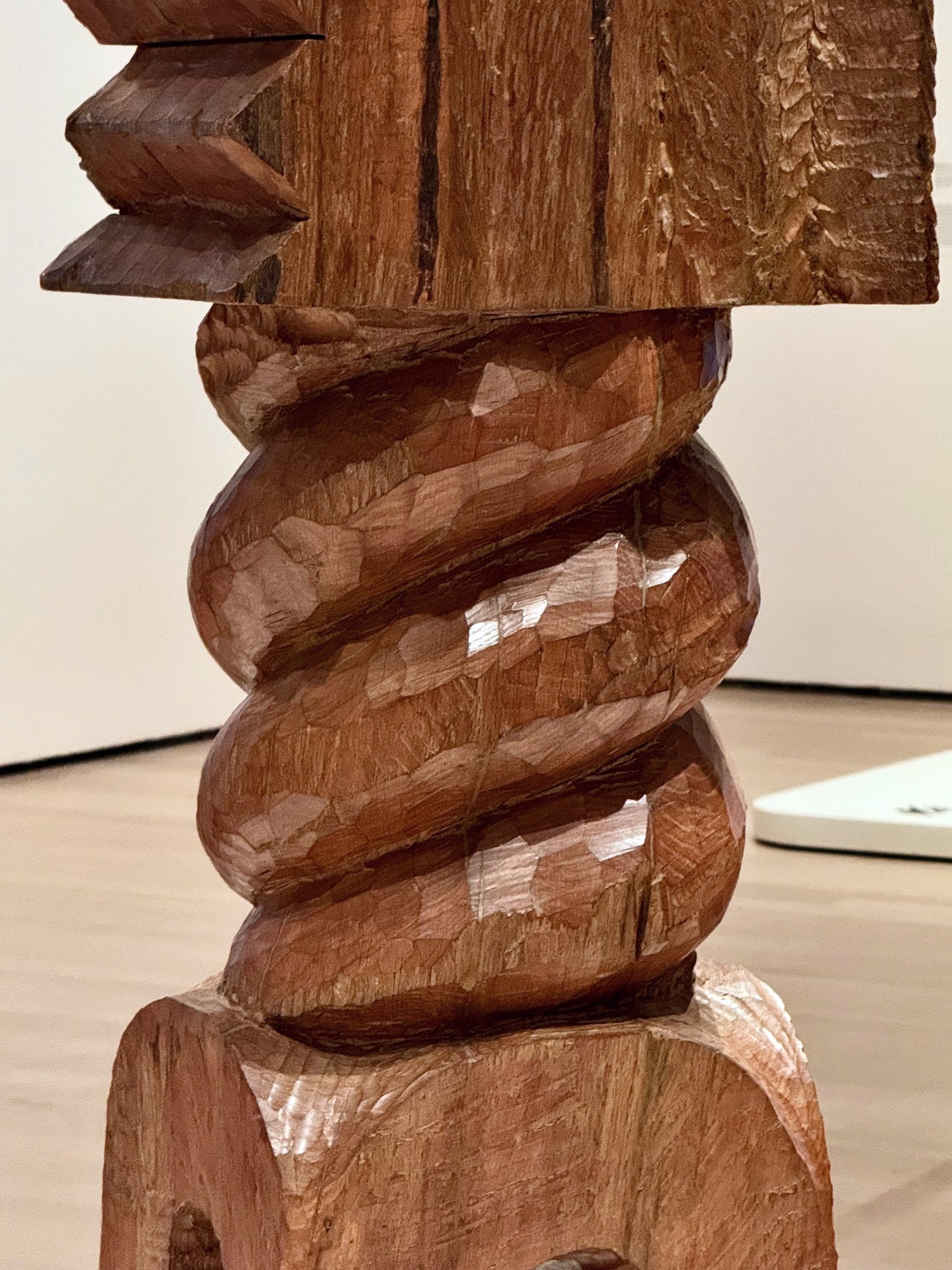
Brancusi didn’t just sculpt objects. He sculpted the space around them.
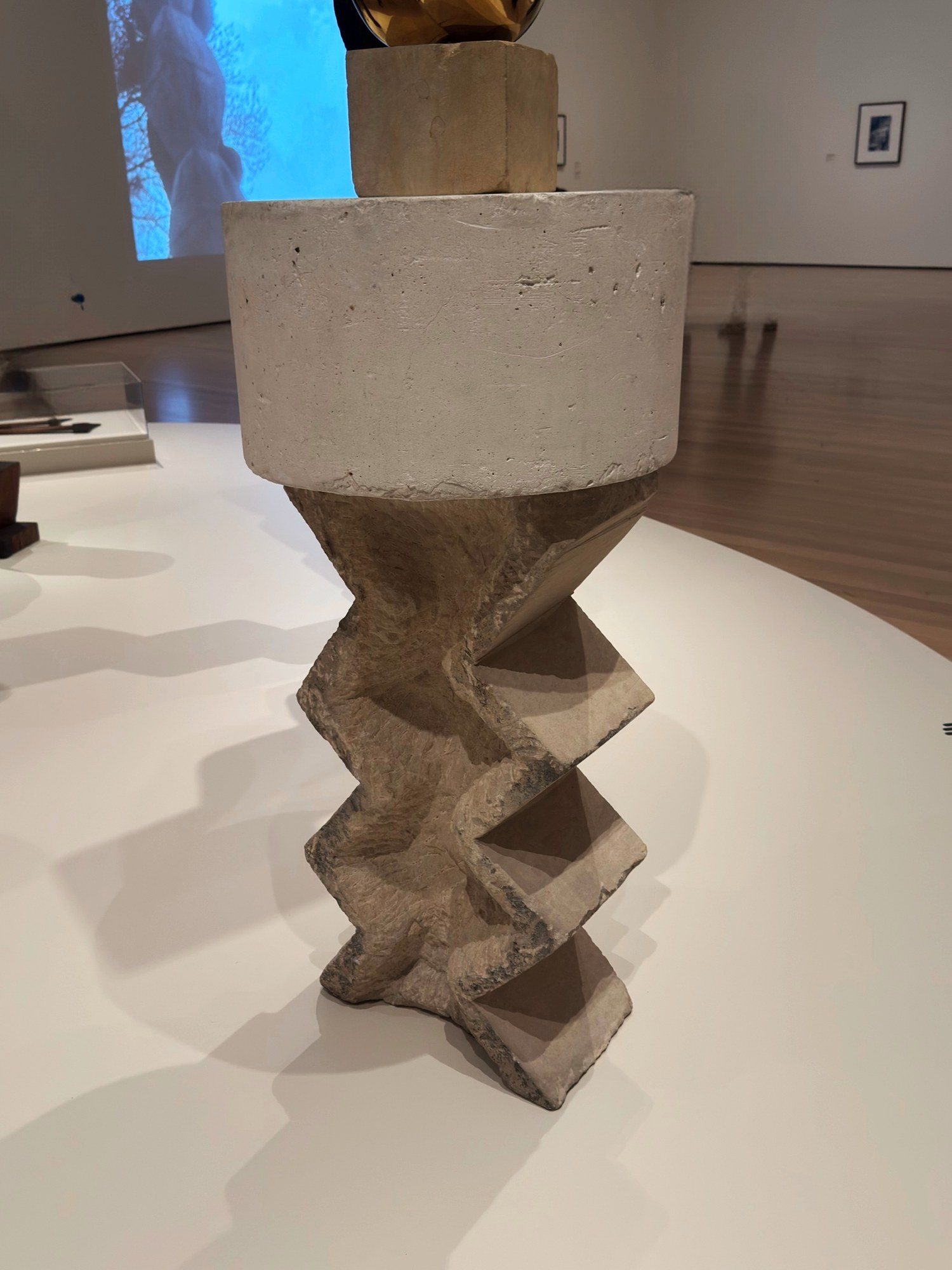
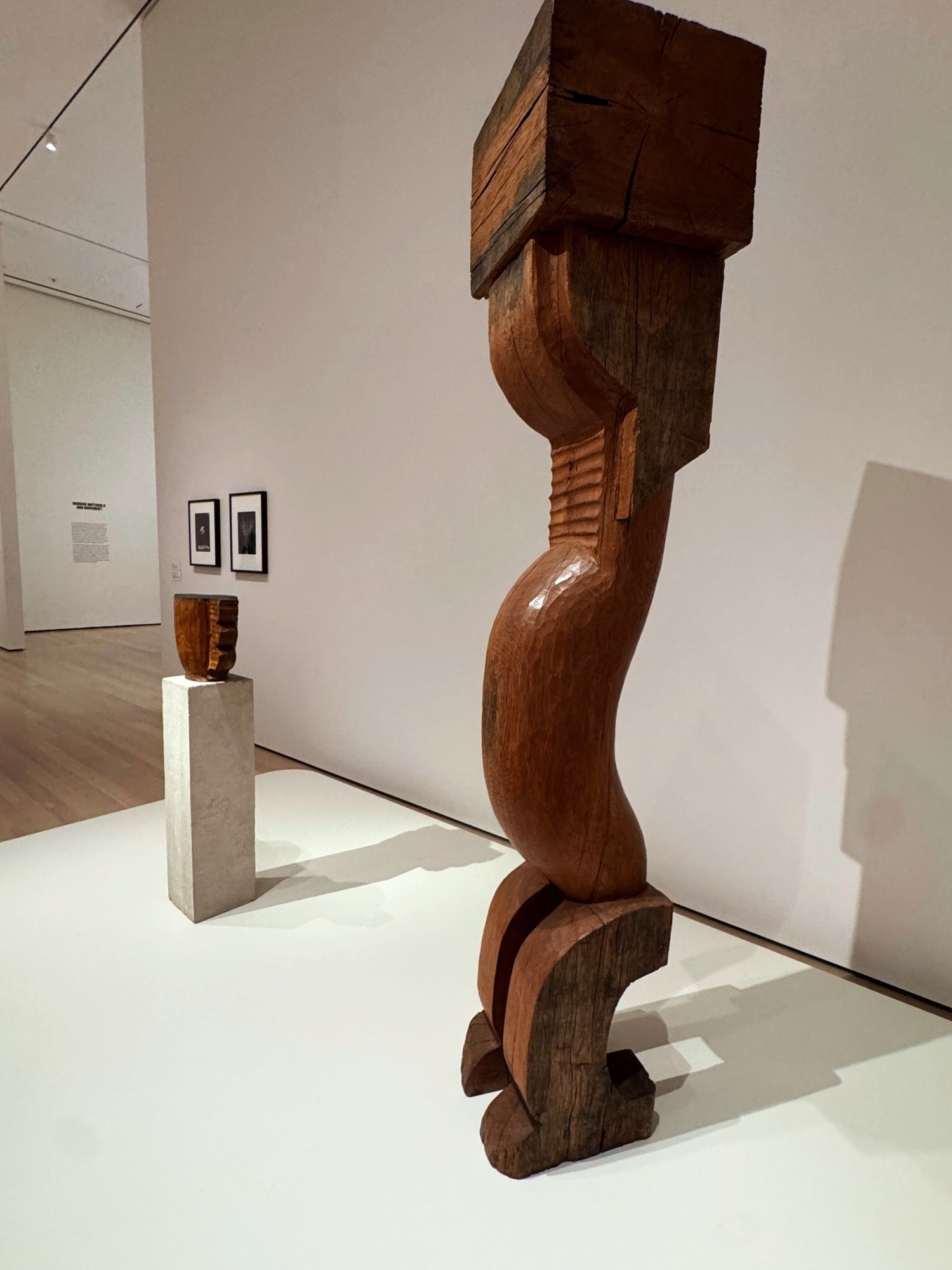
For centuries, a pedestal had one job: lift the statue, then disappear. Brancusi refused. He carved his own bases, stacked them, swapped them, and in the end made them part of the work. Wood under stone, stone under bronze, a block of limestone under a block of oak. Each layer changes the one above it.
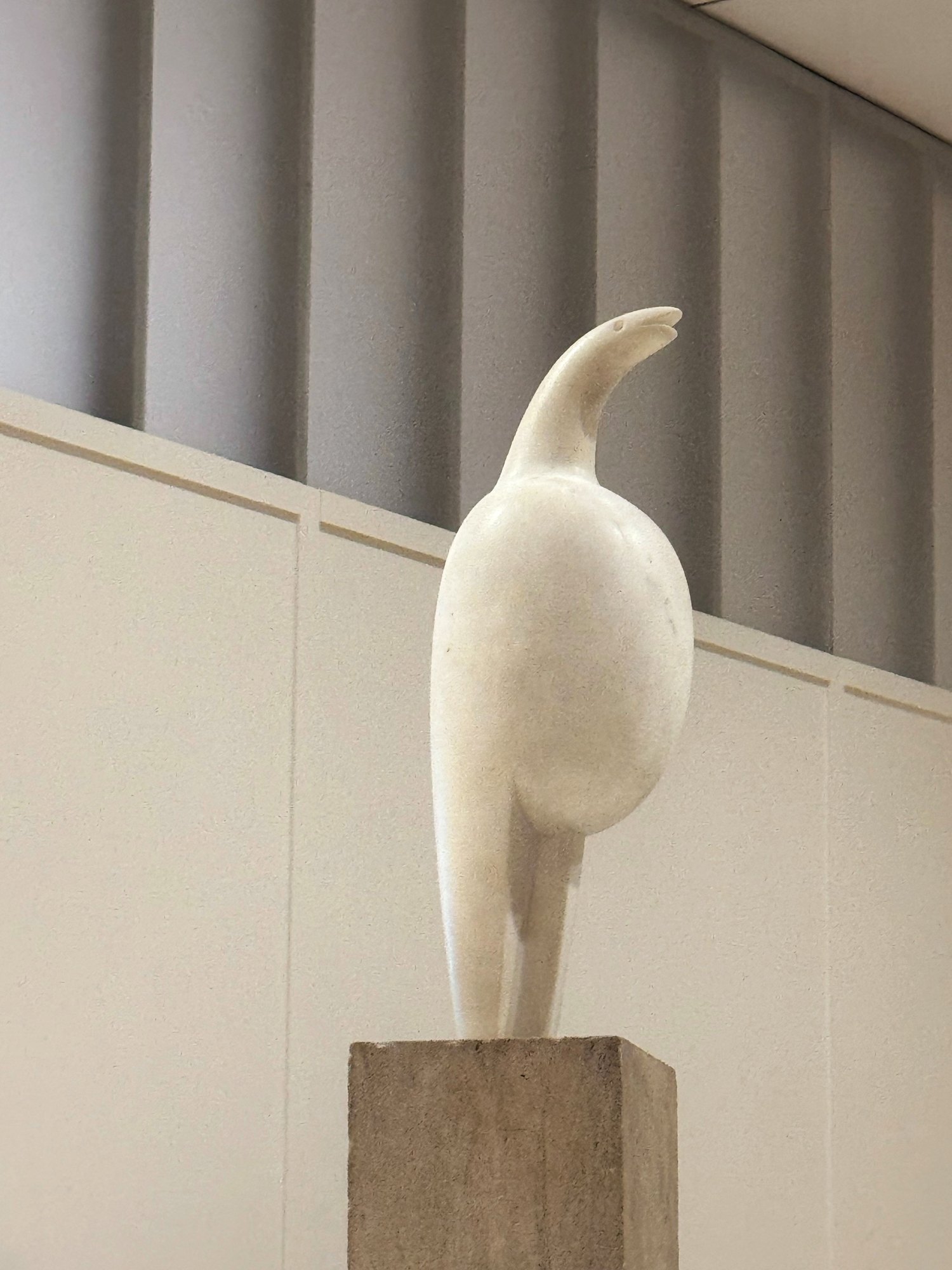
Look at Maiastra, his magical bird from Romanian legend. Polished white marble on top, neck stretched, chest swelling. Under it, limestone. Under that, an earlier sculpture of his, Double Caryatid, quietly demoted to support. It was the first time he turned one of his own works into a base, and the first of more than thirty birds. He never stopped.
The Endless Column, that rhythm of stacked rhomboids, started life as a pedestal motif before it was promoted to monument. His teak stool, shaped like an hourglass, is signed and dated like a masterpiece, and he used the same hourglass shape as pedestals for his sculptures. Seat, support, sculpture: in his studio, the categories simply dissolved.
Then there is Doorway, an imposing carved oak frame that once separated the public display area of the studio from his private living quarters. Two side jambs, cut from an earlier bench, and a lintel with a serrated edge that echoes the Endless Column. It is architecture, furniture and sculpture at once, and it carries the memory of the Romanian houses of his childhood.
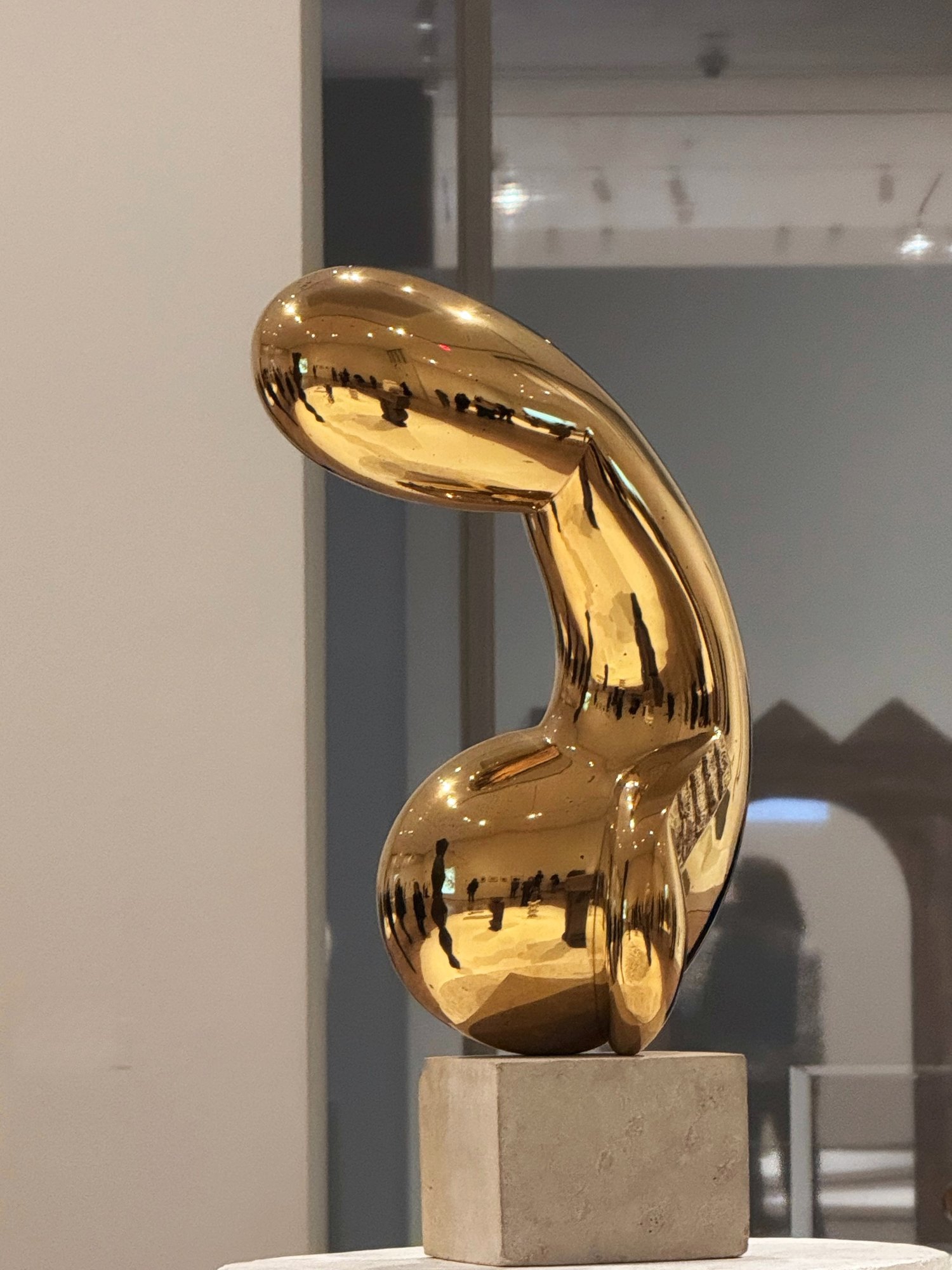
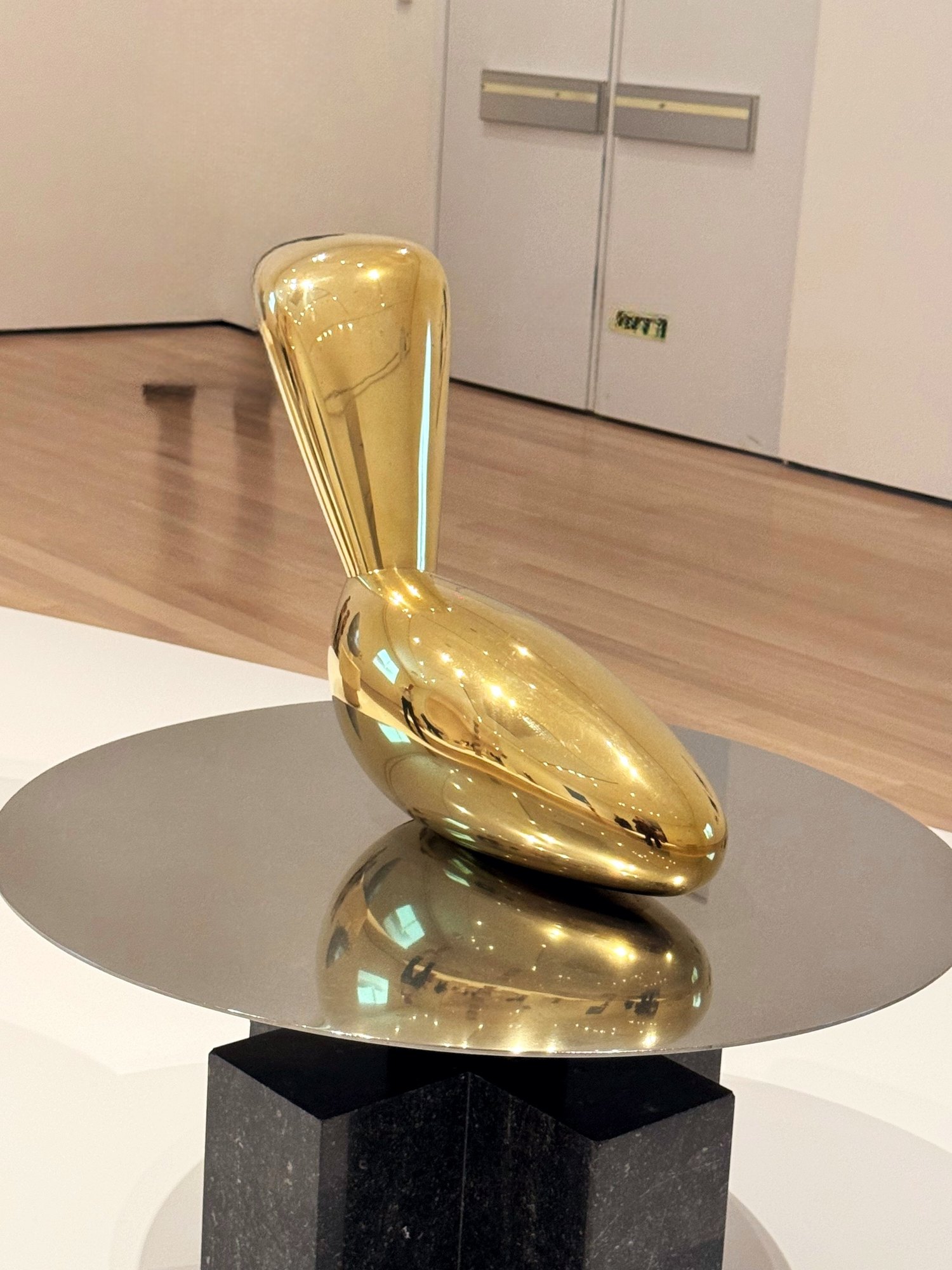
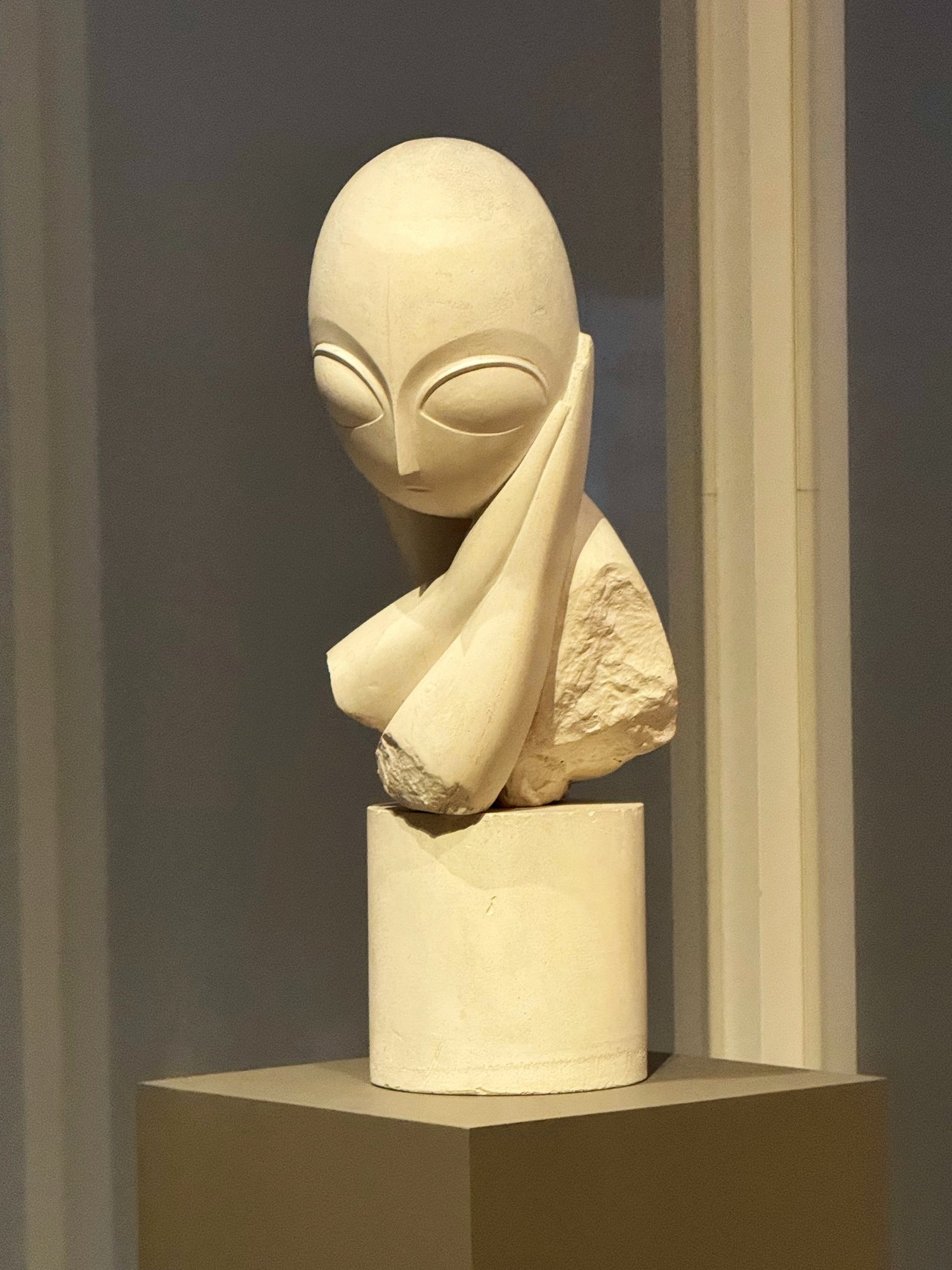
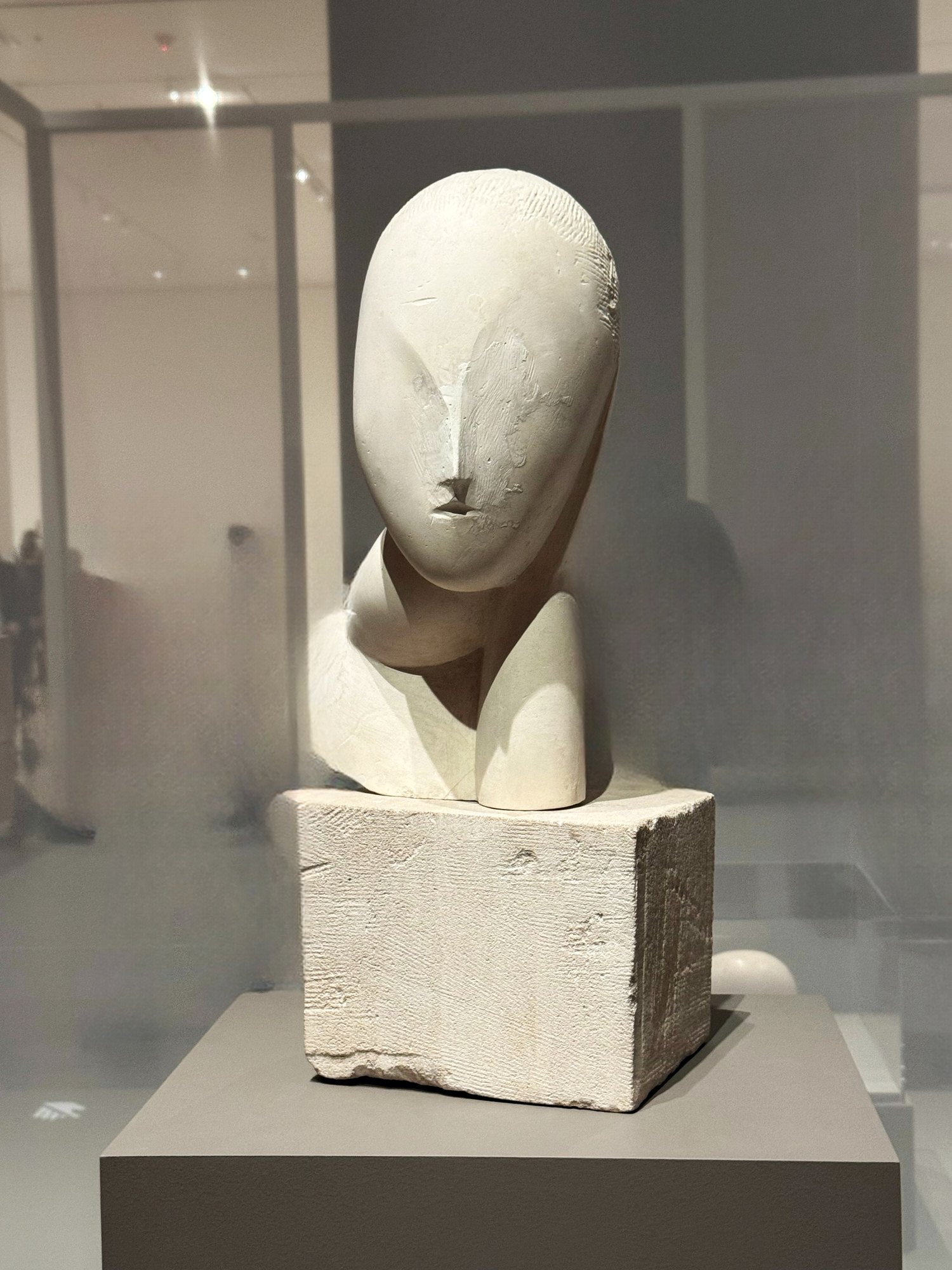
Portraits followed the same path toward pure form. Mlle Pogany began with a Hungarian artist who sat for him in 1910. He later carved her from memory, and over the years reduced her to an oval face, enormous almond eyes and an elaborate chignon. By the end, a person had become a silhouette.
He kept rearranging. Works moved into new groupings he called groupes mobiles, and each version was photographed as if the room itself were the artwork. A sculpture was never finished until he knew where it stood and what stood beside it.
What strikes me as a designer is the hierarchy. Spirit on top, matter below. The polished form floats; the rough block keeps it on the ground. The monumental sits beside the intimate. Change the base, and the same object changes its presence entirely.
That is exactly what happens in a room. I have always believed a sculpture should never be placed simply because a corner is empty. Where do you enter? Where does the light fall? What surrounds it? Brancusi asked the same questions, with an axe in his hand.
Visitors to 11, impasse Ronsin called it “a cathedral,” “a sanctuary,” “a still, white forest.” White plaster, white dust, natural light, and Brancusi himself dressed in white. When a sculpture sold, he often replaced it with a plaster cast, a ghost of the absent work. Colored backdrops stood behind certain pieces, so he could photograph them against the right tone. MoMA’s “ghost studio” follows the same idea: translucent scrims and colored floors trace the footprint of the last atelier, with Doorway, the tool wall and a film of his fireplace in their original positions.
He got that address thanks to a friend. Marcel Duchamp had bought a number of Brancusi sculptures in 1926 and stored them at number 11, a few doors away. In 1927, the studio at number 8 flooded and its floor collapsed; a letter from the landlord, on view, grants Brancusi a temporary extension. Duchamp transferred his lease, and from January 1, 1928, number 11 was Brancusi’s. Upon moving in, he photographed his Endless Columns and a Bird in Space across from the entrance, a configuration he kept for years.
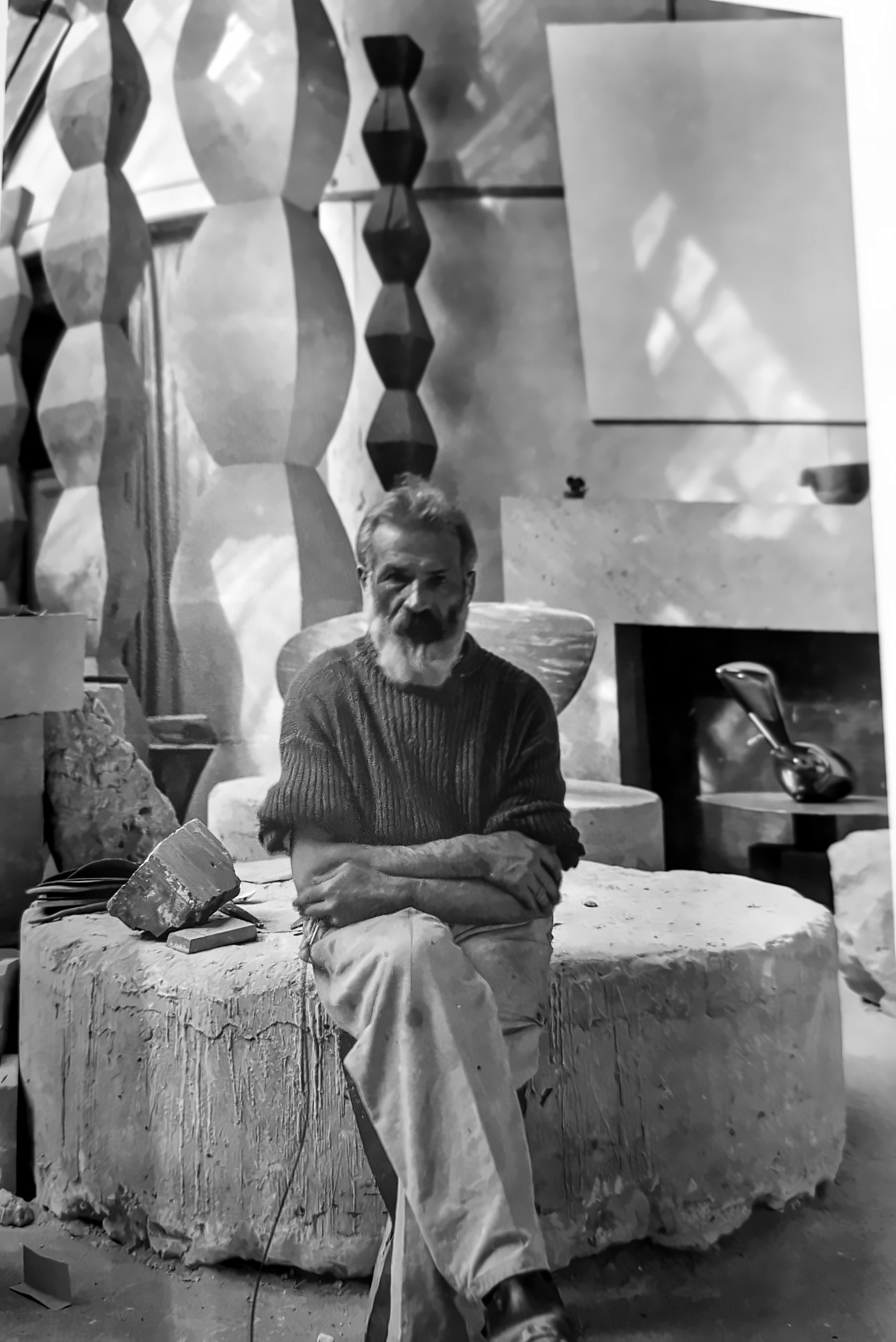
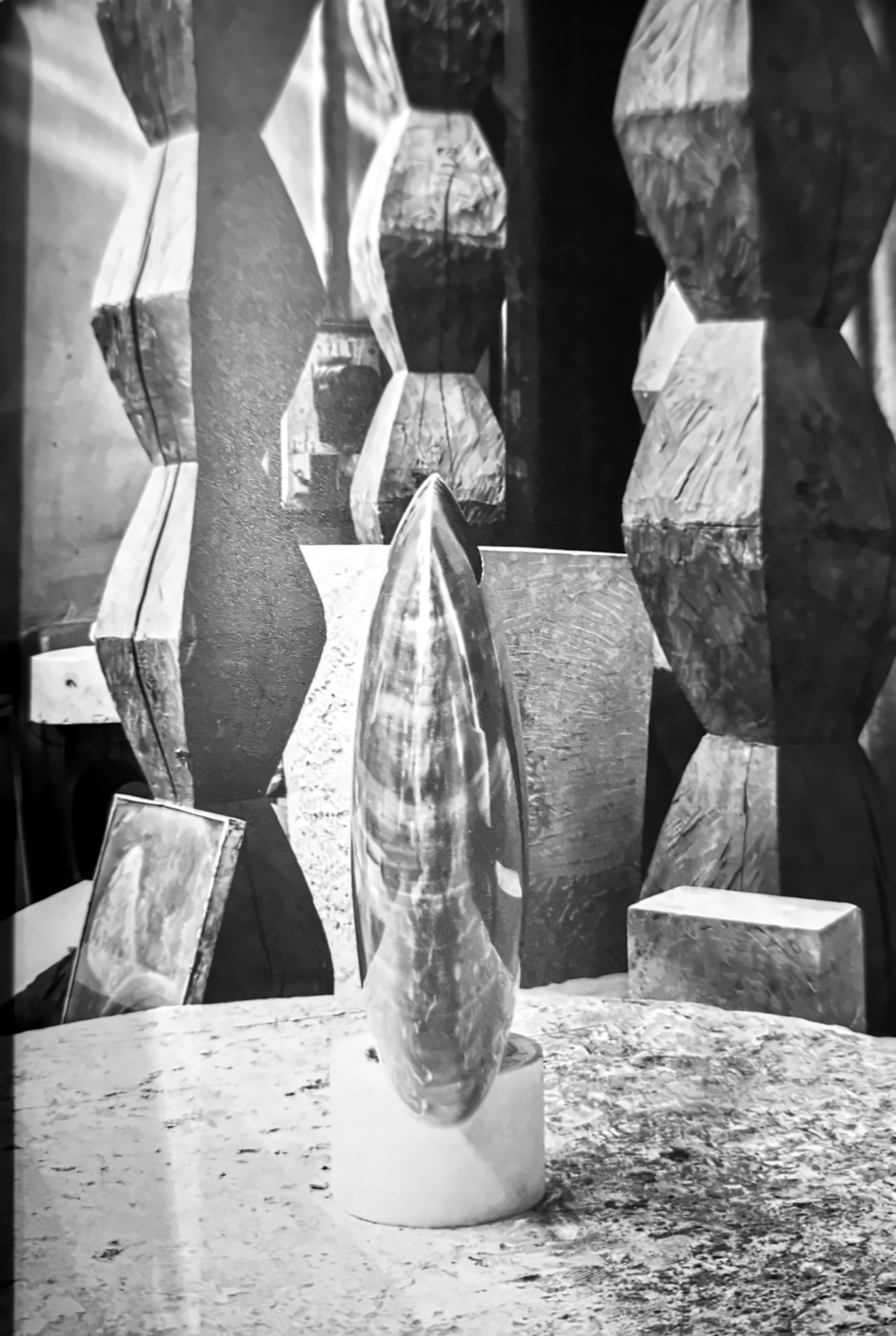
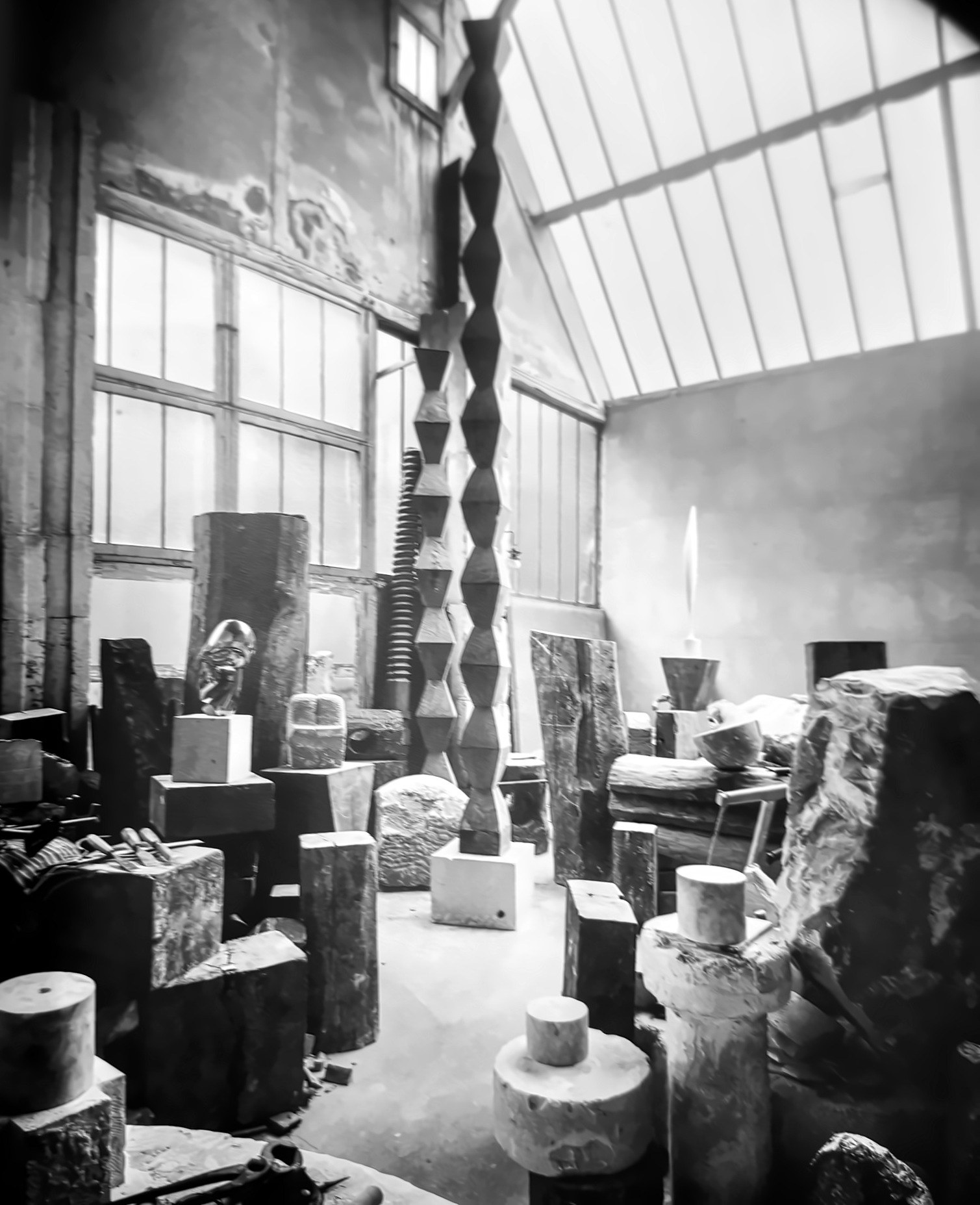
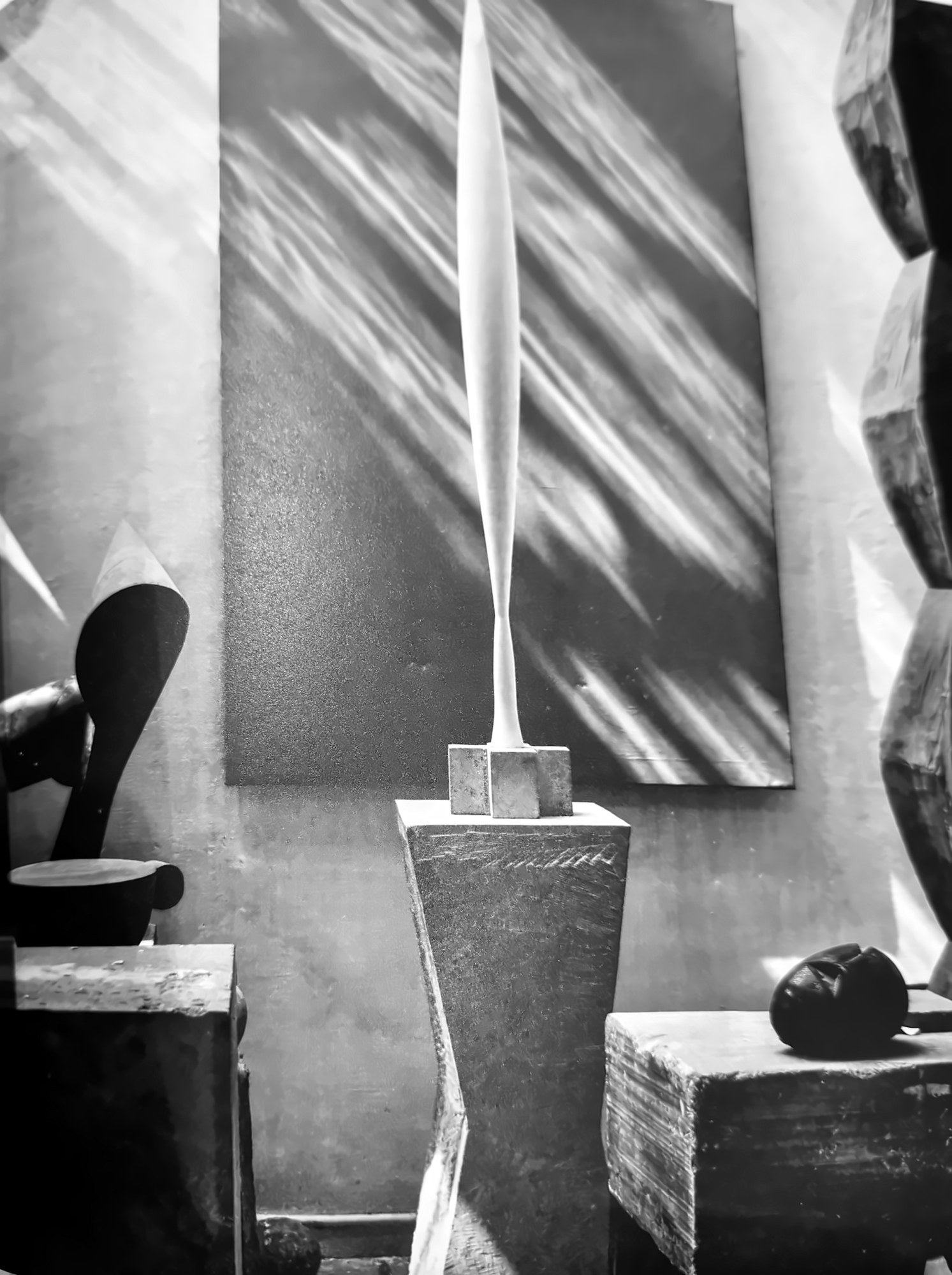
The studio at impasse Ronsin was never just a workshop. For more than forty years, from 1916 until his death in 1957, Brancusi lived there, worked there, received friends and clients, and showed his sculptures there. The exhibition is built around that room: his hand-carved furniture and bases, his films, his tools and his own photographs, lent by the Atelier Brancusi at the Centre Pompidou.
He was his own best photographer. He shot the studio again and again, regrouping the sculptures, watching the light move across stone, bronze and oak. In his pictures, the room itself becomes the work: columns, plinths and birds, all in conversation.
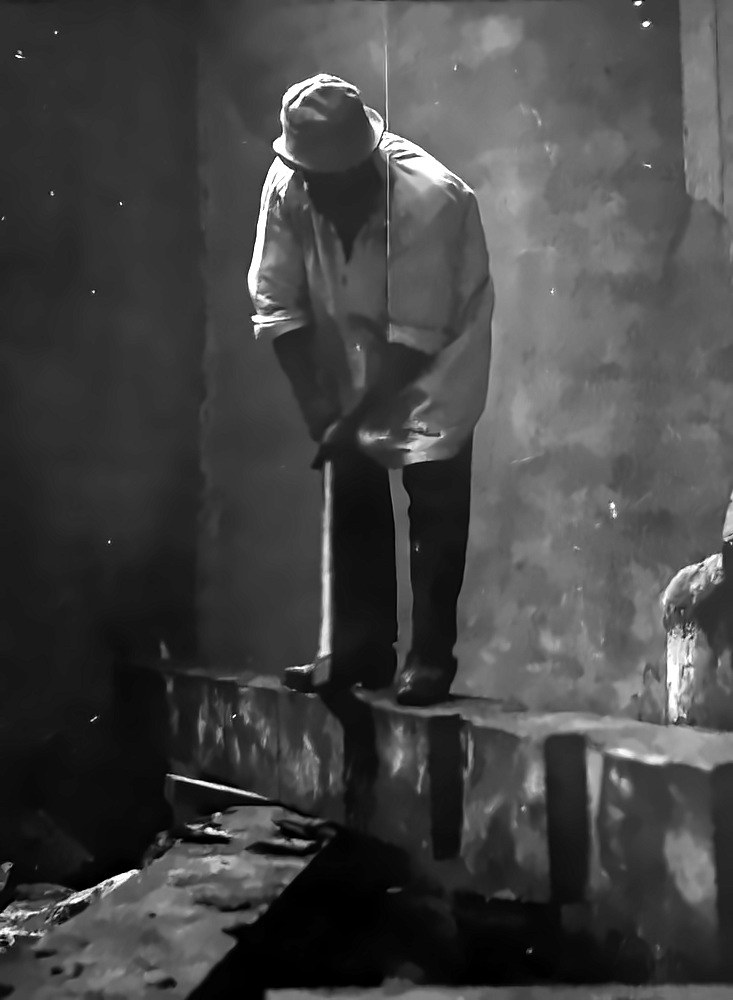
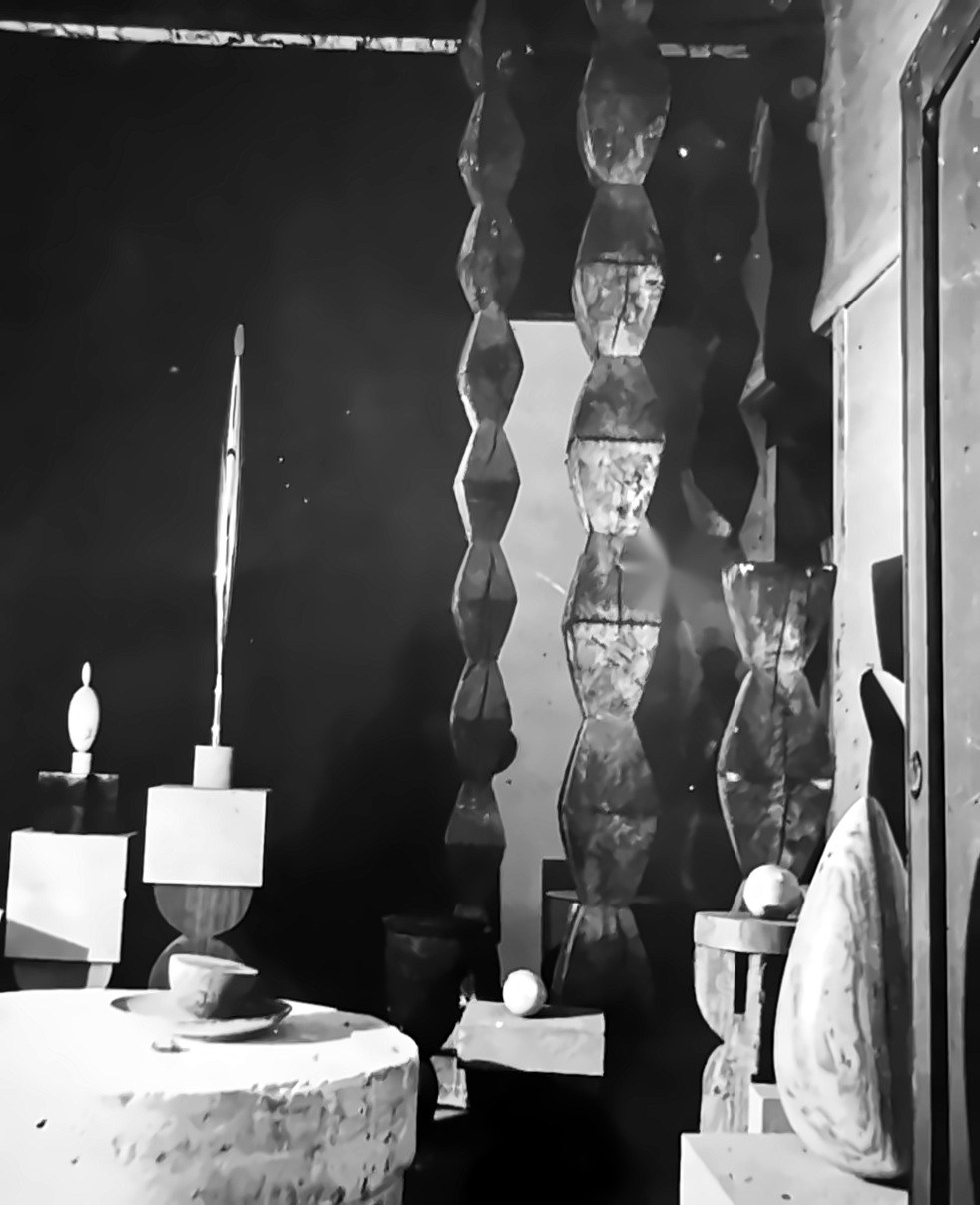
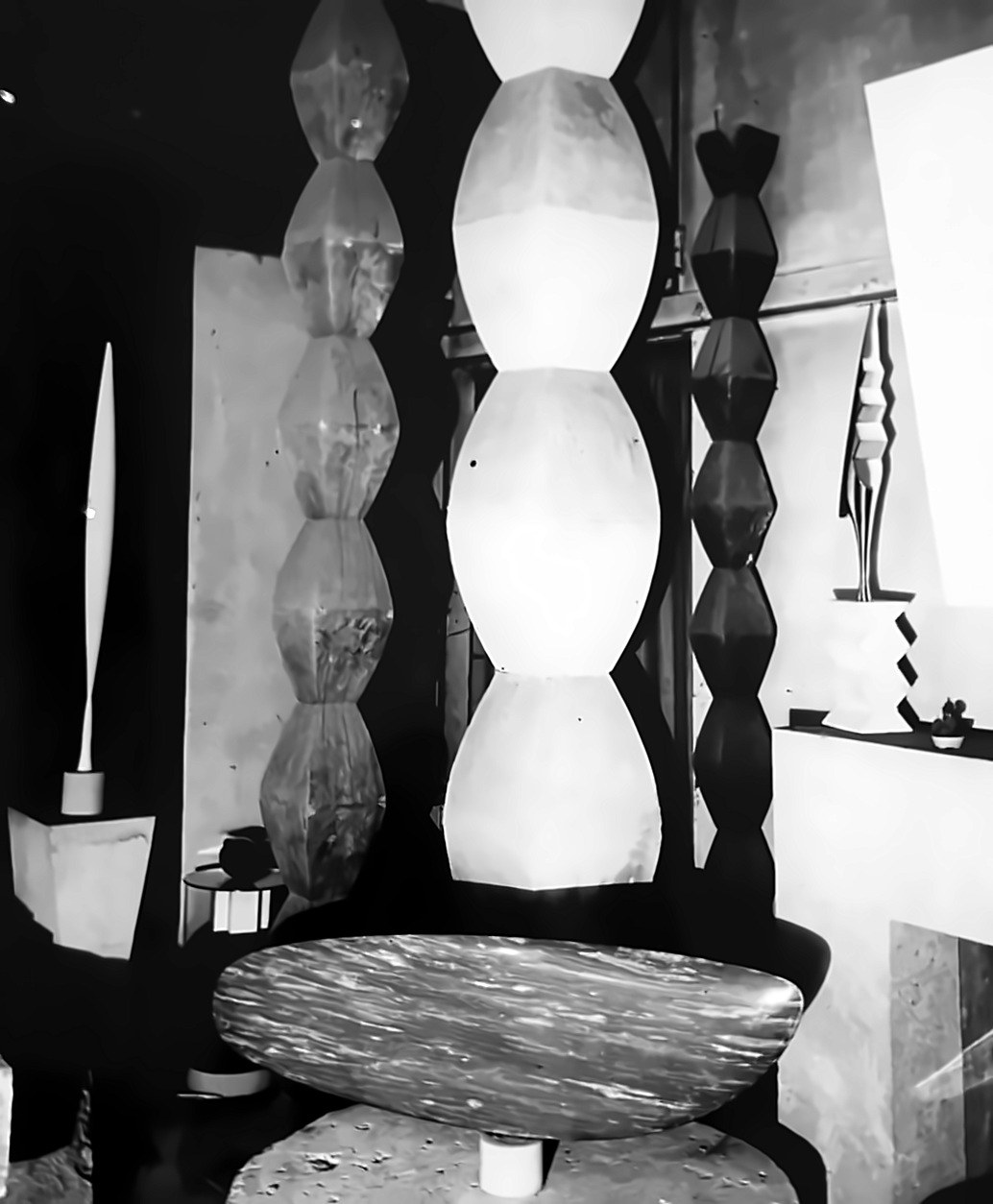
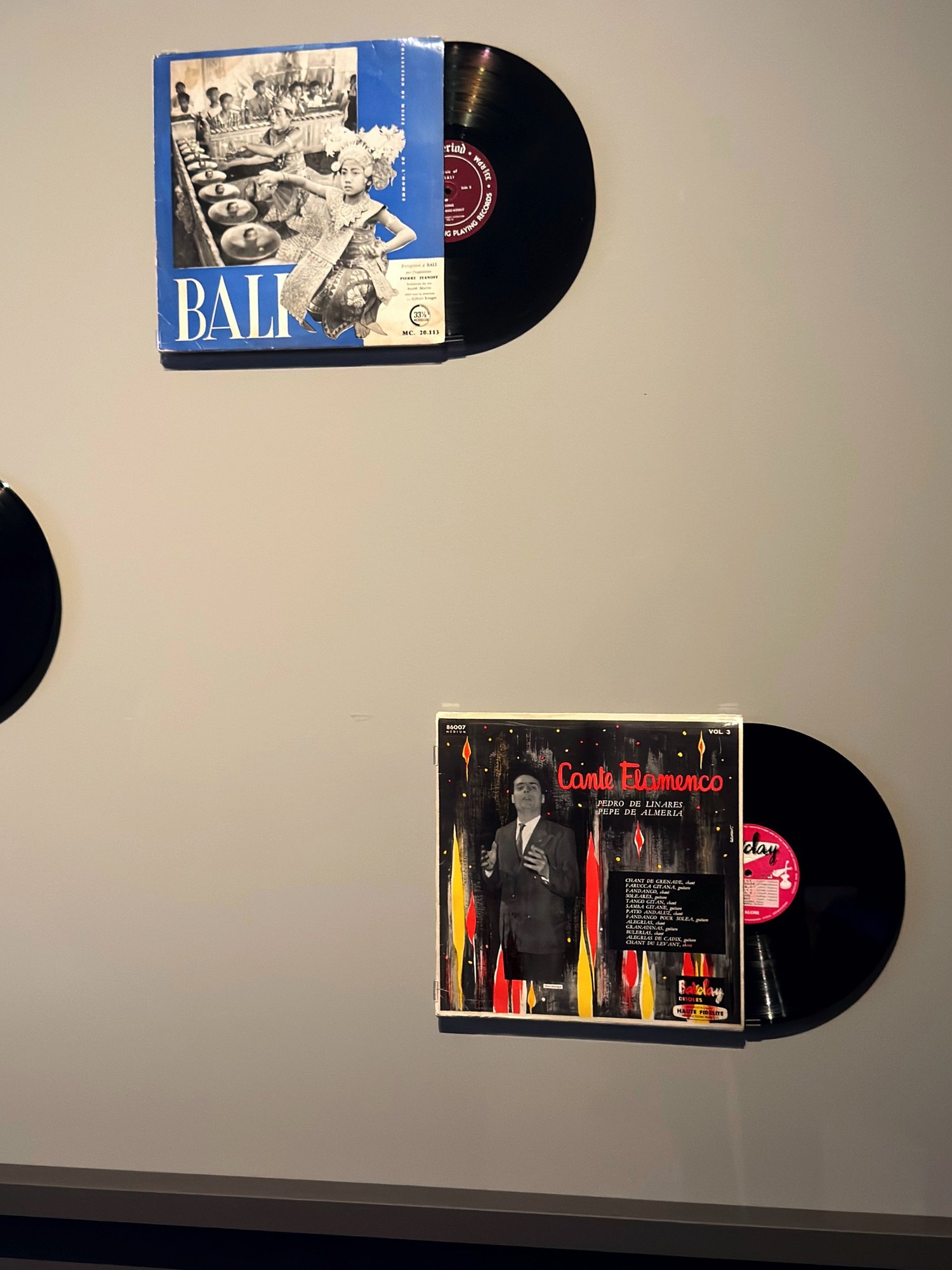
The studio was also a kitchen, a concert hall and a darkroom. Brancusi grilled lamb and chicken on a forge he had built himself. Champagne flowed, along with wines that, one guest said, “would take paint from the door.” Then came freshly ground Turkish coffee, shortbread and music, sometimes Brancusi himself on violin or flute, sometimes one of about two hundred records. The sleeves on display read like a world tour: Romanian folk songs, Balinese gamelan recorded in 1953, flamenco, Latin American rhythms, alongside Satie, Stravinsky, Mozart, Bach, Cab Calloway and Benny Goodman.
He was also his own photographer and filmmaker. He staged four portraits of himself carving an Endless Column with an axe, crouched over, then standing, and sent pictures like these to the press and to clients. He filmed his guests dancing and dining. Long before anyone spoke of image, Brancusi controlled his.
America, meanwhile, was still deciding whether he was an artist at all. In the 1920s, U.S. customs refused to let his Bird in Space in as art and taxed it as a manufactured metal object. A court eventually ruled otherwise. The bird won.
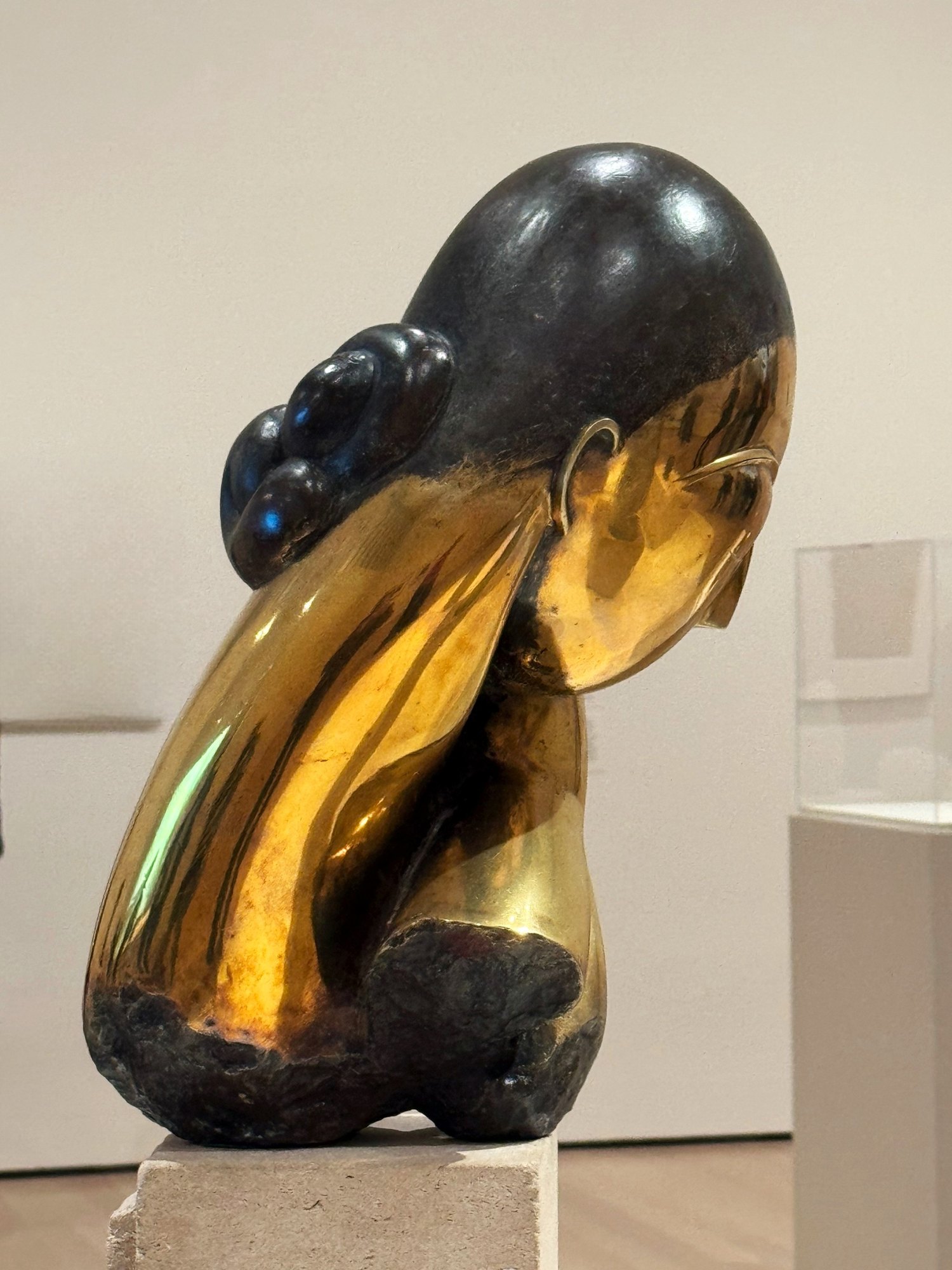
This is where I stayed the longest.
Brancusi carved directly, without a clay model. And the line I would frame for every client: “You can’t do what you want, but what the material allows.”
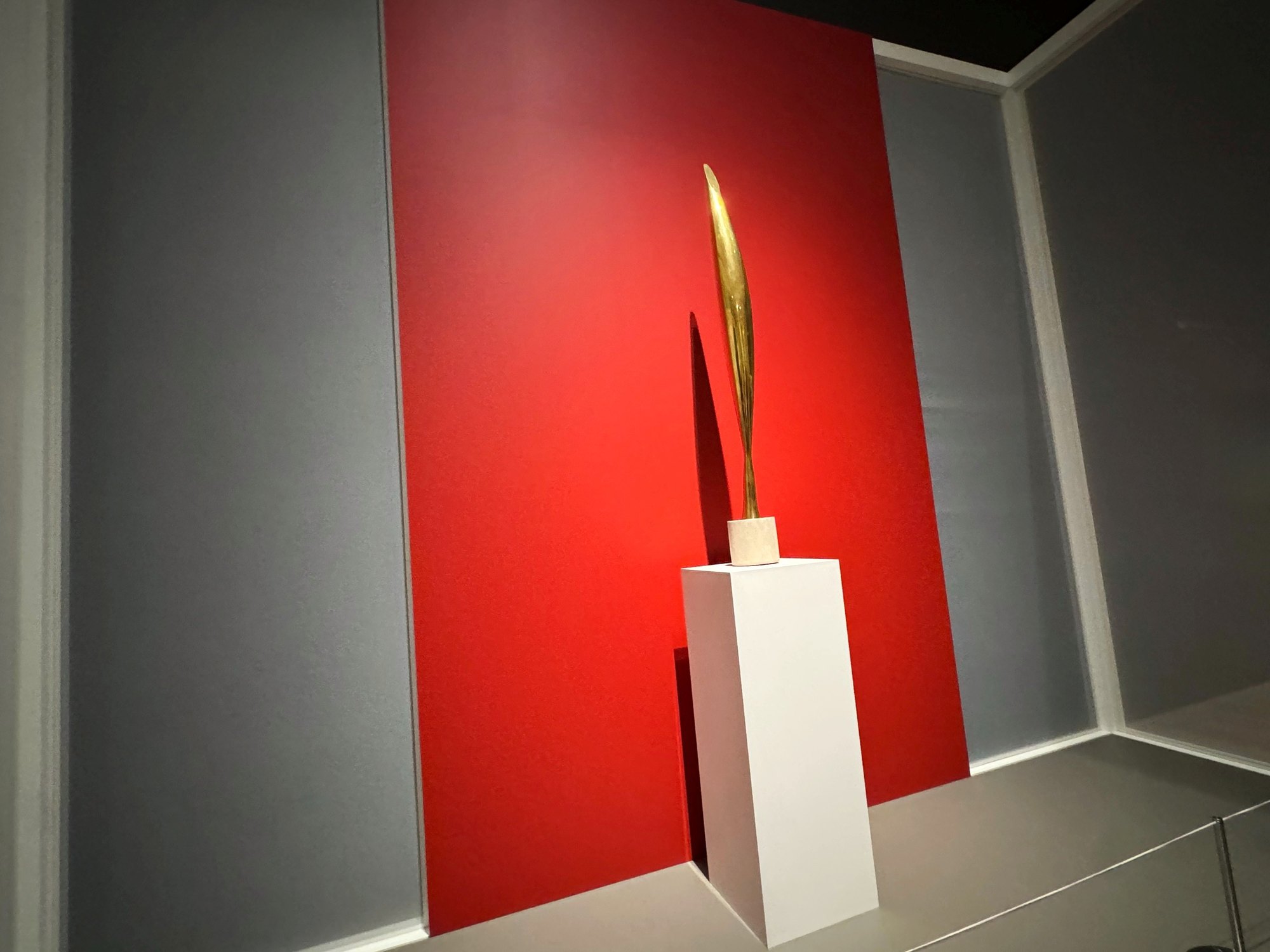
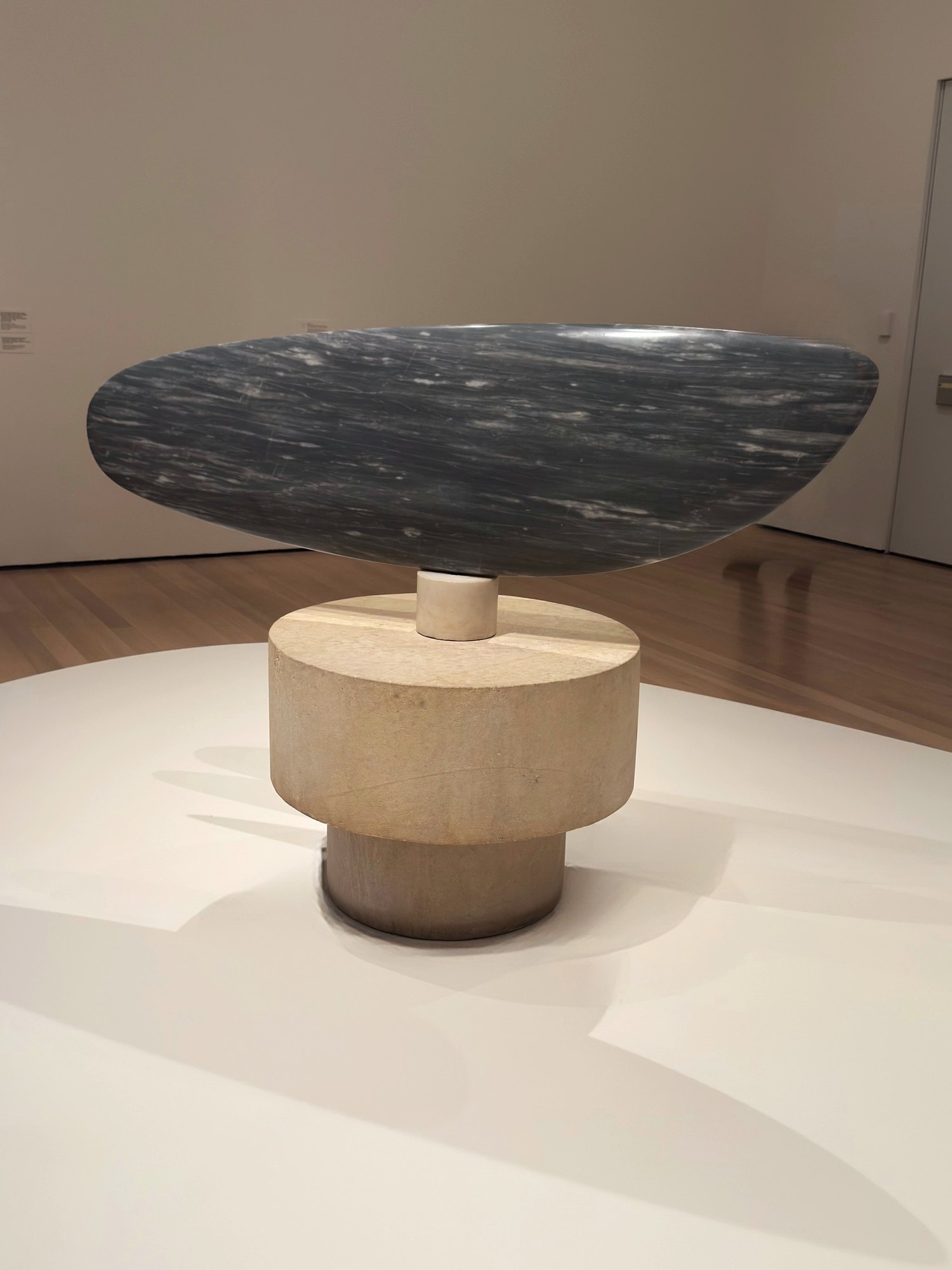
He gave each material its own treatment. Oak left rough, every axe mark visible, like a signature. Walnut and cherry smoothed until the hand disappears. Limestone, chalky and solid. Veined marble, luminous onyx, bronze polished to a mirror and set on carved wood that still remembers the tree.
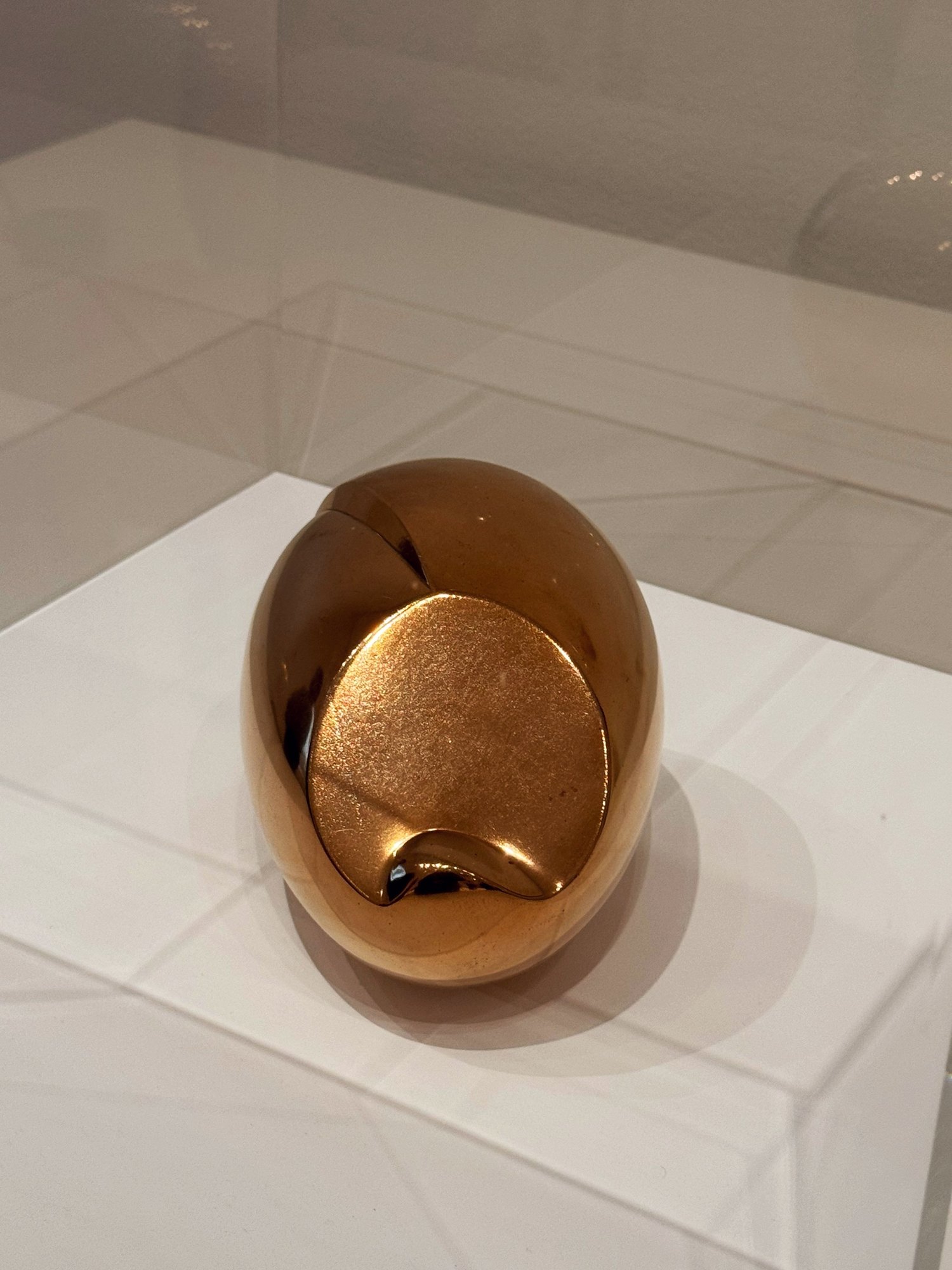
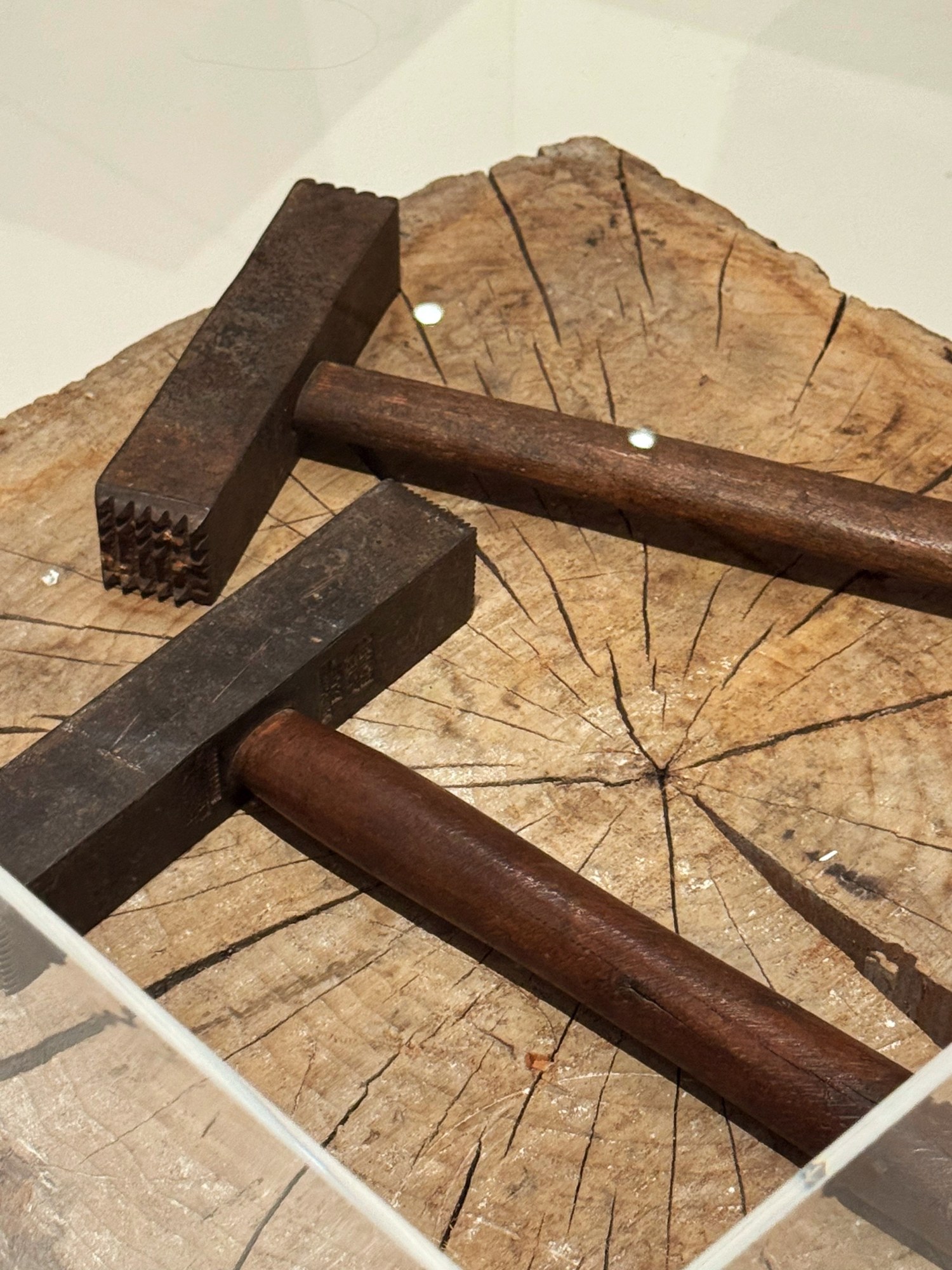
Some pieces are made to be touched. Sculpture for the Blind, a smooth egg of onyx from 1925, has no front and no back; it exists for the hand as much as for the eye. Nearby, Eileen Lane glows in white onyx on a limestone pedestal, and a Torso of a Young Man in walnut stands on its own stone base. Even his tools are on display: two bush hammers resting on a wooden block, as if he had just put them down.
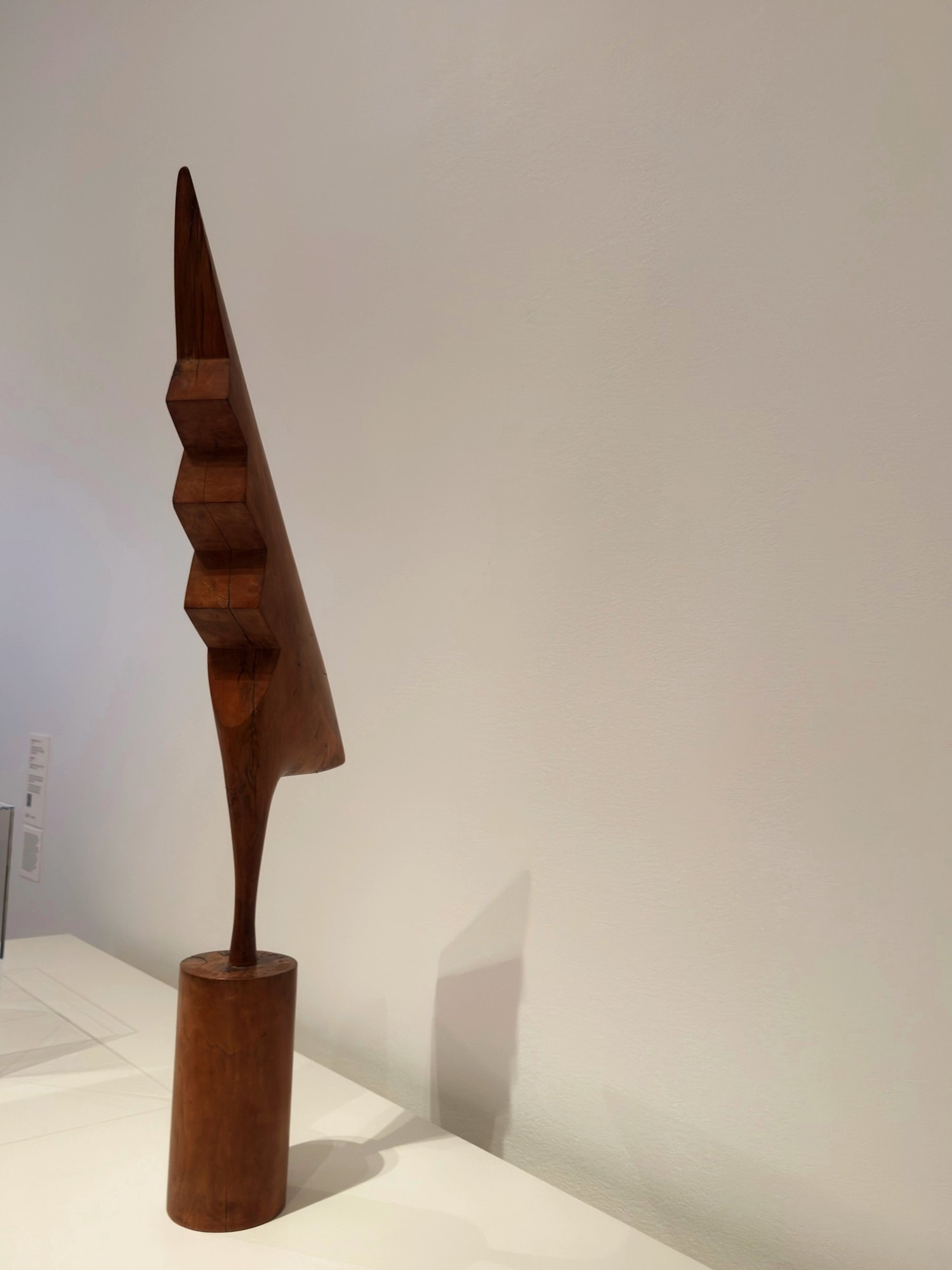
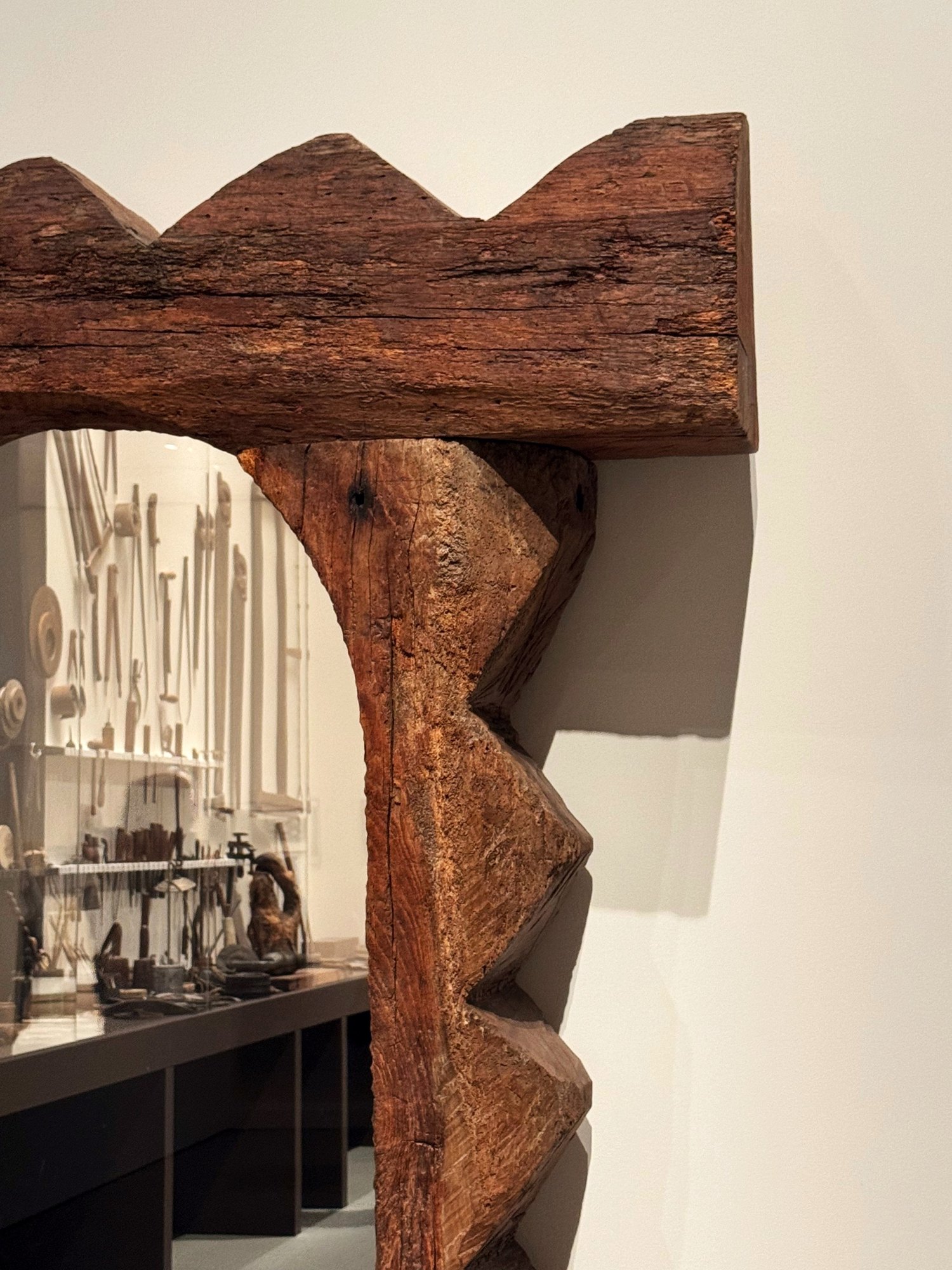
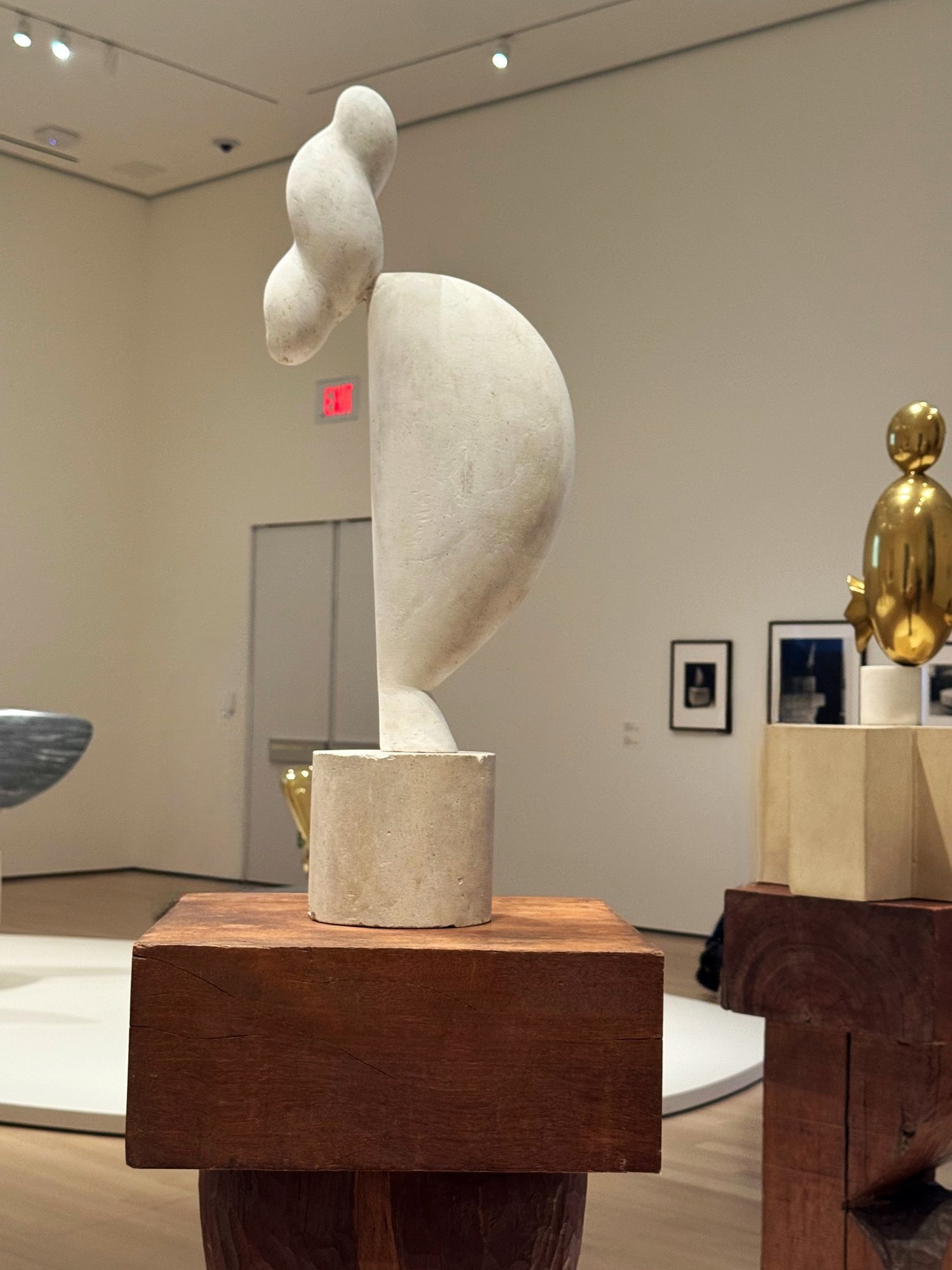
Smooth over rough, again and again. A gleaming disc of metal resting on a column of gouged wood. A milky marble form settled into a block of porous limestone. Polished bronze on a pale stone cube. Neither surface would mean as much alone.
I kept moving closer, and cropping my photographs tighter. That is where the work happens: in the grain, the gouge, the meeting point between two materials.
This is how I look at every object I place in an interior. The silhouette catches you from across the room. The material is what keeps you there, once you are close enough to touch.
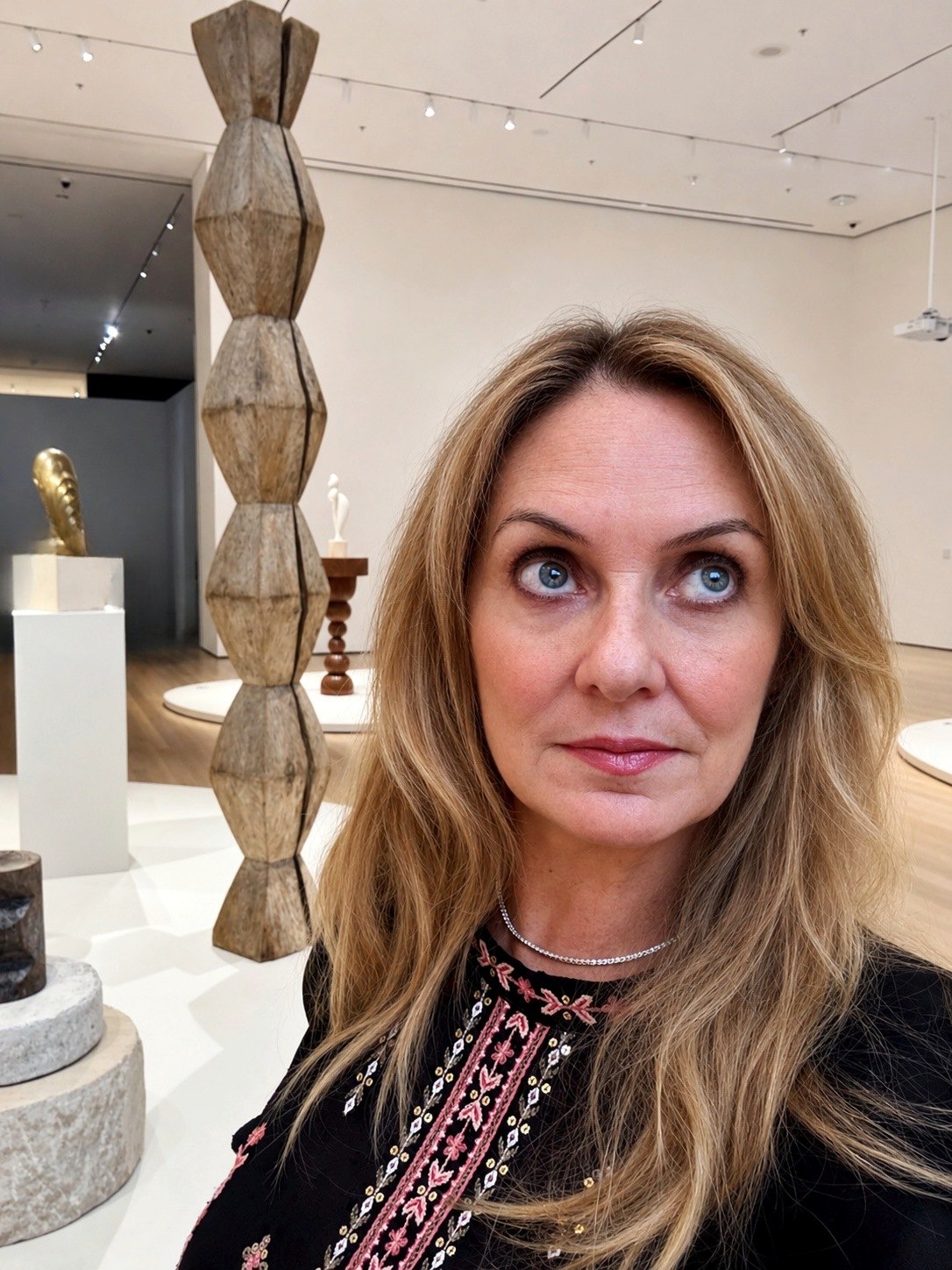
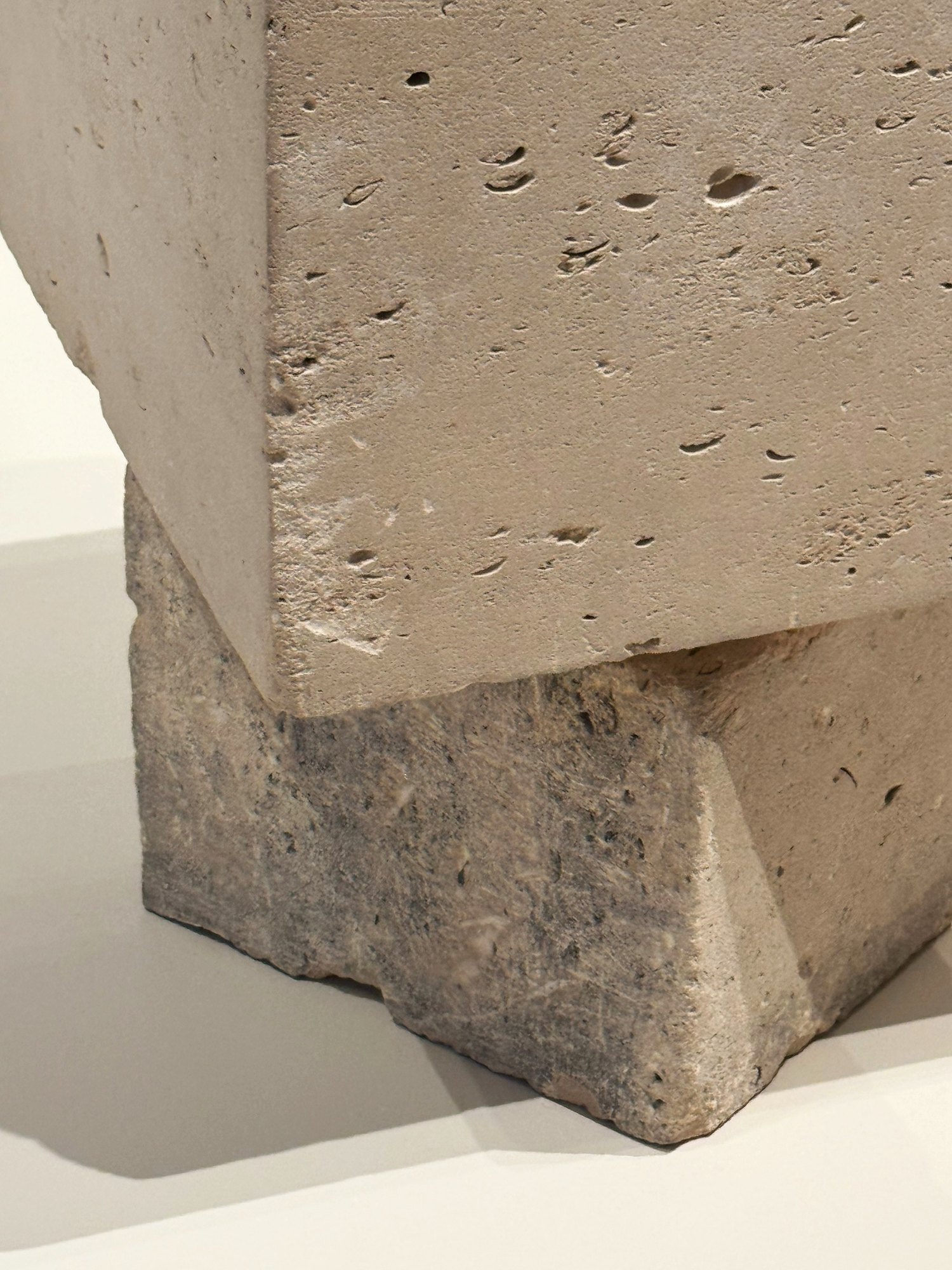
That conversation between surfaces is what I chase in interiors. Some of today’s best furniture shares Brancusi’s language without claiming to descend from it: form first, honest materials, and a base that is part of the composition, not an afterthought.
Rietveld’s Zig-Zag chair, an architectural gesture in a single line of wood. Zanat’s Unity stool, carved walnut with real sculptural presence. Soho Home’s Torren side table, a dark wood block resting on raw stone.
None of them is a Brancusi, and none pretends to be. What they share is a way of standing in a room: grounded, deliberate, with nothing superfluous. Put one of them on a plain floor, give it light and space, and it starts to behave like a sculpture.
Brancusi taught us to look at what holds the object up. Once you see it, you can’t stop.
“Brancusi: The Artist and His Studio” is at The Museum of Modern Art, New York, through February 27, 2027.
Photos: Joelle Maslaton Oster
Exhibition: Brancusi: The Artist and His Studio, October 25, 2026 – February 27, 2027
Venue: The Museum of Modern Art, 11 West 53rd Street, New York
Curators: Anne Umland, guest curator, and Mia Matthias, with Samantha Small, in collaboration with Centre Pompidou
Studio photographs: Constantin Brancusi studio, Atelier Brancusi, Centre Pompidou, photographed in the exhibition and from the exhibition catalogue

Joelle Maslaton Oster
Founder of Joelle Magazine and Studio Joelle, an interior design practice in New York. She writes on art, design and the places in between.
DISCOVER THE CURATION
Read our Privacy PolicyAlso on Substack: Where Is Joelle?
This website uses cookies to improve your experience. We'll assume you're ok with this, but you can opt-out if you wish. Accept Read More