

Some hotels impress you at the door. This one slows you down. On the 30th floor of a new tower in Takanawa, the light drops, the stone turns rough under your hand, and for a moment Tokyo disappears. The JW Marriott Hotel Tokyo, the brand’s first in the capital, opened in October 2025. It is the most thoughtful hotel interior I have seen this year.
Takanawa was once wooded hills, cherry blossoms and views of Tokyo Bay. In 1872, Japan’s first railway crossed the water here on a stone embankment. It was forgotten for a century, then rediscovered in 2019, when workers dug the foundations of a new station. That station, by Kengo Kuma, opened in 2020 under a white roof folded like origami.
Today the land is Takanawa Gateway City, master-planned by Pickard Chilton and fully opened on March 28, 2026. Very Tokyo. Very now.
The interiors are by Yabu Pushelberg, the Toronto and New York studio of George Yabu and Glenn Pushelberg, with creative director Joyce Mou. Their story is balance: yin and yang, the perfect and the imperfect, Zen calm with a little mystery.
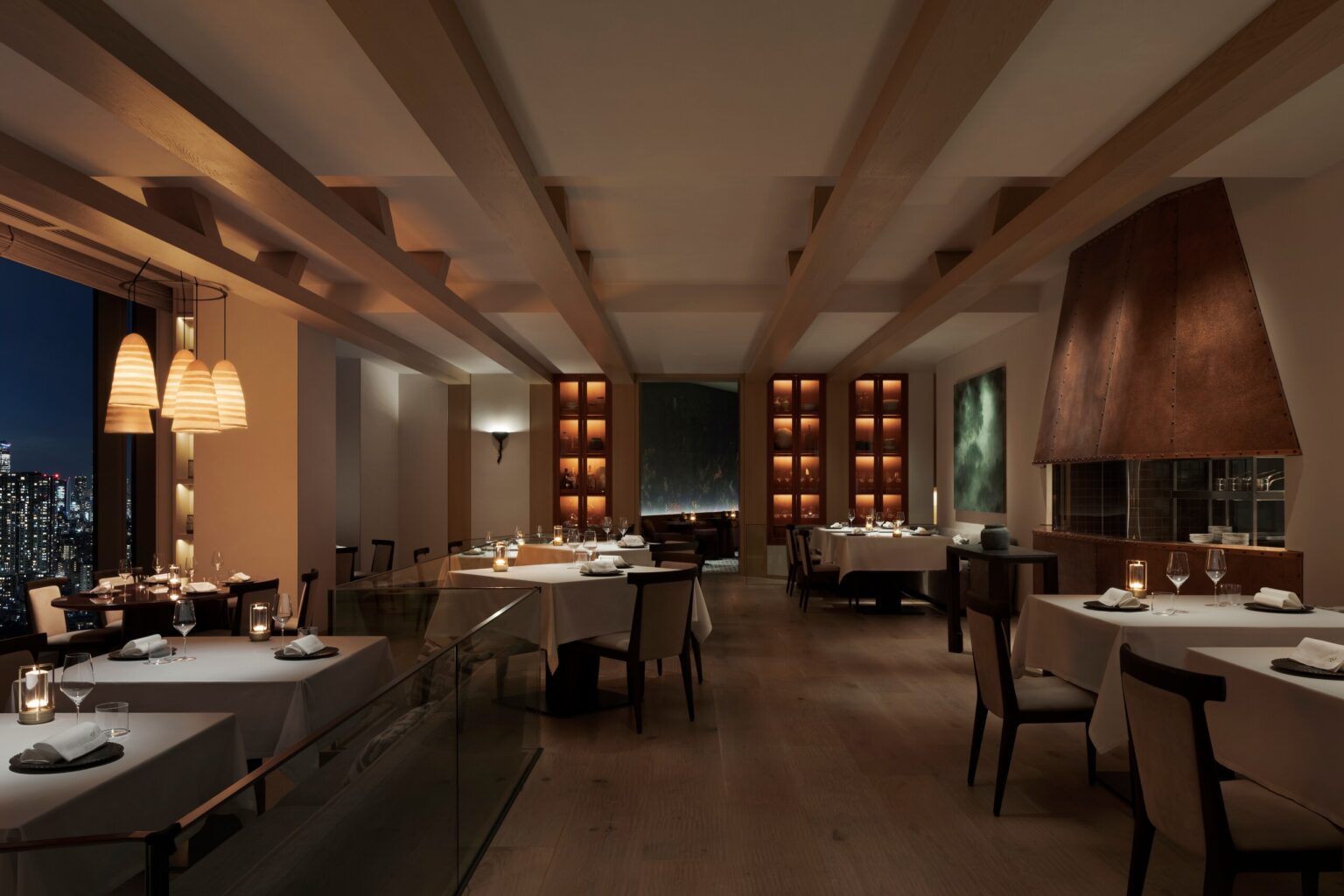
What I love is their restraint. Contemporary lines meet wabi-sabi, the Japanese beauty of the simple and the imperfect: rustic metal, textured stone, wood grain left visible. Even the corridors turn on purpose, so you discover the next space.
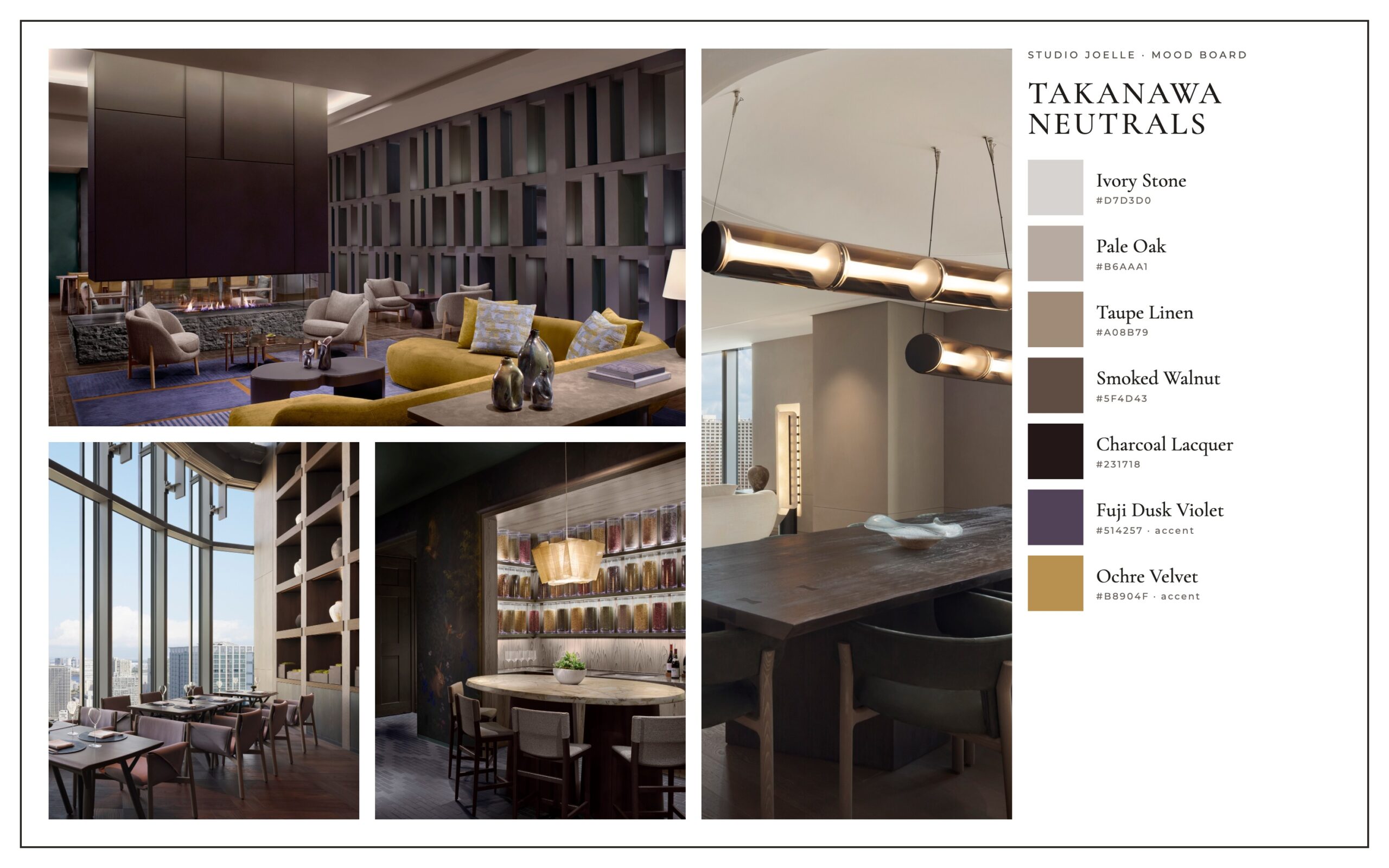
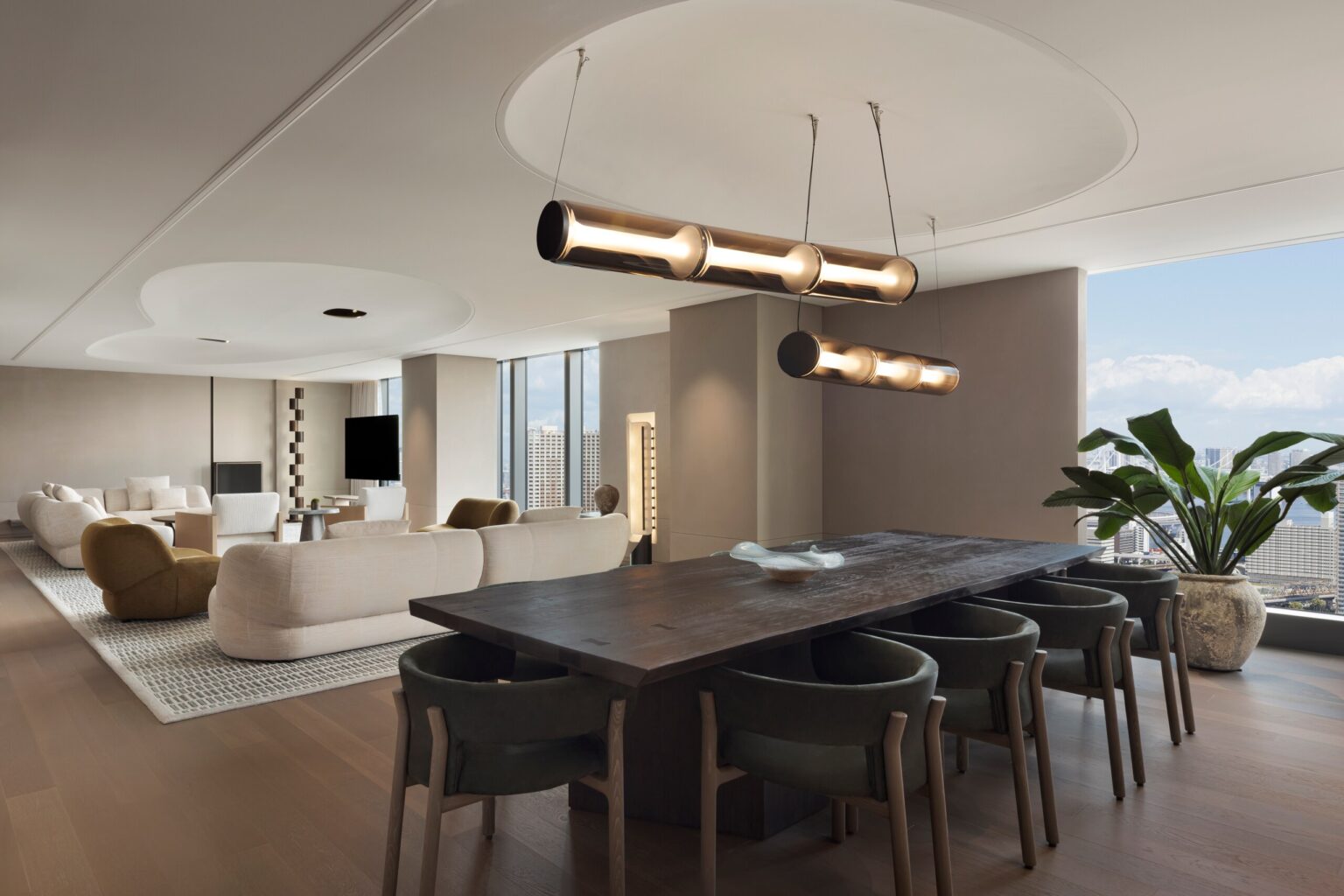
The base is a quiet range of neutrals: ivory stone, pale oak, taupe linen, smoked walnut, and a charcoal that is almost black.
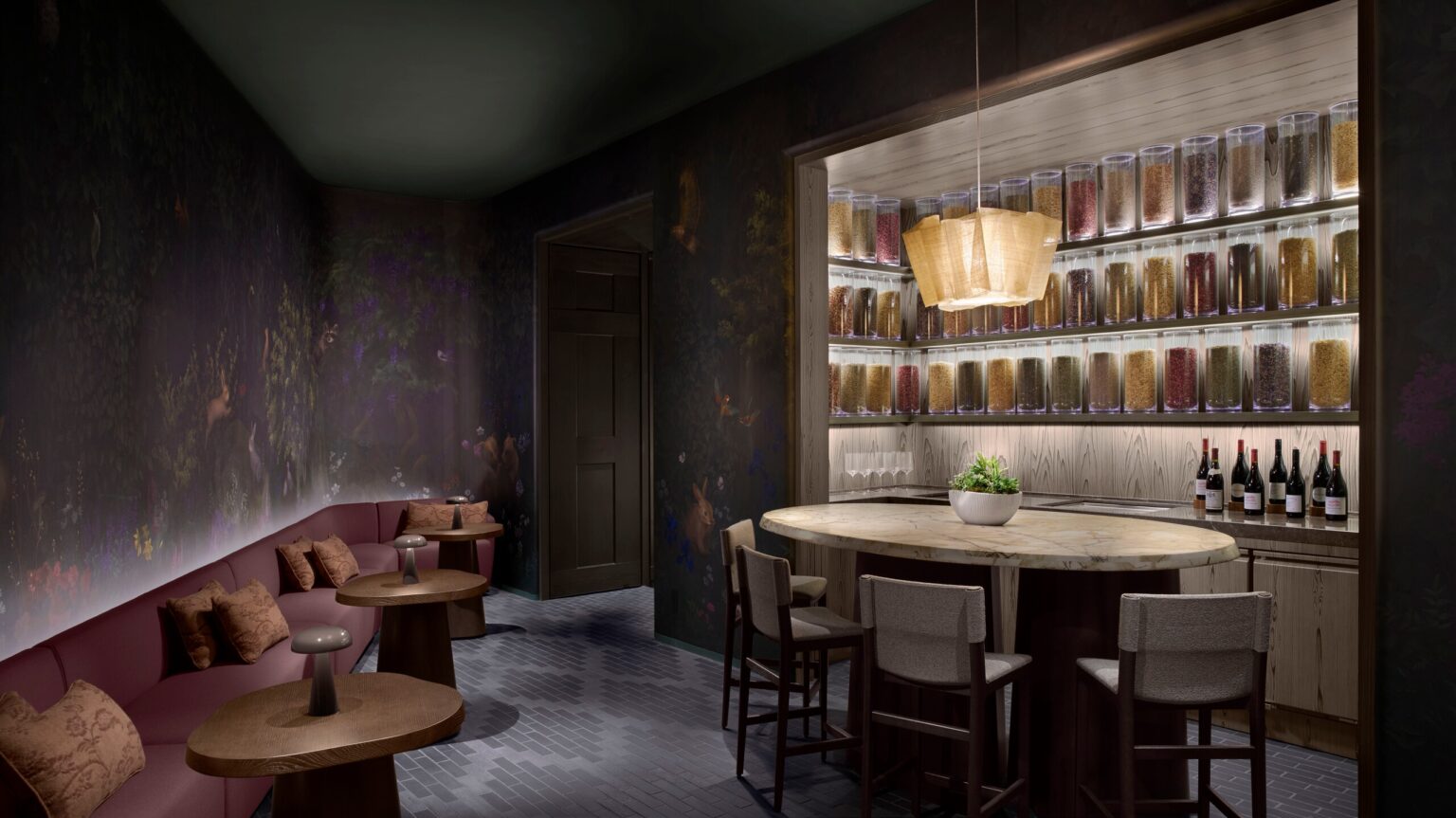
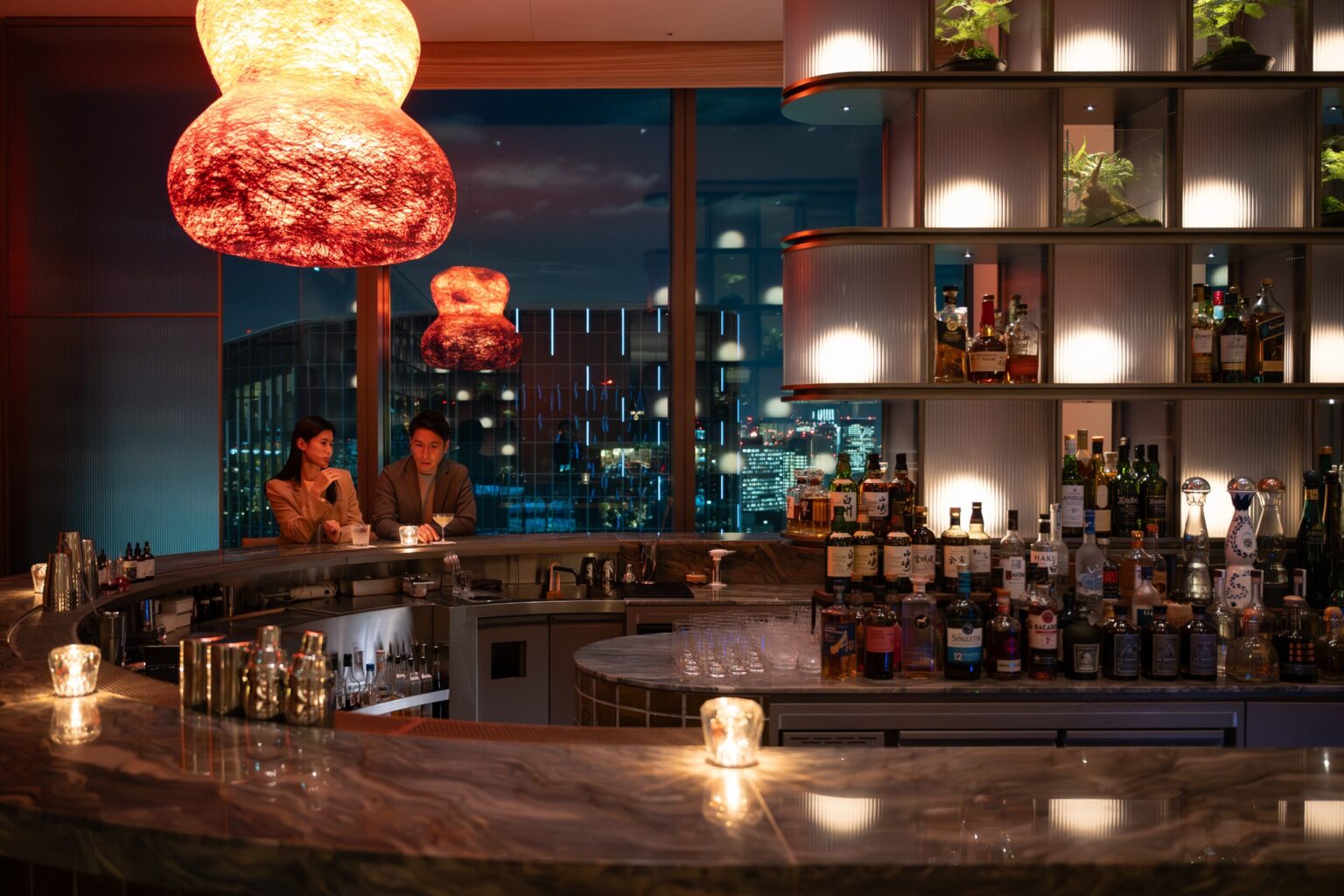
Then three accents, used sparingly, like salt. A deep violet in the corridors and the lounge rugs, inspired by the sky after sunset over Mount Fuji. An ochre velvet on the sofas. And a touch of red in the bars, like a glowing lantern. Copper warms it all, and even the air is designed, with a signature scent by Flamingo Estate.
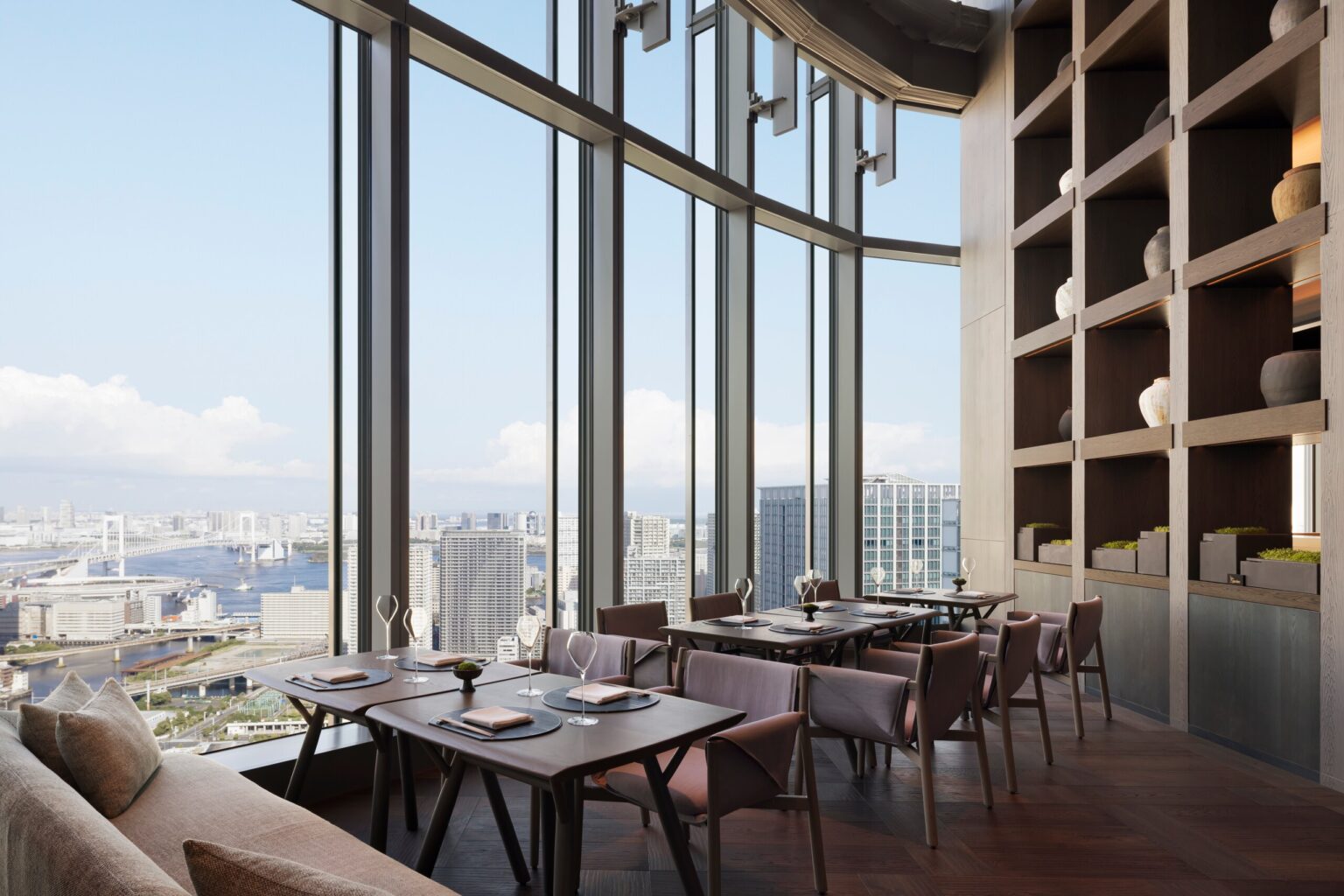
Some spaces are deliberately dark and intimate, like the forest that once covered the hill. Others open wide to the bay, Tokyo Tower and, on a clear day, Mount Fuji. Walking from one to the other is the whole experience.
As a designer, this is the lesson I keep: light is not everything. Shadow matters just as much.
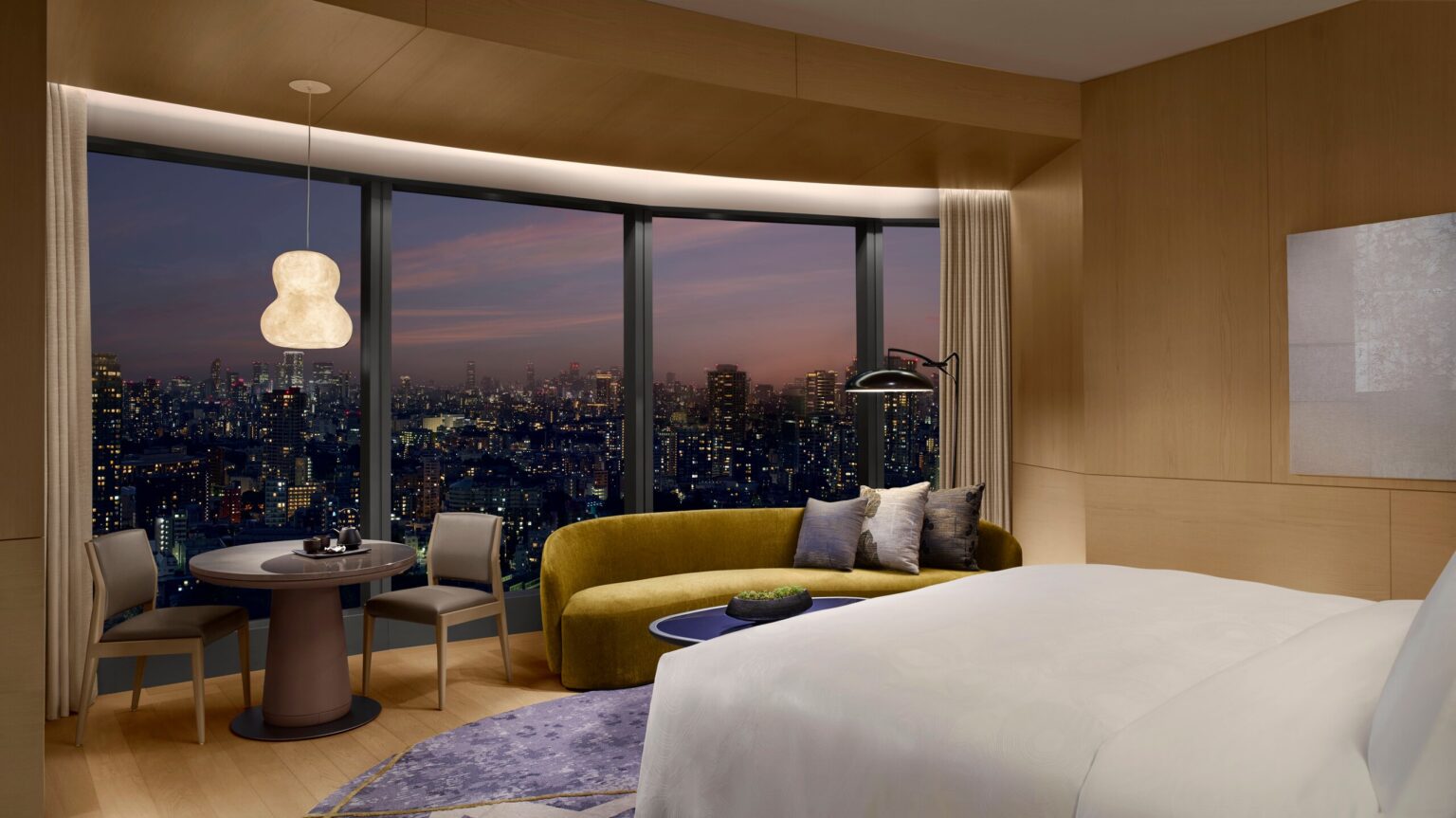
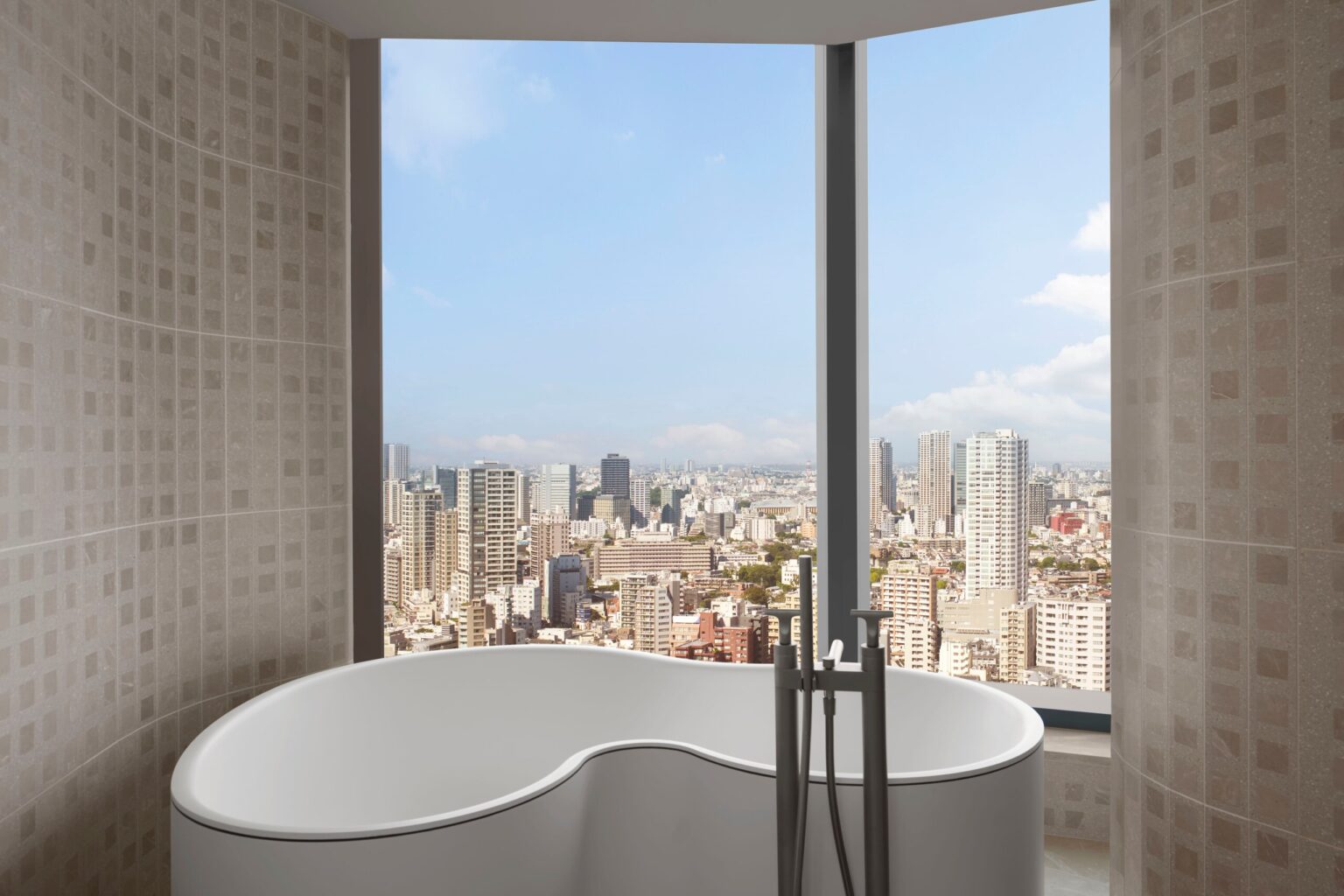
The 200 rooms and suites are built around the window. Glass runs from floor to ceiling, so the city becomes the artwork. Inside, it feels like a garden after rain: pale oak, linen, plaster, and one ochre sofa curved like a river stone. In the suites, a sculpted bathtub faces the skyline. A nightcap, with a view.
The Mindful Rooms, the first for the brand in Asia, share a floor with the spa. No front desk, no small talk. Just your robe, and the way to your treatment.
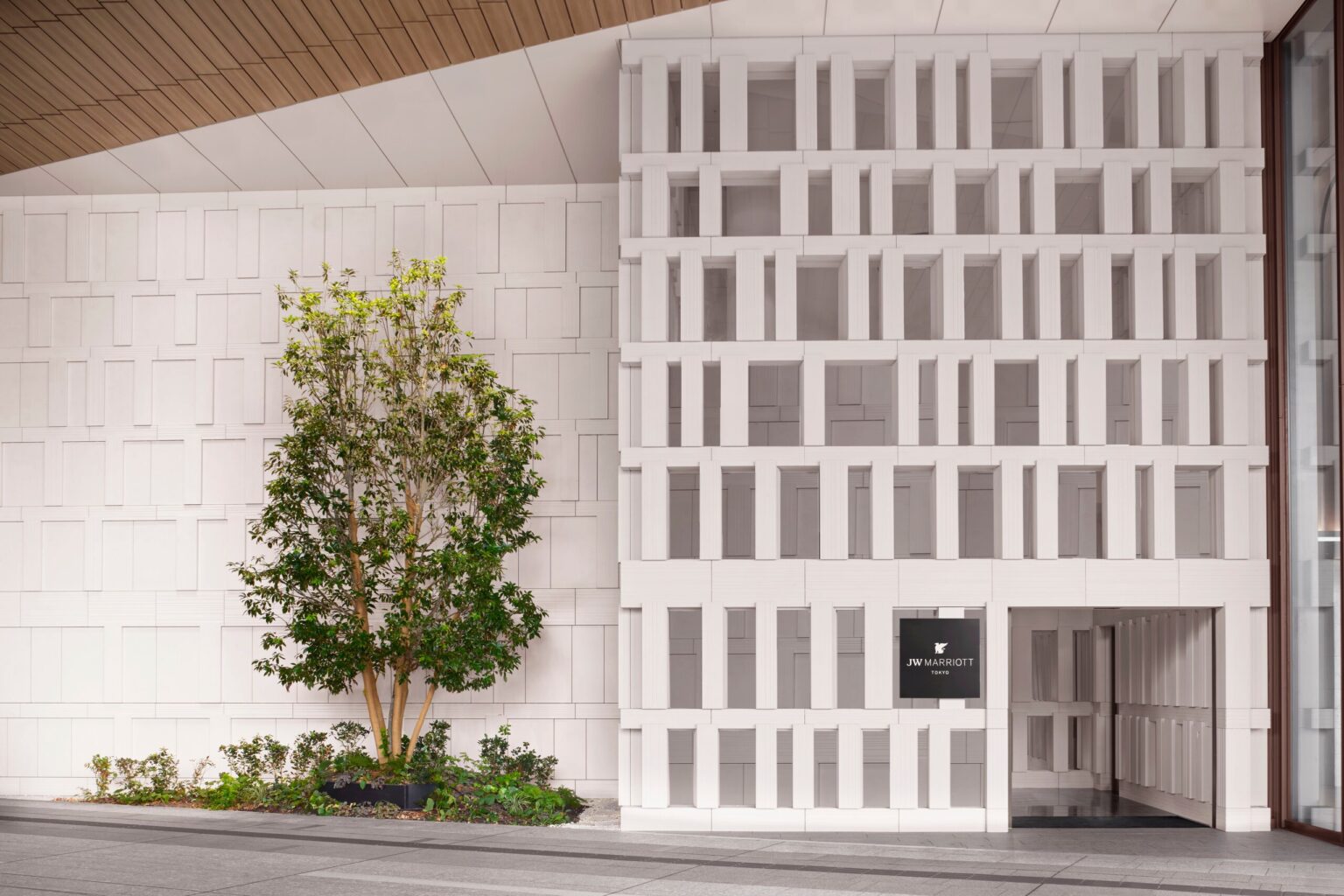
A mirrored Mount Fuji and Zen rocks greet you at street level. Upstairs, reception curves under clouds inspired by Kamakura-bori carving, with photographs by Sho Makishima.
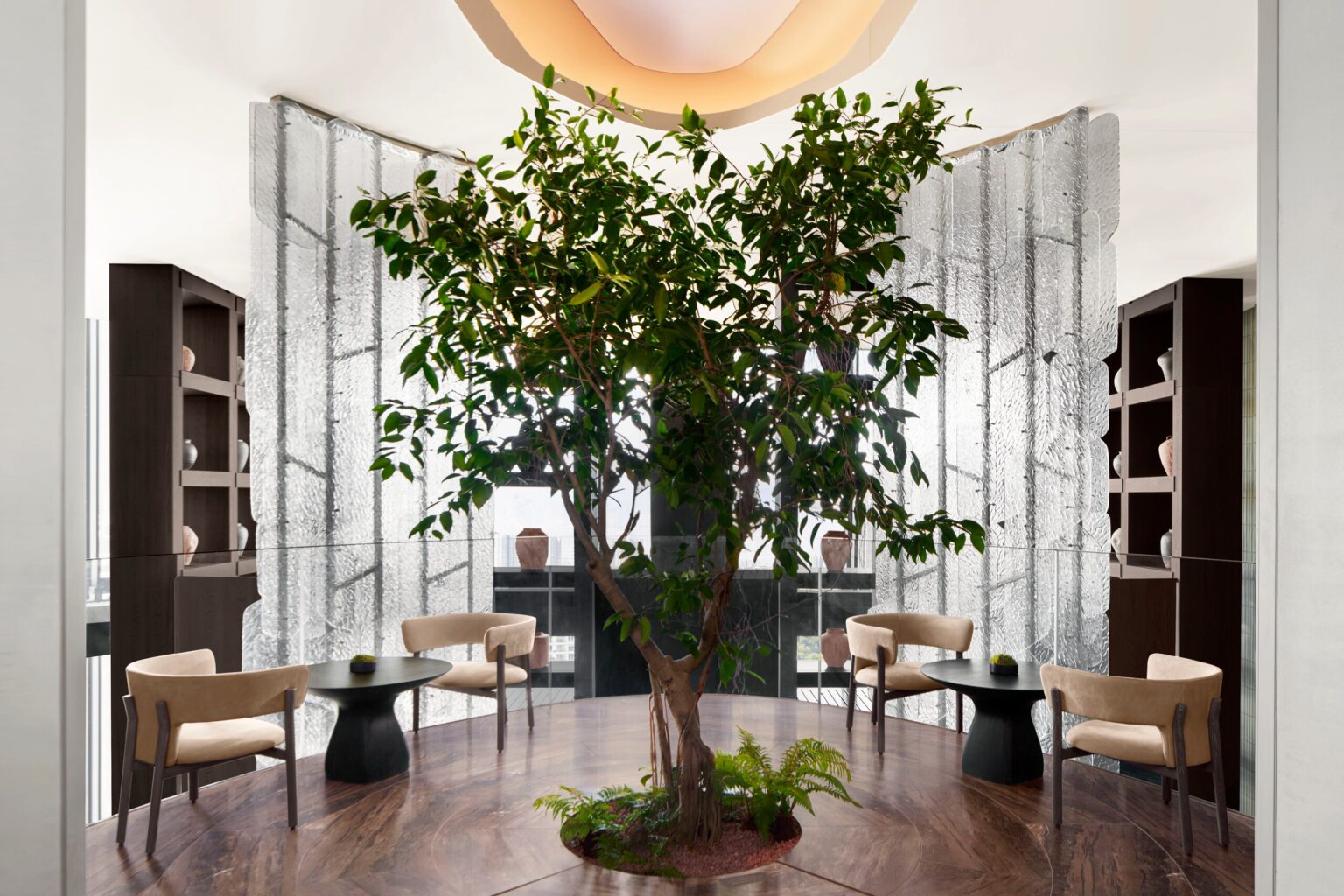
In the Lobby Lounge, the Tree House by the Czech glassmaker Lasvit spreads glass leaves over the room, and ceramics by Tomonari Hashimoto give every corner a hand.
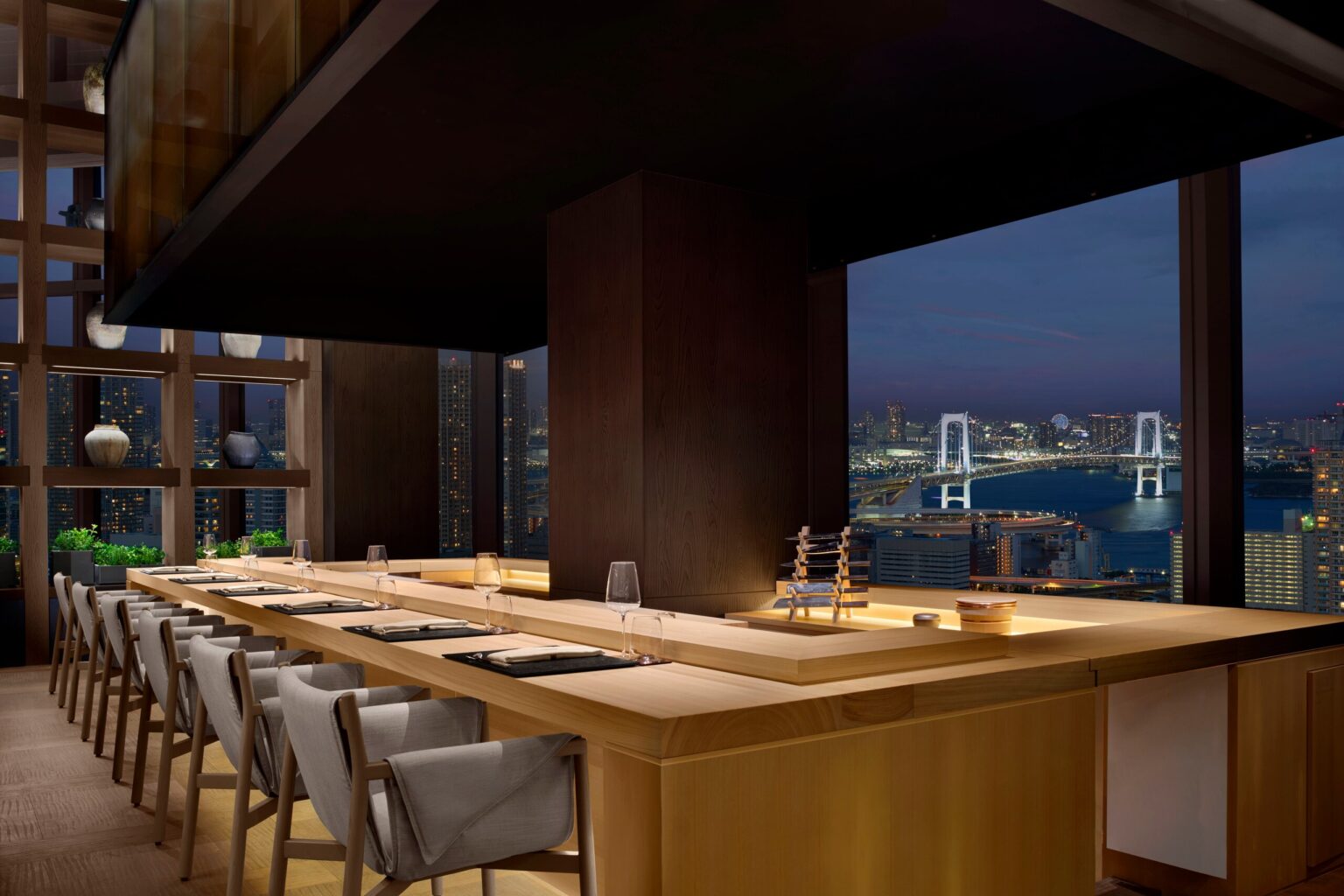
Kakō serves Japanese classics, from bento breakfasts to sake from every prefecture. Saki is an intimate modern kappo counter. Sefino looks to the southern Mediterranean, behind a wine cellar passage, and Le Cres bakes croissants worth the elevator ride.
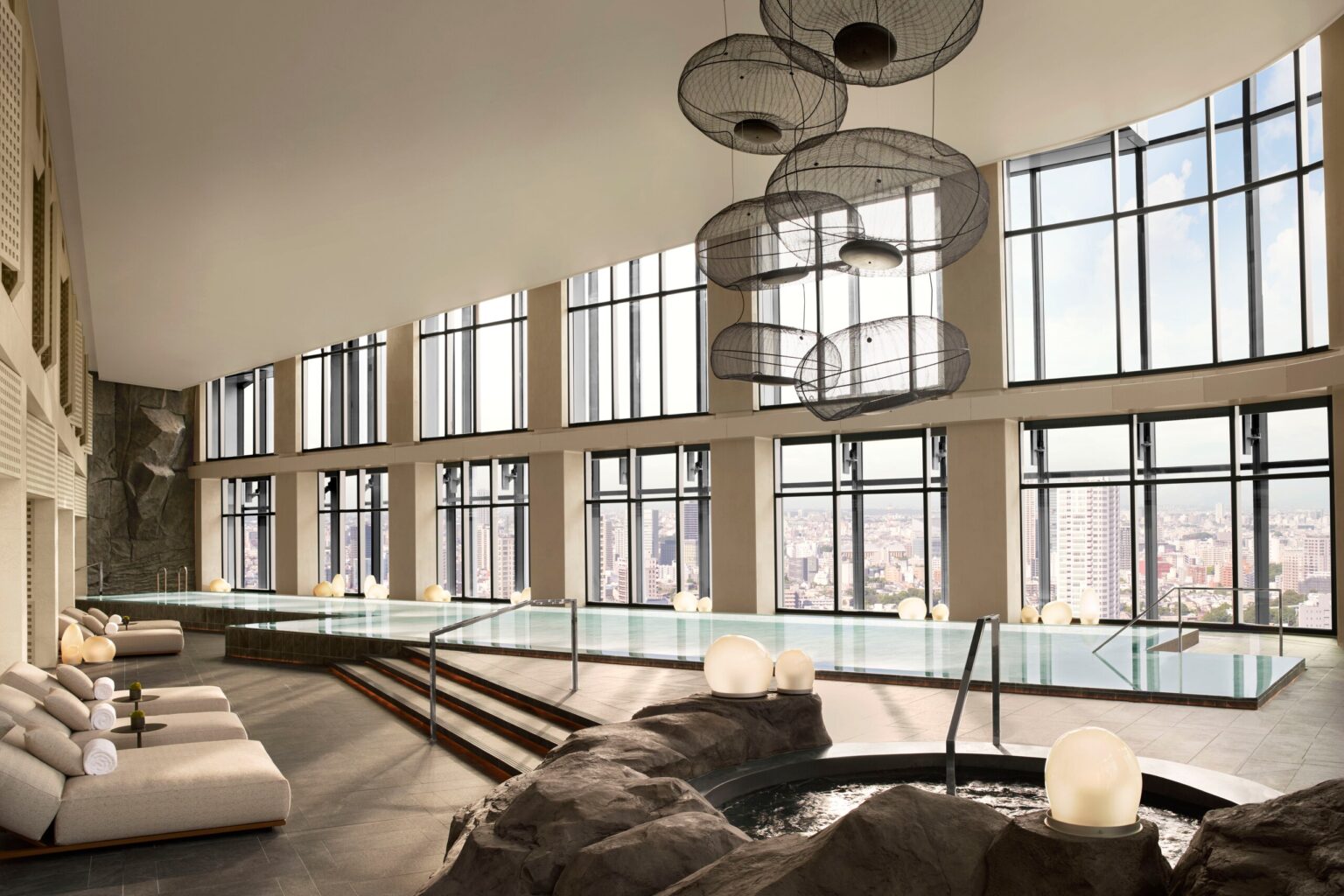
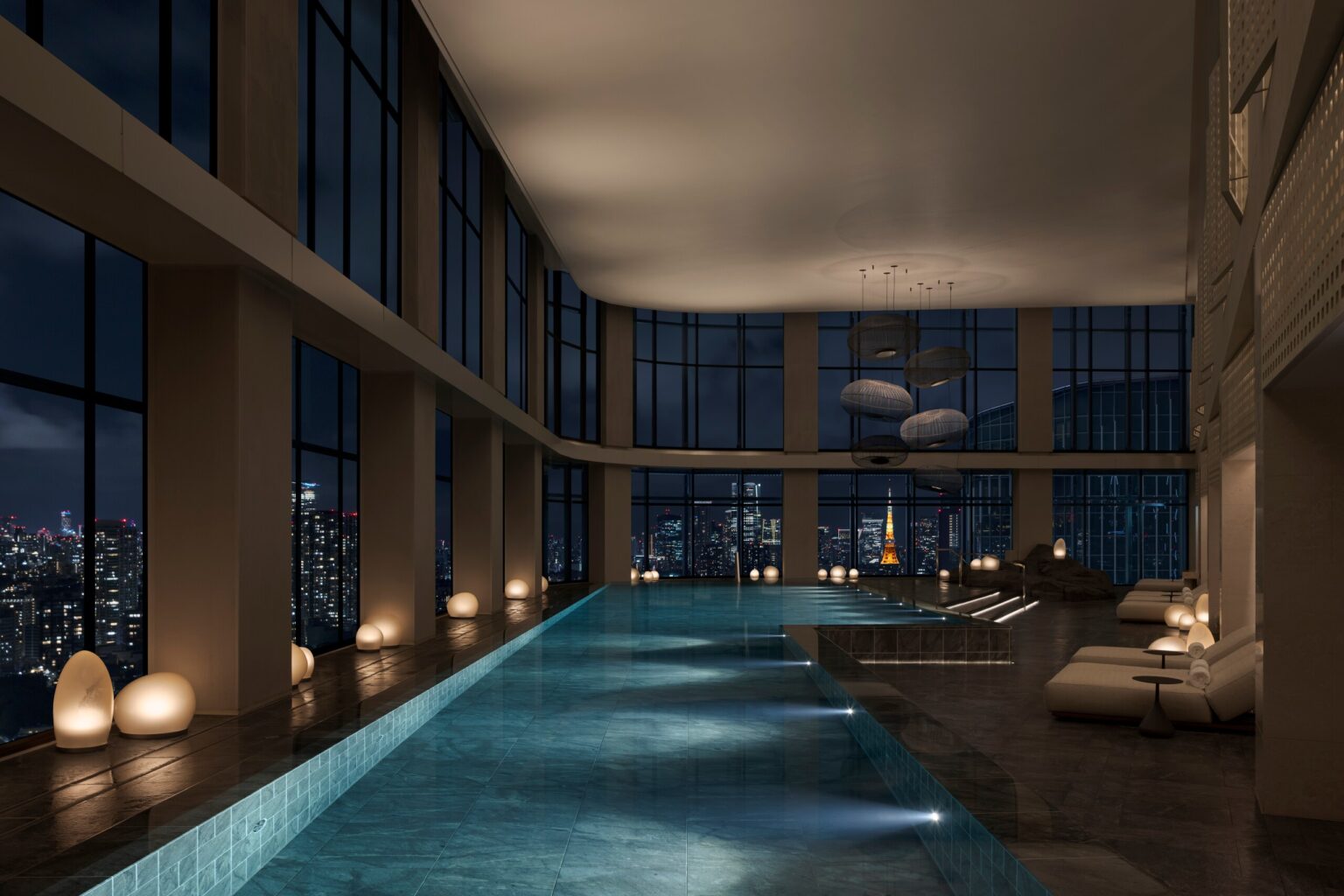
The pool, on the 28th floor, has a quarry-like stone wall, rocks and soft light around the water. A modern onsen in the sky. If I had to choose one room, it would be this one.
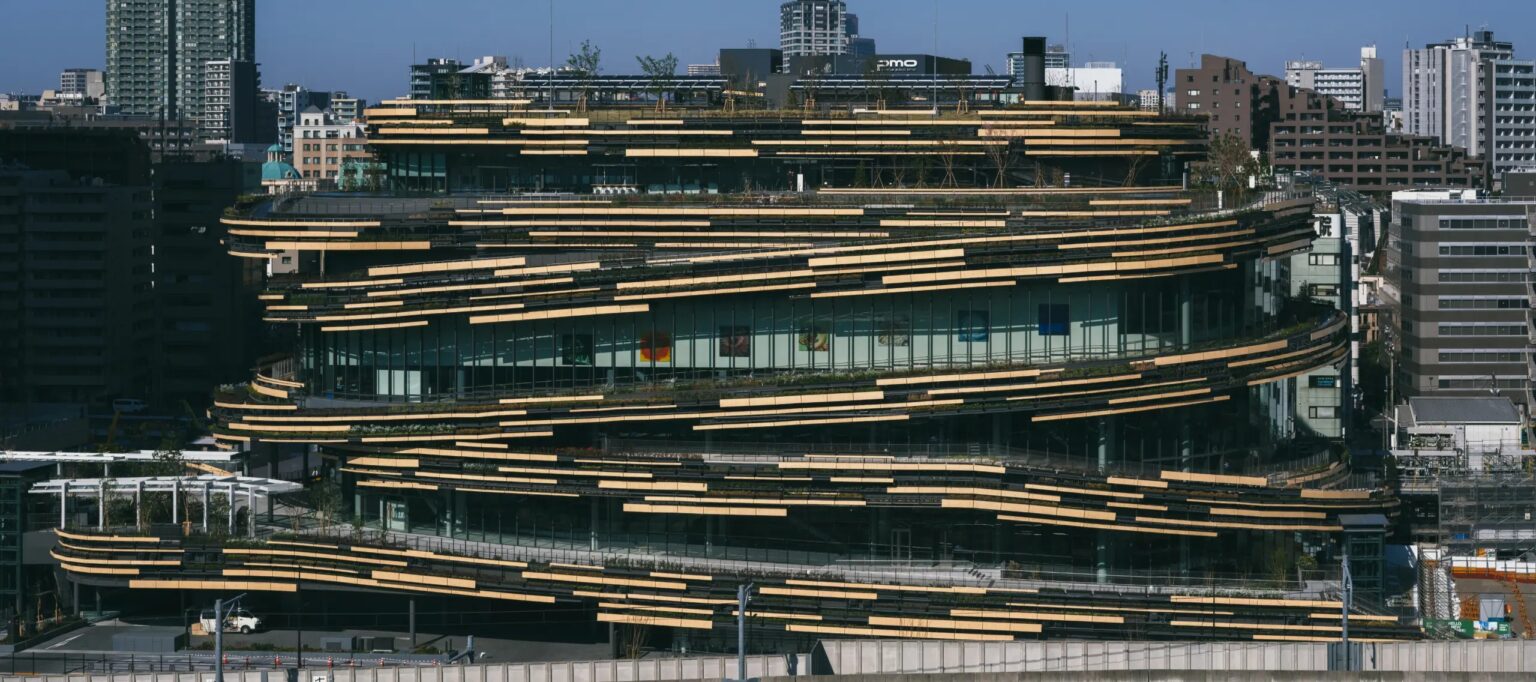
MoN Takanawa. Five minutes from the hotel, MoN Takanawa: The Museum of Narratives opened on March 28, 2026. Kengo Kuma wrapped it in a spiral of wood and gardens. Inside, exhibitions, a full-stage theater and a hall of 100 tatami mats. Outside, terraces for a foot bath and moon viewing. Book a timed ticket.
Luftbaum. A botanical garden 150 meters above the city, on the 28th floor of NEWoMan Takanawa, with more than 500 plants and a hundred-year-old banyan tree.
Sengakuji. A short walk away, the temple of the 47 ronin, for a dose of old Tokyo.
Loops. The café inside Luftbaum, with coffee by Fuglen.
Kappo Butai. On the 29th floor, Happoen serves Edo-style cuisine at the counter. Ask for a seat facing the chef.
La Maison du Chocolat. The brand’s first concept café, styled like a Parisian apartment. Chocolate afternoon tea, and yes, it counts as culture.
Bunkitsu Tokyo. A bookstore with more than 100,000 titles and quiet reading lounges.
CFCL and Beams Cultuart. Sculptural knitwear, then art, vinyl and a milk tea stand in one room.
Nicolai Bergmann. Flowers for your room, on the way back.
I kept taking notes. Studio Joelle designs restaurants, bars and hotels, a discipline I love: a room where people eat and talk has to hold them for hours, in every light.
Here is what I take home. Neutrals are never boring when the textures do the talking: rough stone, raw wood, linen, a little dark metal. One accent color is enough, used like salt. Art should come from local hands, a ceramic, a glaze, a glass. And shadow is a material, as important as light.
Planning a restaurant, a bar or a hotel? Studio Joelle would love to hear about it.
Photos: JW Marriott Hotel Tokyo, MoN Takanawa
Hotel: JW Marriott Hotel Tokyo
Interiors: Yabu Pushelberg
Architecture: Kengo Kuma & Associates
Restaurants: Kakō, Saki, Sefino, Le Cres
Spa: Spa by JW
Museum: MoN Takanawa
Mood board: Studio Joelle

Joelle Maslaton Oster
Founder of Joelle Magazine and Studio Joelle, an interior design practice in New York. She writes on art, design and the places in between.
BOOK WITH JOELLE
Read our Privacy PolicyAlso on Substack: Where Is Joelle?
This website uses cookies to improve your experience. We'll assume you're ok with this, but you can opt-out if you wish. Accept Read More