

I went for Pollock. I stayed for Krasner. At The Met, I stood in front of Autumn Rhythm, almost 17 feet of black, white and sand, poured on the floor of a Long Island barn in 1950. A few steps later, Lee Krasner’s The Seasons stopped me again. Nearly as wide, pink and green, unmistakably alive. One painting by him, one by her. Husband and wife, at the same scale, at last.
Krasner and Pollock: Past Continuous, on view at The Metropolitan Museum of Art from October 4, 2026, to January 31, 2027, gives the couple equal weight for the first time at The Met: more than 120 works, 74 by Krasner and 48 by Pollock, from over 80 lenders. So I did what a designer does. I paired them, side by side.
She was born in Brooklyn in 1908, to Jewish parents from what is now Ukraine. She trained the European way, at the Cooper Union, the National Academy of Design and, from 1937, with Hans Hofmann. He was born in Wyoming in 1912 and grew up near Los Angeles, fed on Mexican murals, Native American art, Picasso and Miró. Two tracks. One collision.
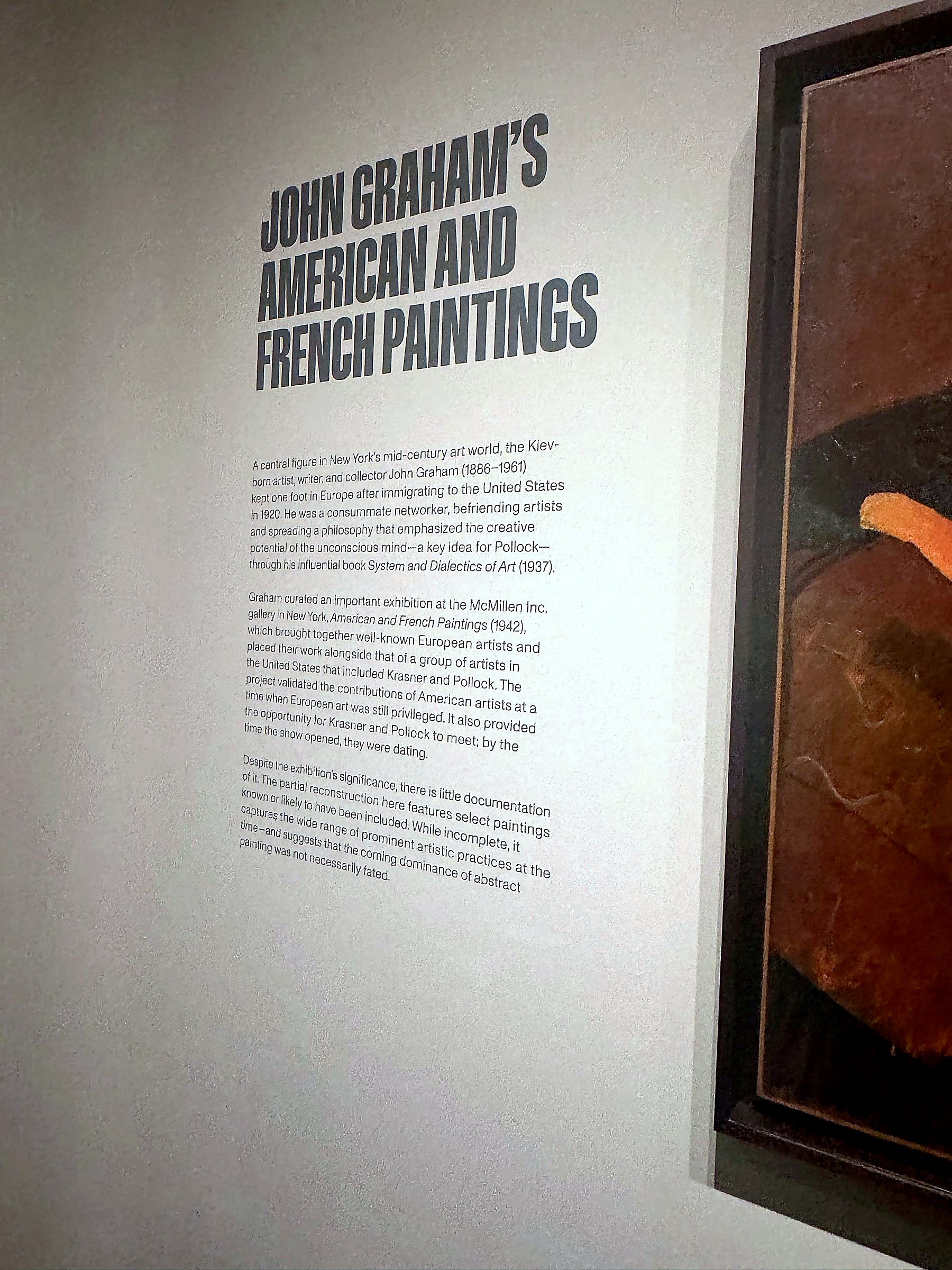
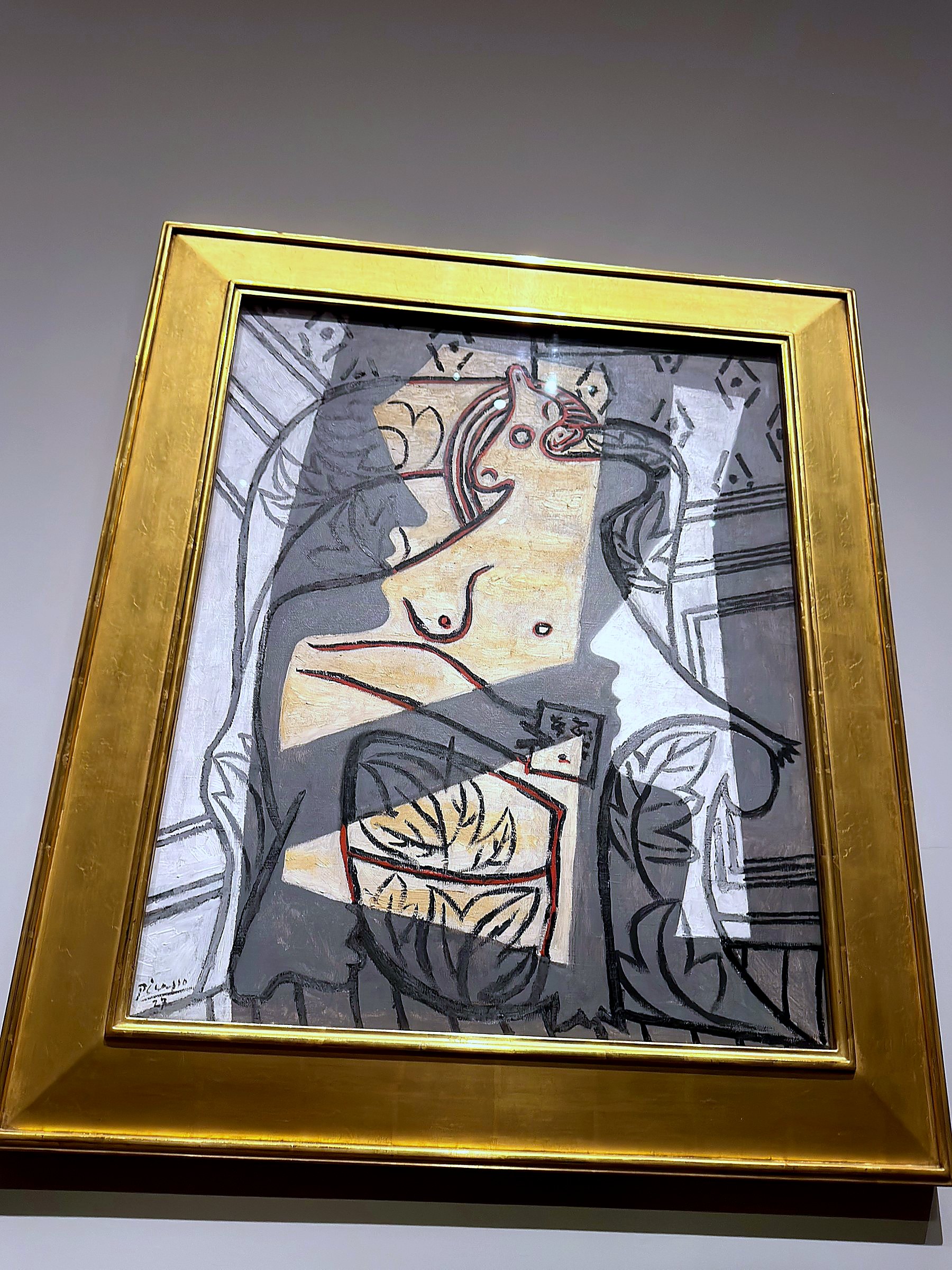
It came in 1942. The painter and collector John Graham hung both of them in American and French Paintings at the McMillen Inc. gallery in New York, next to Picasso and Matisse. They had met the year before. By opening night, the wall text tells us, they were dating. The Met rebuilds a part of that show, and the effect is delicious: the future of American art, still hanging politely next to Paris.
Look at them before the romance. Hers: crisp, cubist, Hofmann’s grid in full color. His: totems, myths, a private alphabet. Same city, same years, two languages.
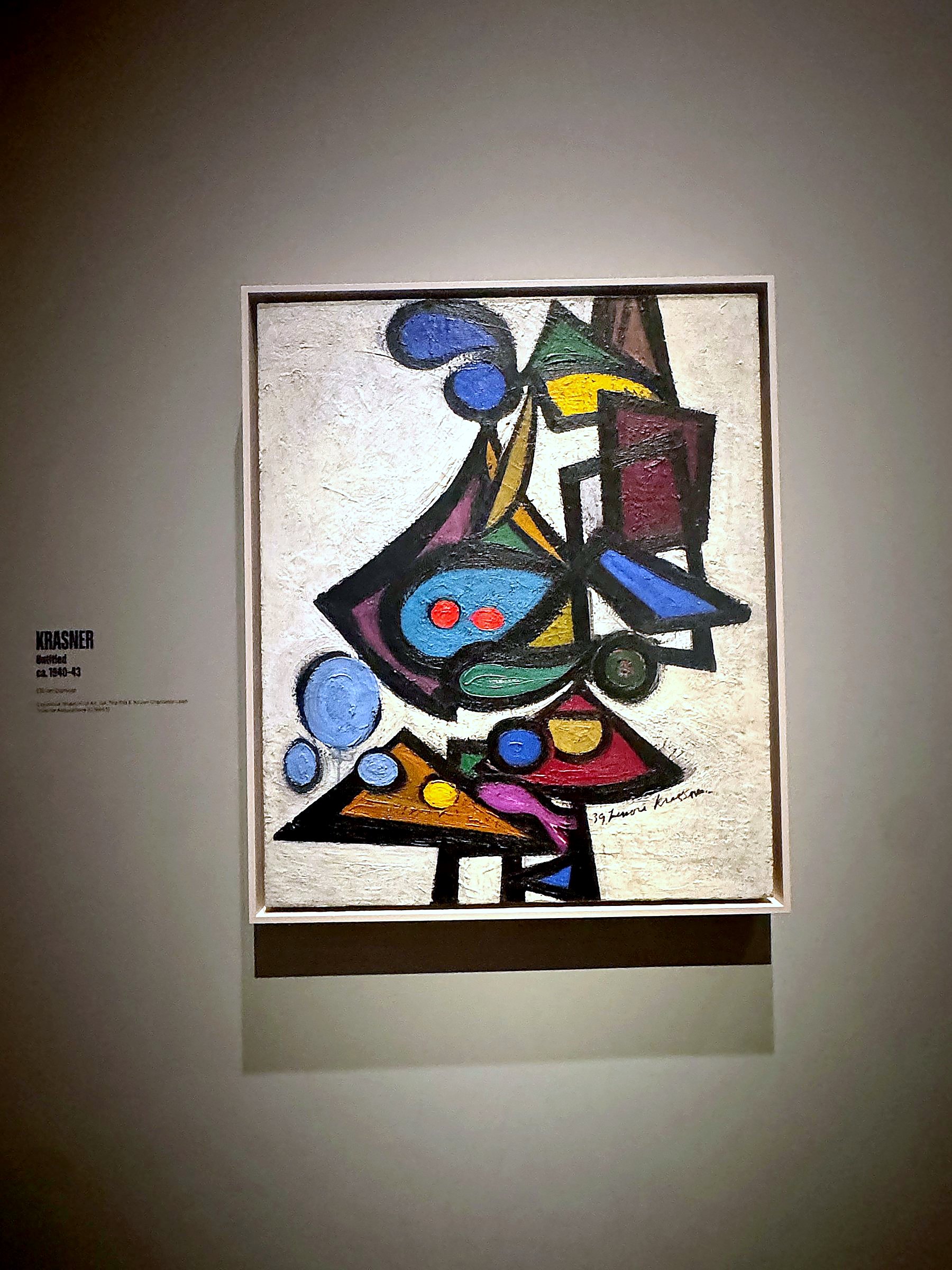
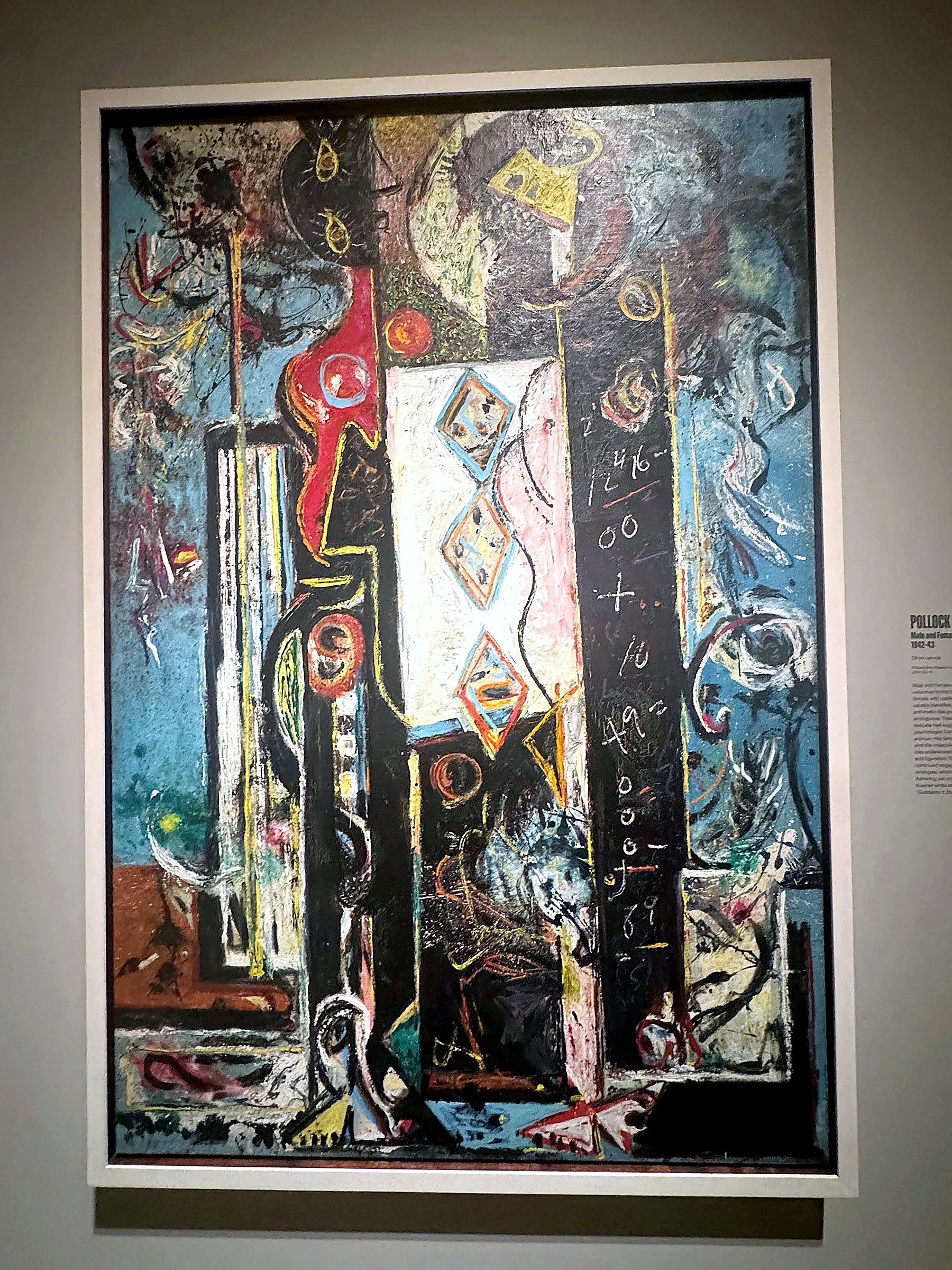
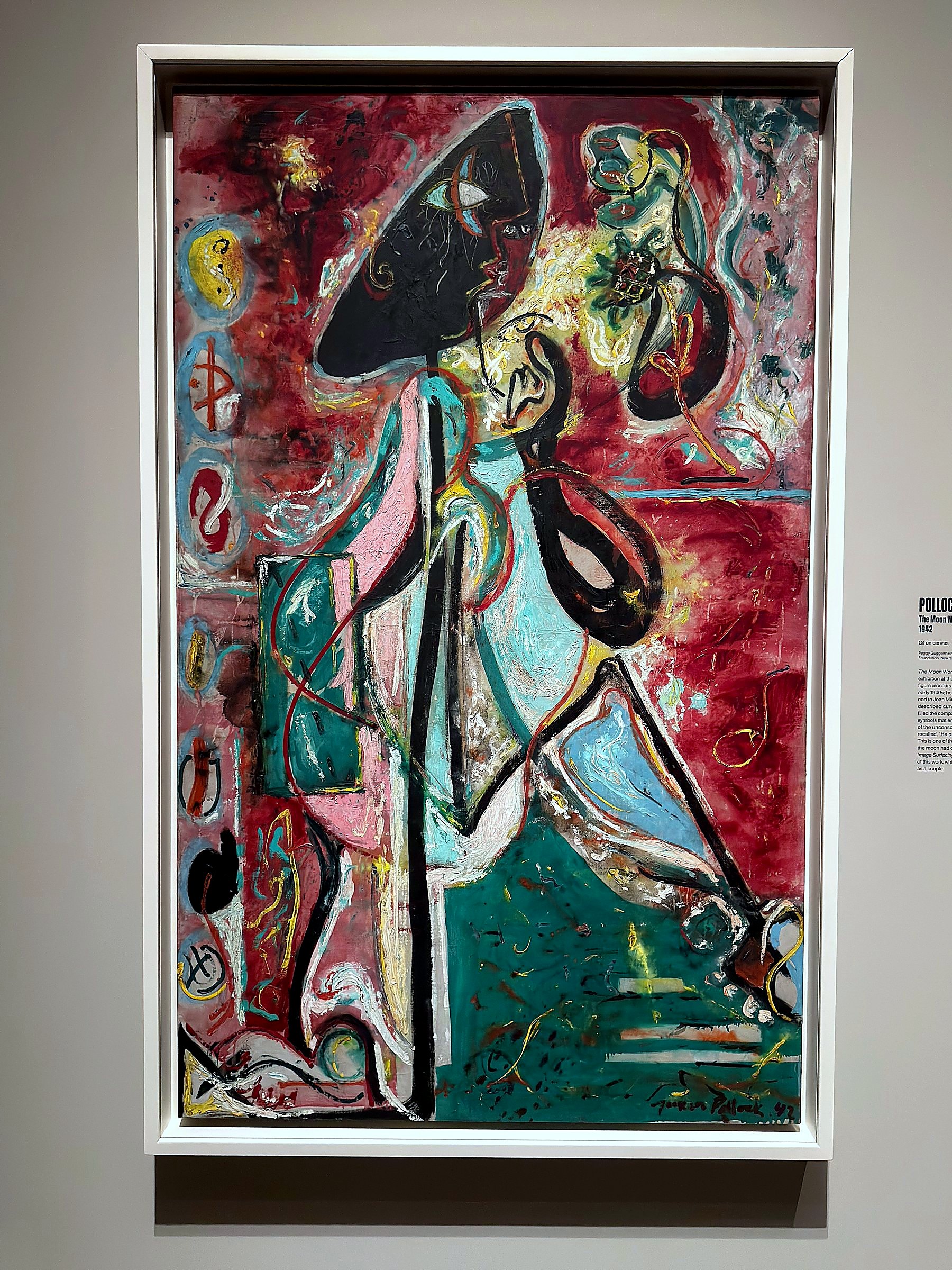
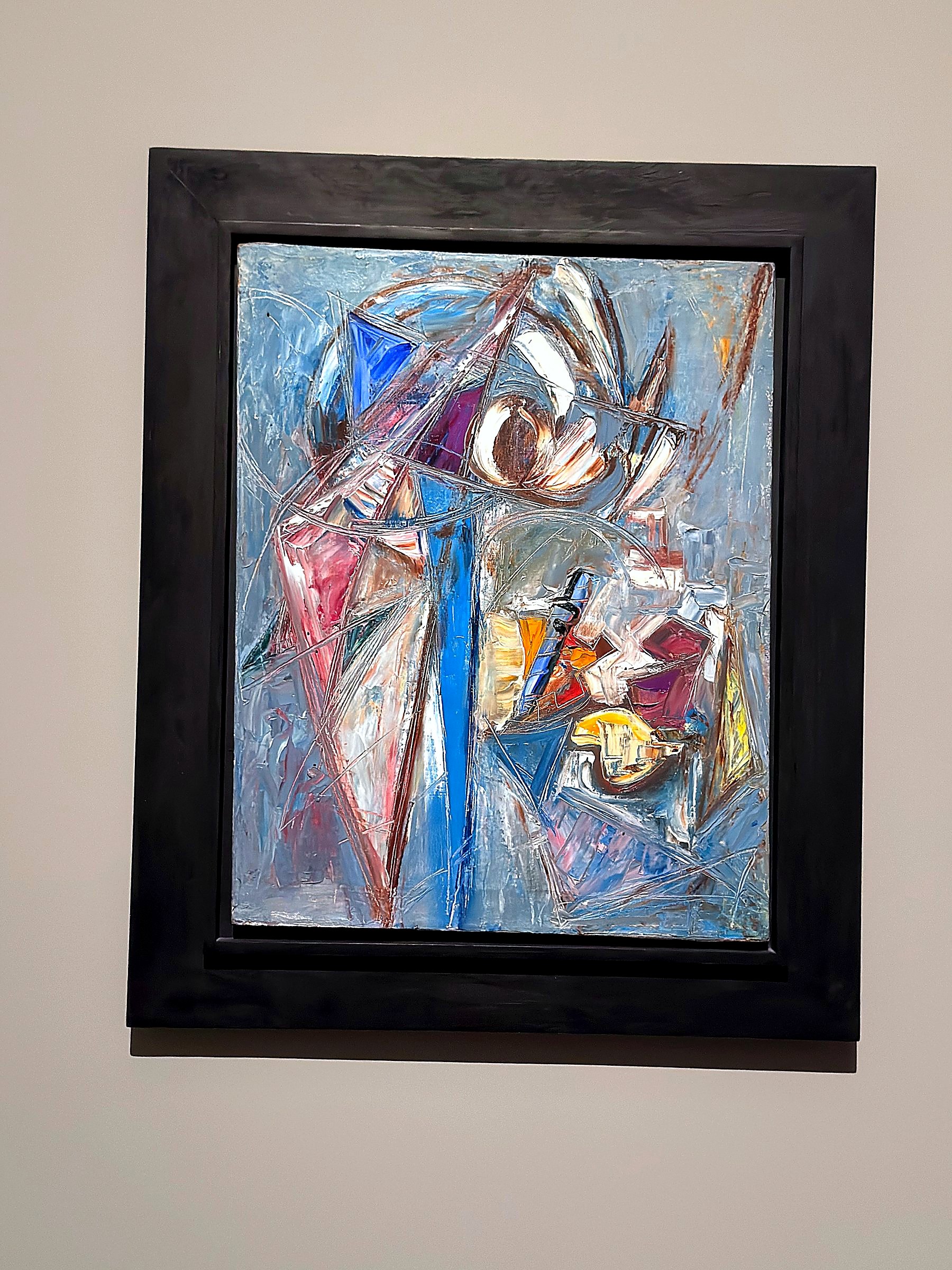
Pollock’s The Moon Woman, from 1942, is loud and mythic, a figure in red, green and black, on loan from the Peggy Guggenheim Collection. The curators set it in dialogue with Krasner’s Image Surfacing, from about 1945. His moon shouts. Her picture shimmers in blues and broken shards, as if the image is still deciding whether to come up for air.
By 1945 they had married and moved to Springs, a fishing village at the far end of Long Island. He took the barn. She painted first in the kitchen, then in a small bedroom upstairs. Same house, very different square footage.
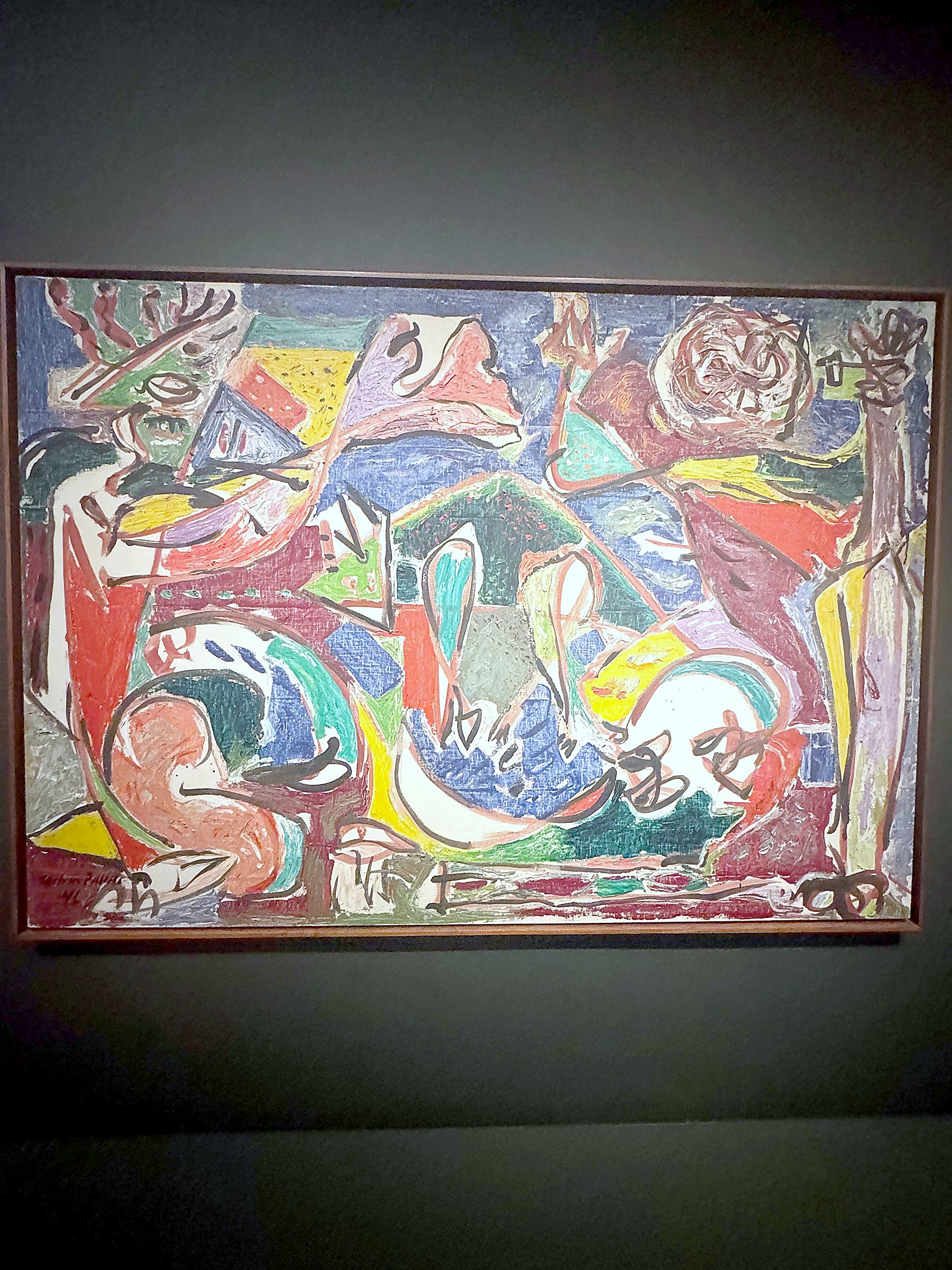
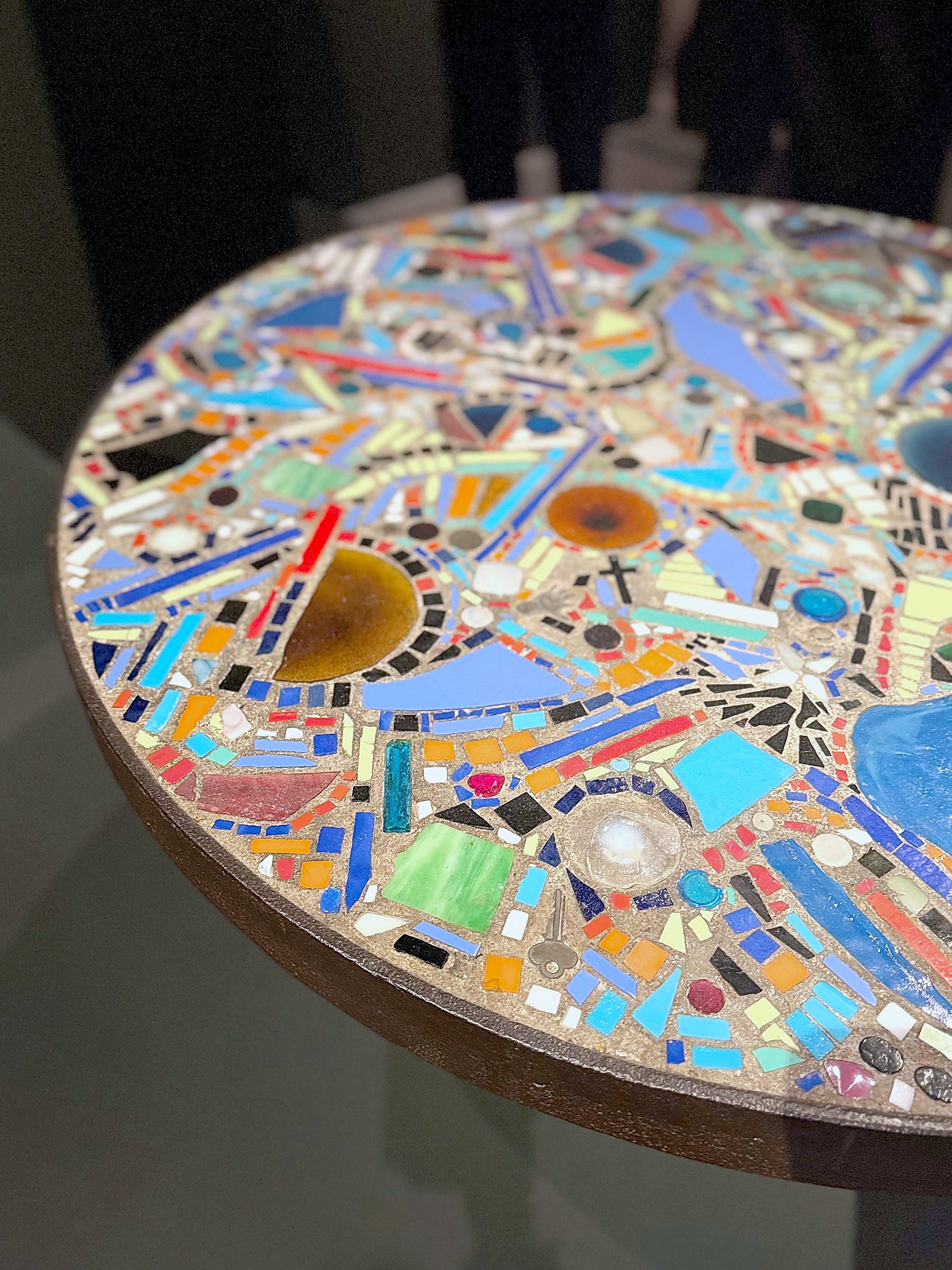
And yet. In those years her Little Images fill small canvases with dense, hieroglyph-like signs, while his 1946 canvases, like Eyes in the Heat, are thick, swirling, all-over. Two hands, both refusing the center. In 1947 she also made a mosaic table on an iron wagon wheel, set with broken glass, keys, coins, pebbles and ceramic. Domestic, witty, and very serious about color.
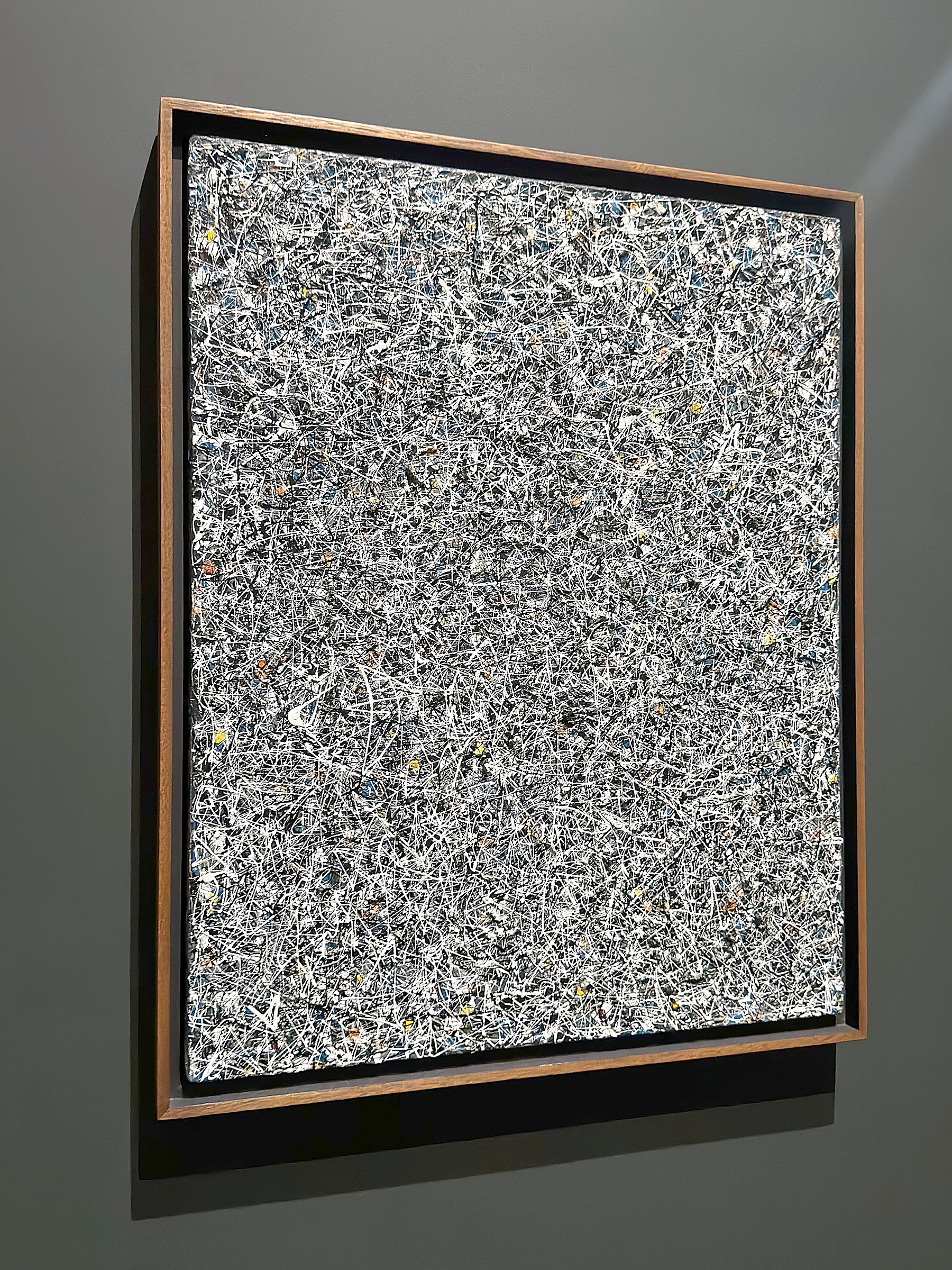
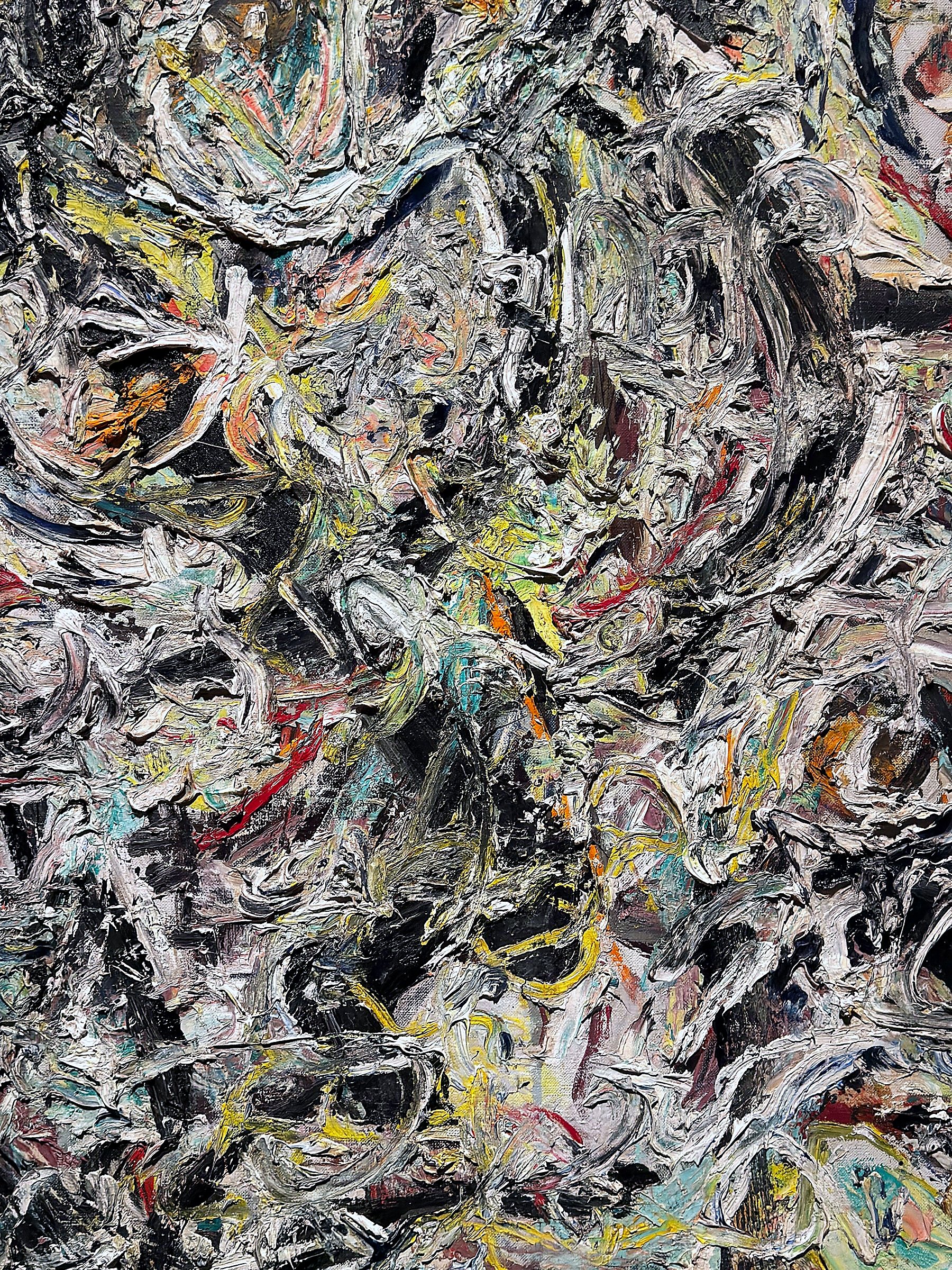
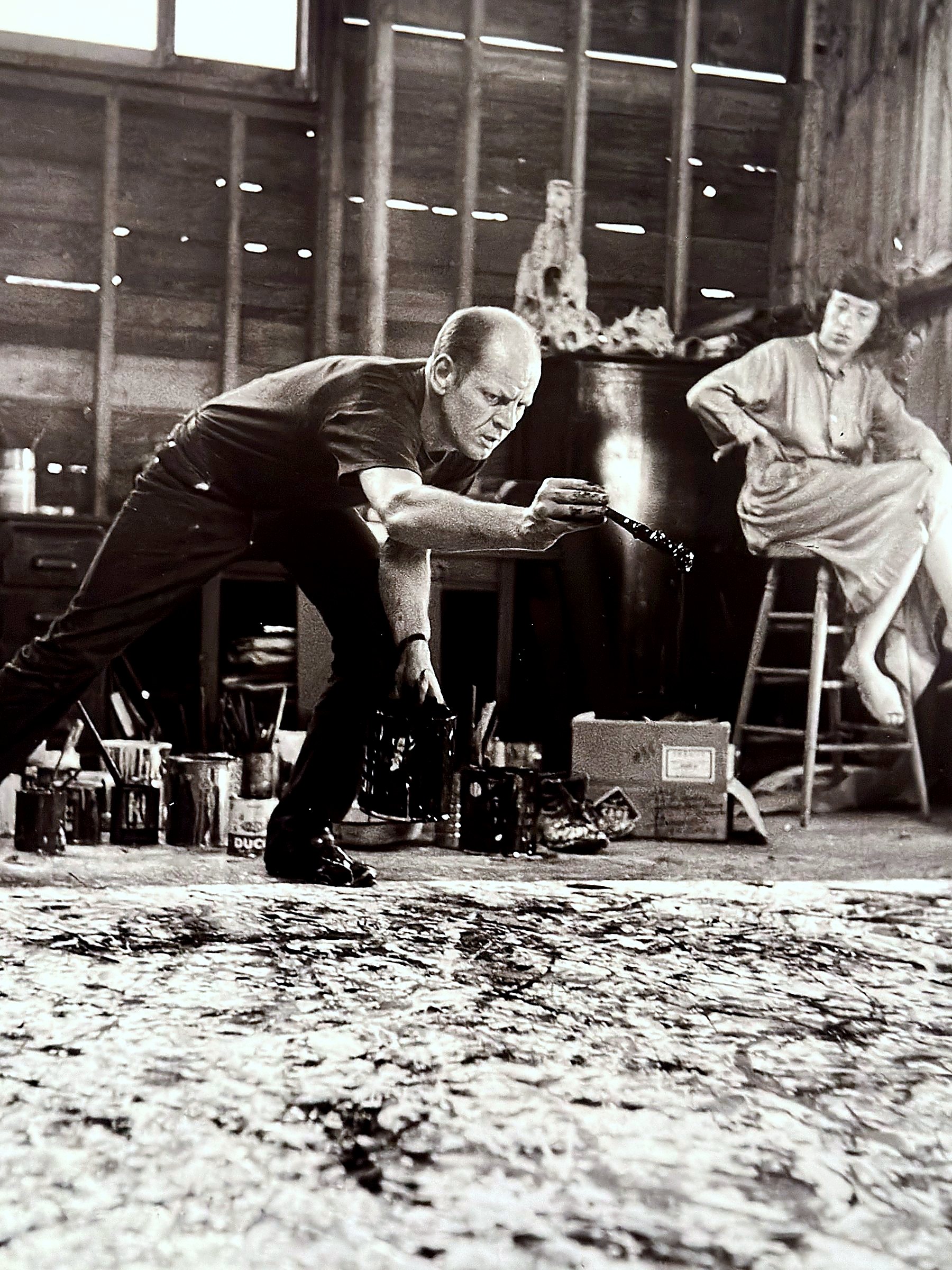
The barn had no insulation and no heat. In early 1950 it was simply too cold to paint. Then summer came, and autumn, and Pollock poured, dripped and stained the paintings that made his name, some of the largest he ever made. That season, the photographer Hans Namuth followed him around the canvas, brush and can in hand.
Up close, Autumn Rhythm is not chaos. It is choreography. After his death, Krasner helped bring it to The Met, where it has lived ever since. Here it leaves its usual wall for a freestanding one, against slate gray, and the pale canvas almost floats.

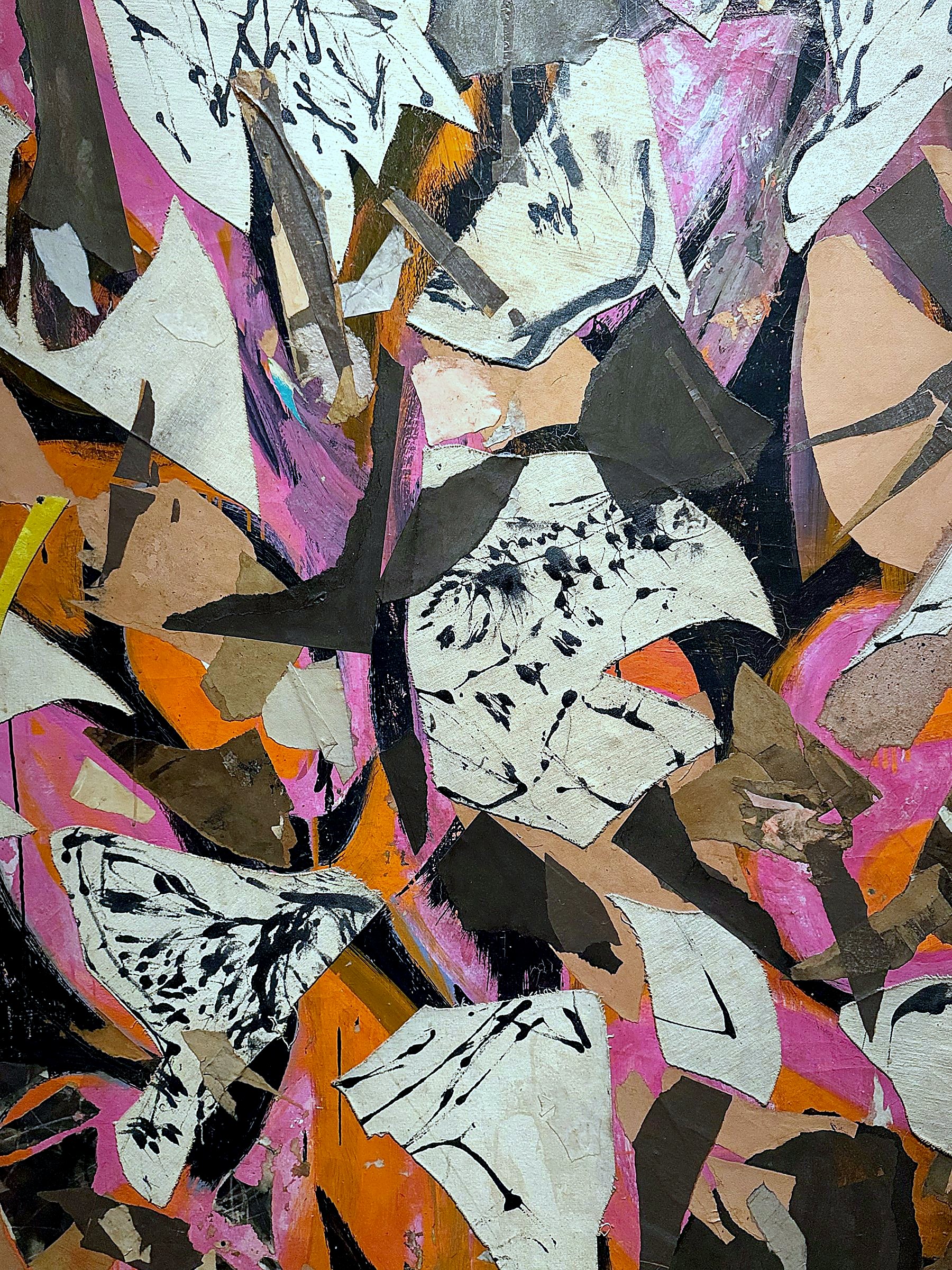
In 1953, Krasner picked up the scissors. She cut up her own unsold paintings and, in a few cases, drawings Pollock had thrown away. In Bald Eagle, from 1955, his black-and-white lines sit inside her hot pink and orange, and a cut shape at the center opens like a beak.
The label offers three readings: vampiric, resourceful, phoenix-like. I read it as editing. Nothing is wasted, everything is reconsidered. Not a duet, the wall text insists, but a dialogue, with tension. Krasner said she would destroy a work in some way “and come up with a new thing.”
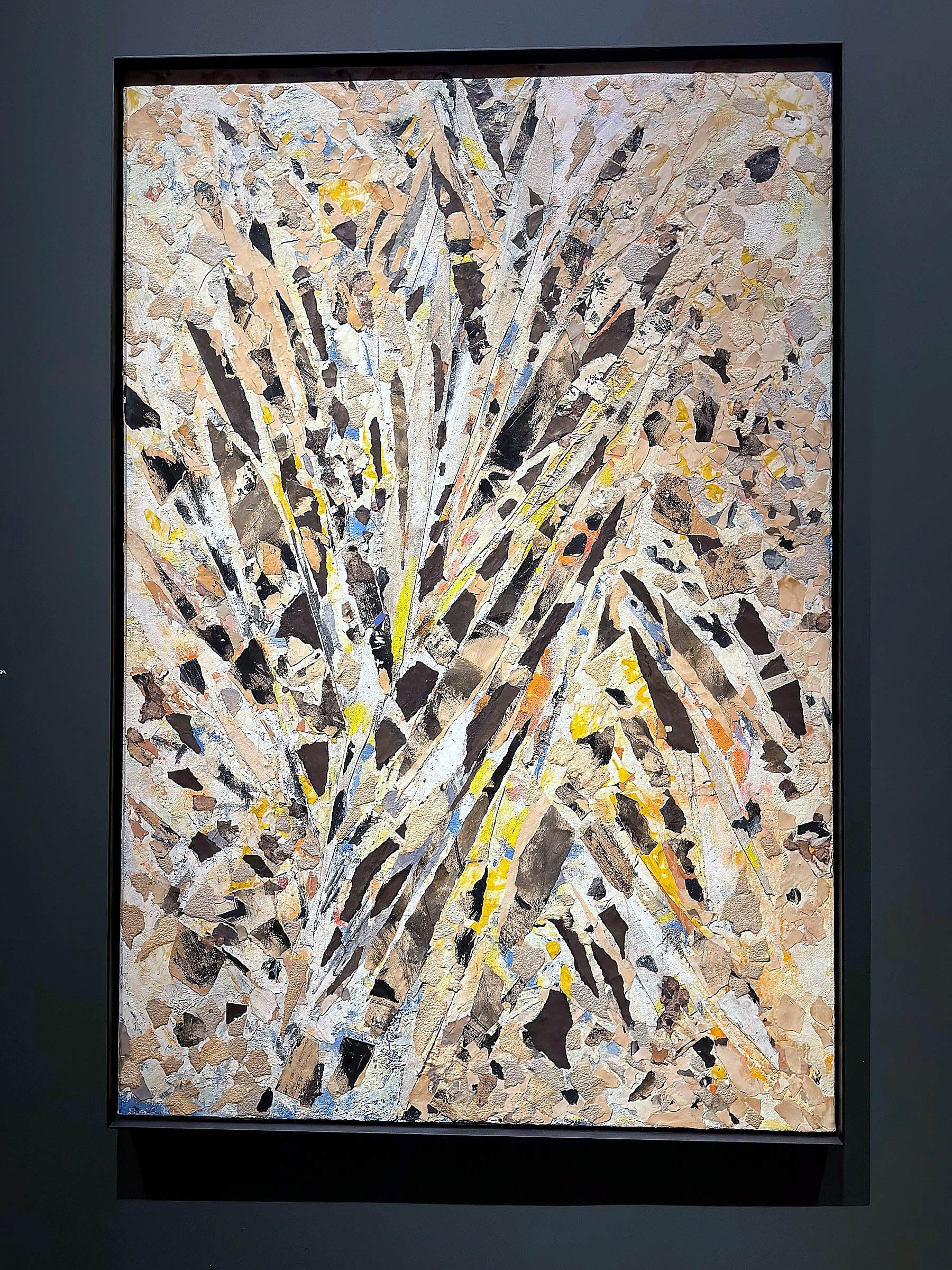
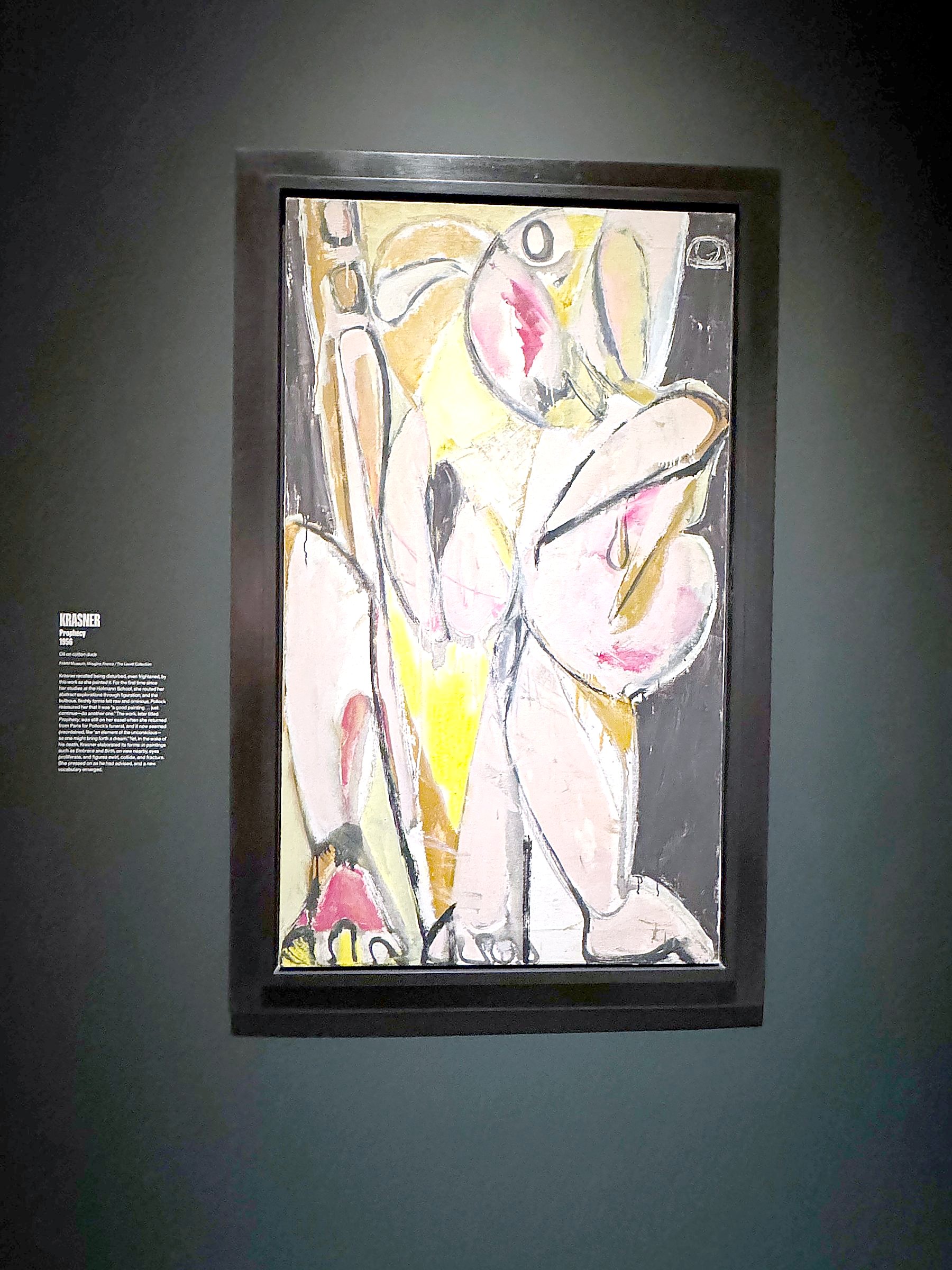
In 1956, a painting on Krasner’s easel frightened her. Fleshy, raw, figurative. Pollock looked at it and told her it was good, and to keep going. That summer she traveled to Paris. On August 11, Pollock died in a car crash near their home. She came back for the funeral, and the painting, later titled Prophecy, was still waiting on the easel.
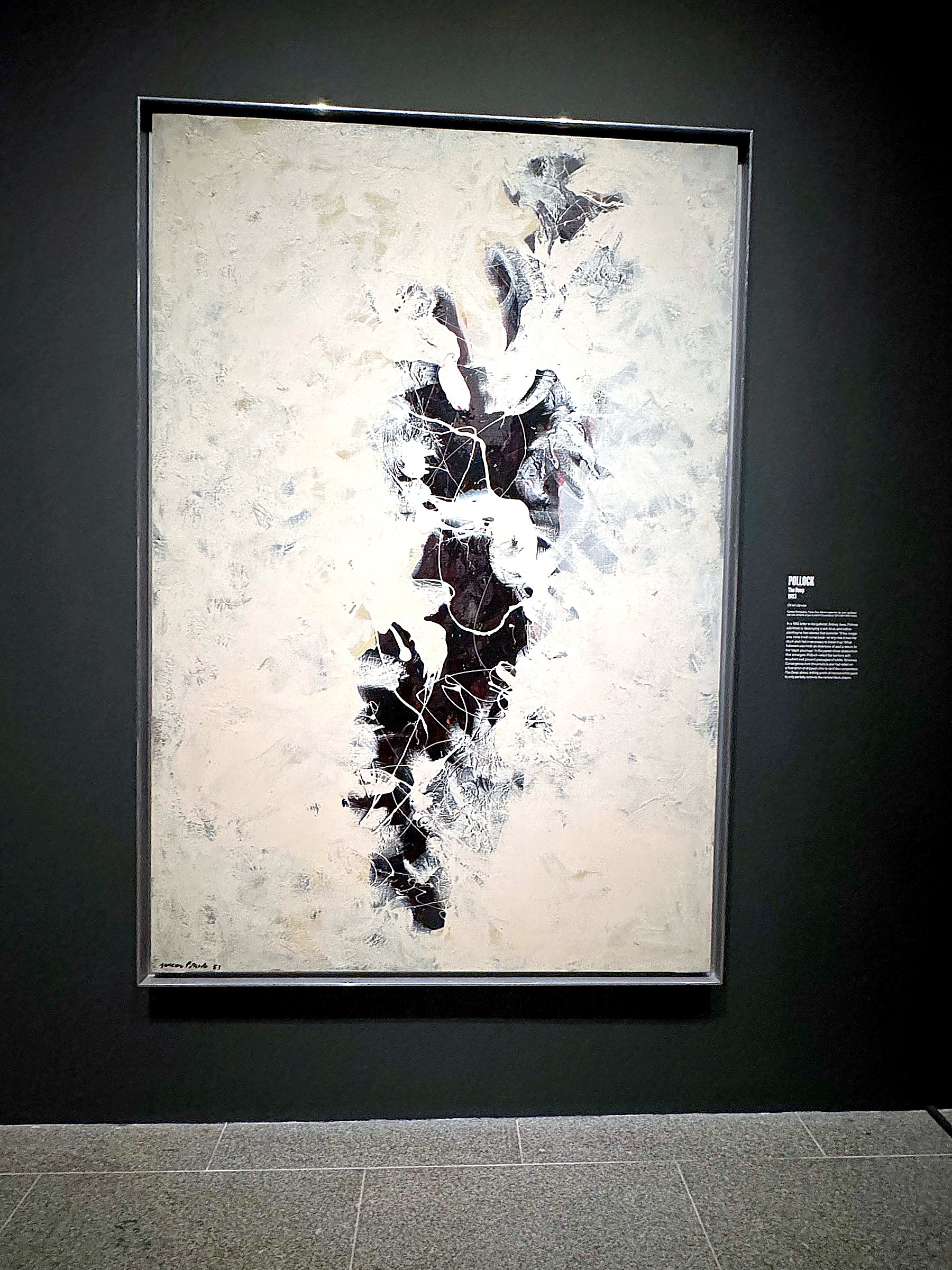
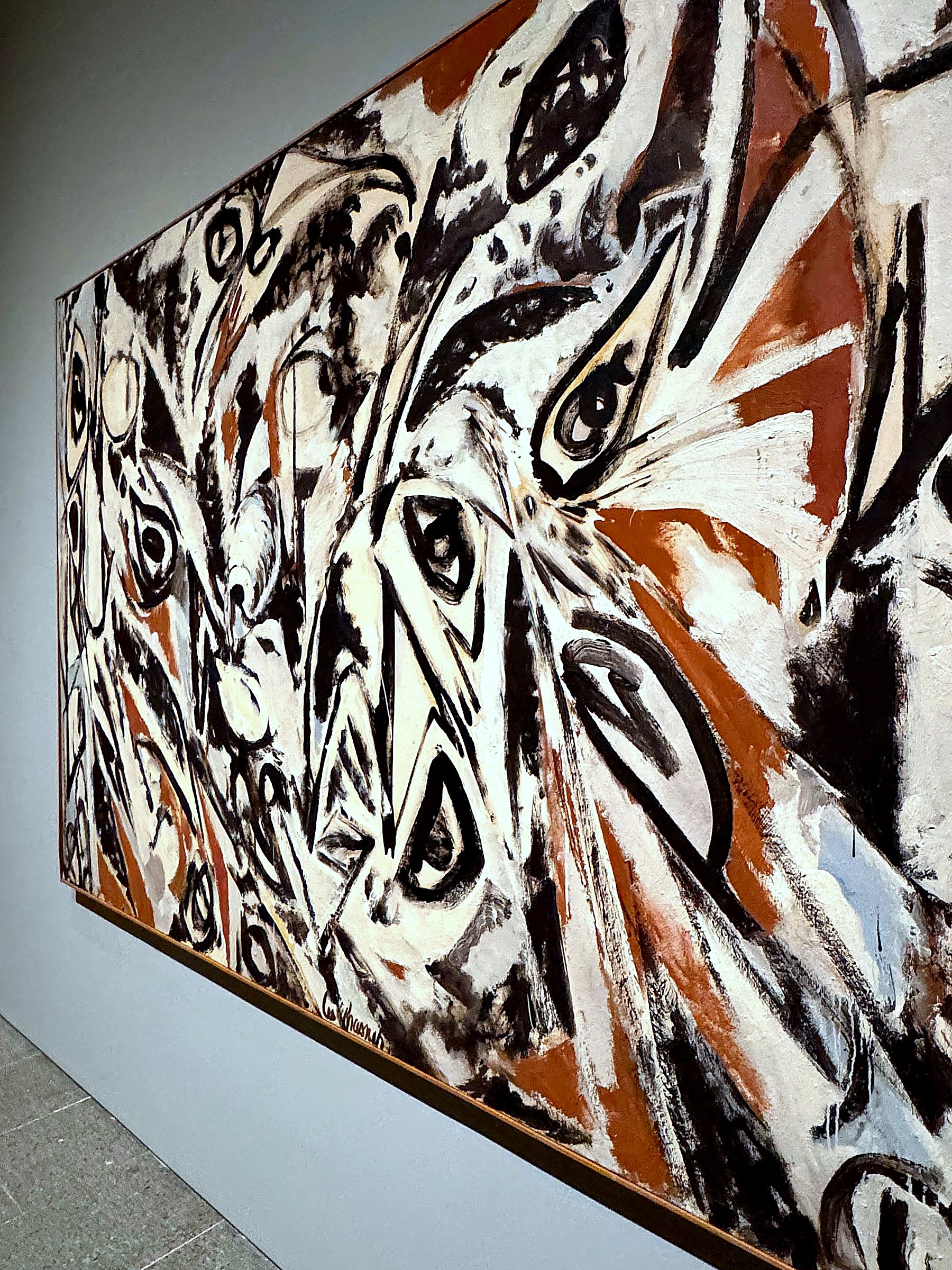
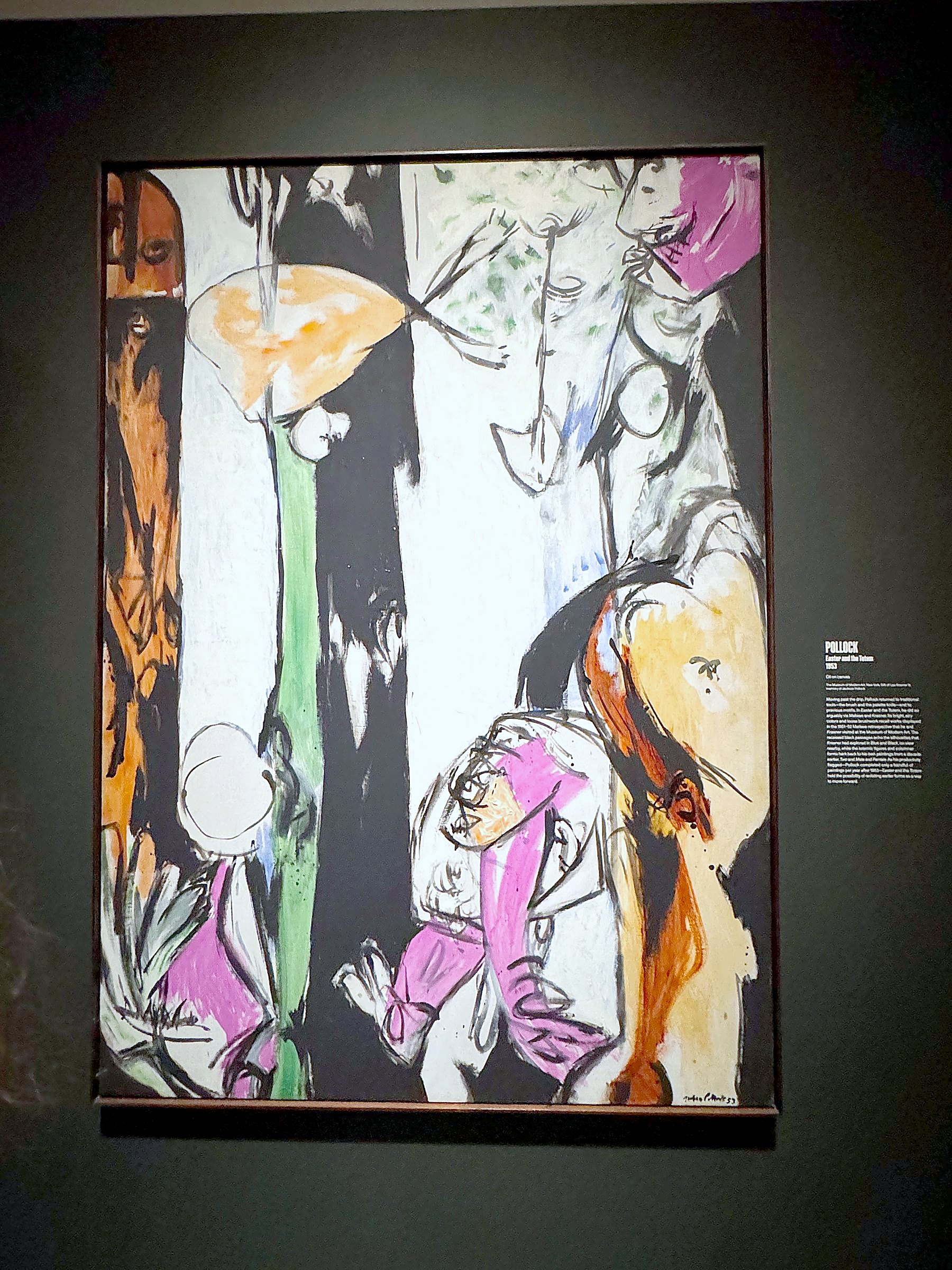
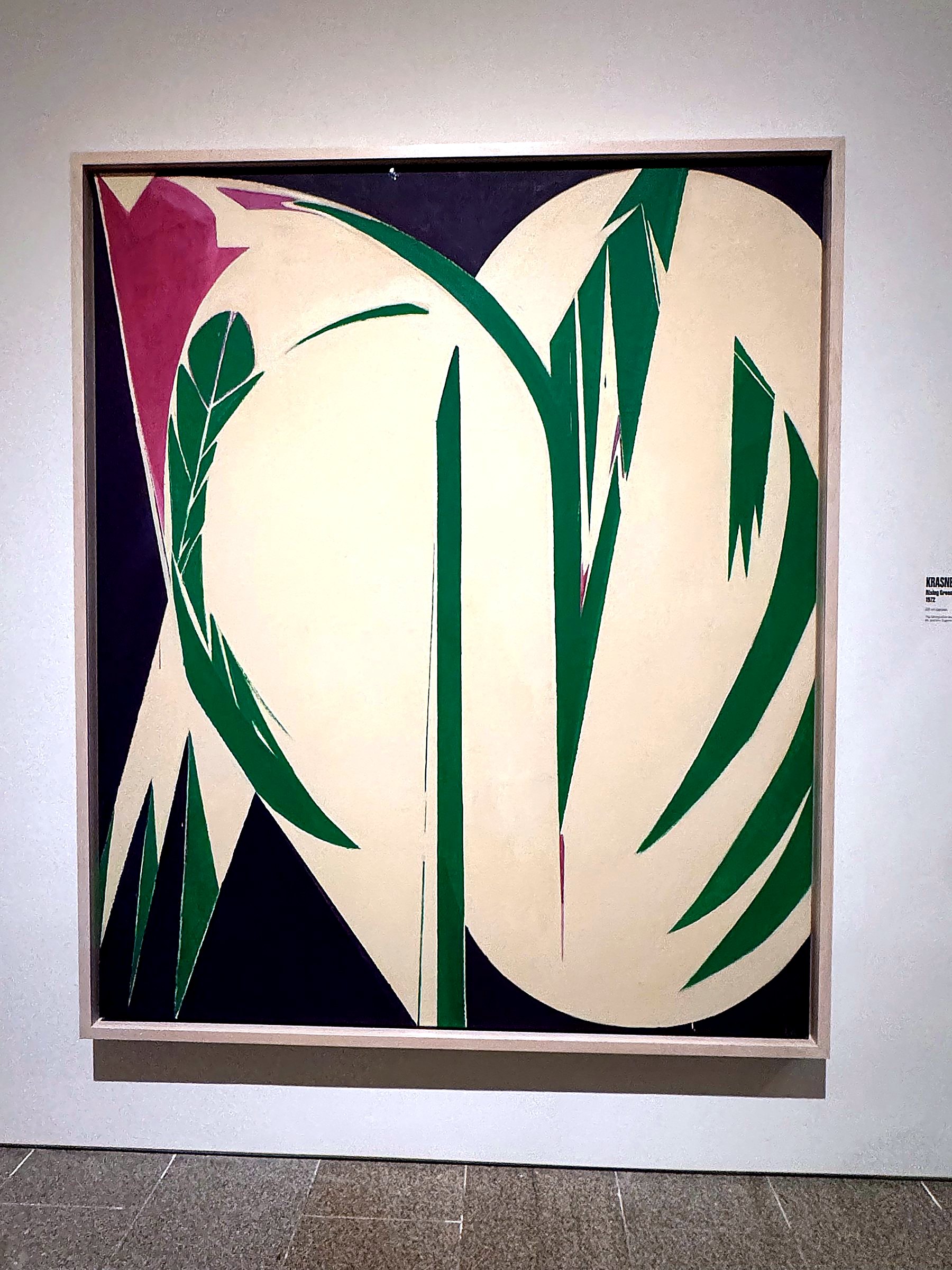
She kept going, as he had said. She moved into the barn. His last major canvases, The Deep and Easter and the Totem, both from 1953, swing between a white void and returning figures. Hers keep moving: the earth-toned Umber paintings, the bloom of The Seasons, and later the hard-edge green of Rising Green, from 1972. She outlived him by 28 years, and they were some of her best. The show borrows its title from her 1976 painting Past Continuous. Perfect grammar for a marriage.
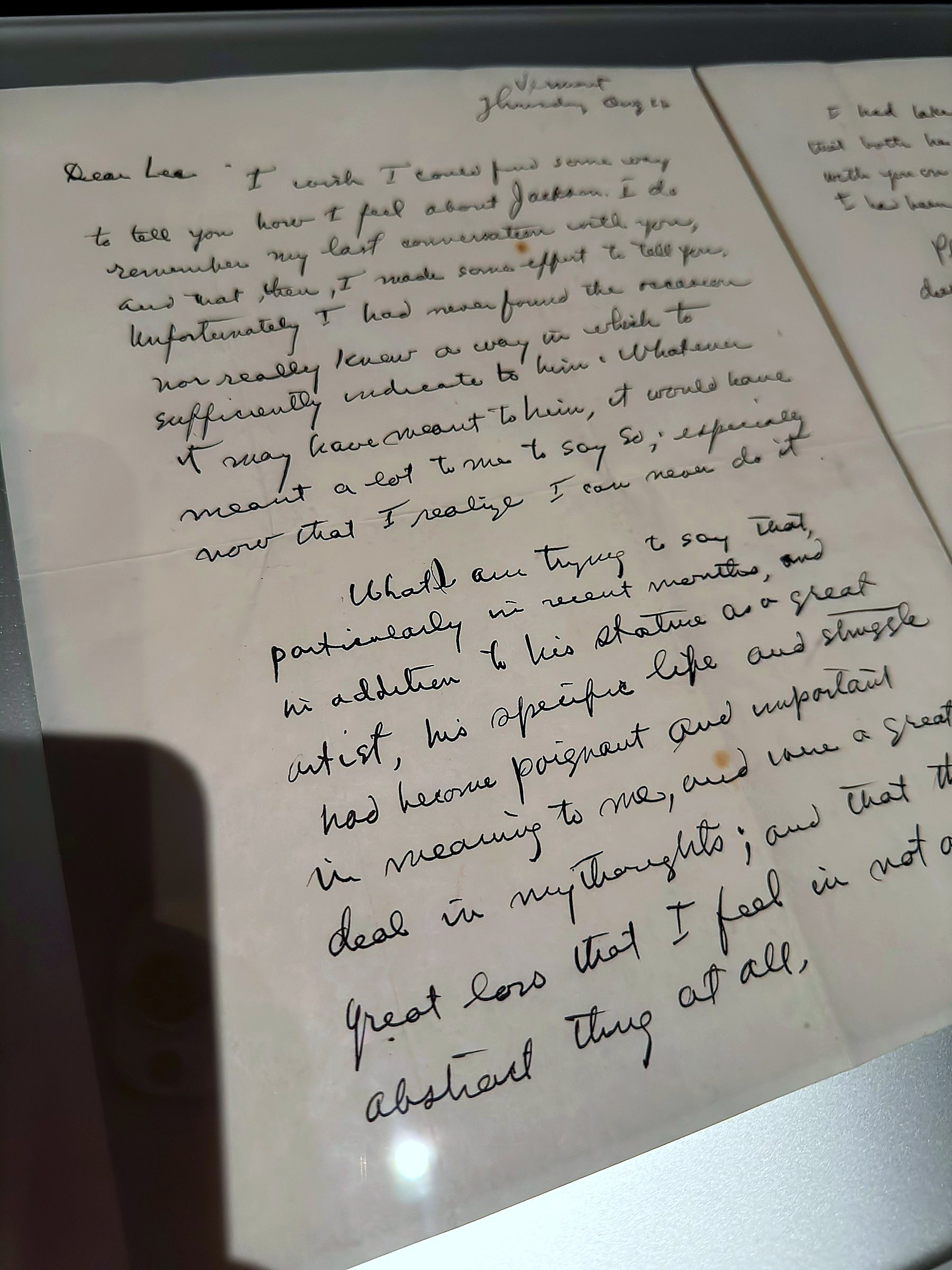
Near the end, a handwritten letter to “Dear Lee,” sent from Vermont on Thursday, August 16, five days after his death, speaks of Jackson and a great loss. Then the color comes back.
Pair works; never match them. Two paintings in one room should hold a conversation, even a disagreement. Play with scale: a small canvas beside a vast one makes both stronger. Give pale work a dark wall. And treat the past as material, the way Krasner cut up hers.
The great decorators always knew it. Jean Royère drew furniture with the freedom of a painter’s line. François-Xavier and Claude Lalanne turned sculpture into something you sit on. Peter Marino builds rooms around the art, never the reverse. Krasner and Pollock make the same case from the other side: art and the interior were never separate rooms.
Krasner and Pollock never matched. They answered each other. That is my rule for a room, and maybe for a life: let each piece keep its own voice, give them the same respect, and let the tension do the rest. A beautiful interior, like a good marriage, is a conversation.
Photos: Joelle Maslaton Oster
Exhibition: Krasner and Pollock: Past Continuous
Museum: The Metropolitan Museum of Art
Curators: Brinda Kumar and David Breslin
On view: October 4, 2026 – January 31, 2027

Joelle Maslaton Oster
Founder of Joelle Magazine and Studio Joelle, an interior design practice in New York. She writes on art, design and the places in between.
DISCOVER THE CURATION
Read our Privacy PolicyAlso on Substack: Where Is Joelle?
This website uses cookies to improve your experience. We'll assume you're ok with this, but you can opt-out if you wish. Accept Read More