

Salon Art + Design returned to the Park Avenue Armory this year for its 15th edition, and I liked it more than any other year. Leaner, sharper and more assured, this edition traded volume for conviction. It runs from November 4 to 8, 2026, and the fair’s own mission holds that today’s designers and collectors “create environments rather than collect objects.” From about fifty booths I chose ten. Eight are Paris houses or show French hands, one is Brazilian, and one is a New York studio. I didn’t plan it that way. So I asked myself why.
Jader Almeida, the Brazilian designer showing his own work at the fair, gave me the answer. An object, he argues, is the distillation of a culture: know-how watched, repeated and handed down, often across three generations. And “hands are never completely neutral.” They leave memory, precision and intent, legible in a seam, an edge, a joint, a gesture performed a thousand times over.
The French have a word for it: savoir-faire. And few countries have guarded it as long. The lineage runs from Jean-Henri Riesener, cabinetmaker to Marie Antoinette, through the ateliers of the Faubourg Saint-Antoine, to the lacquerers, saddlers and bronze founders still named on the tear sheets here. The market has taken note. In the first half of 2026, the four most valuable names in design at auction, Claude and François-Xavier Lalanne, Diego Giacometti and Jean Royère, all made their careers in Paris, together commanding some $139 million of a $249.5 million market.
A Screen for a Princess
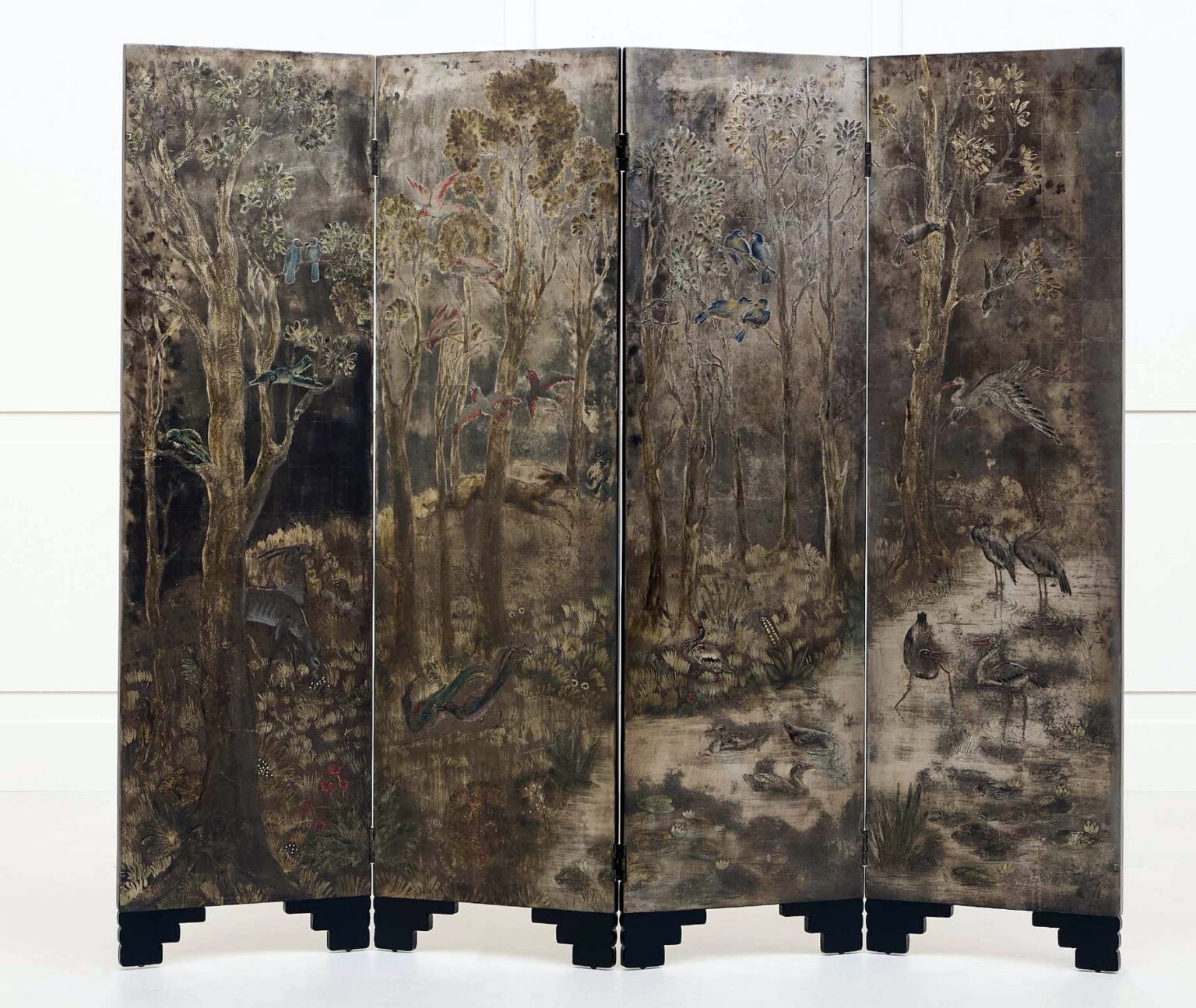
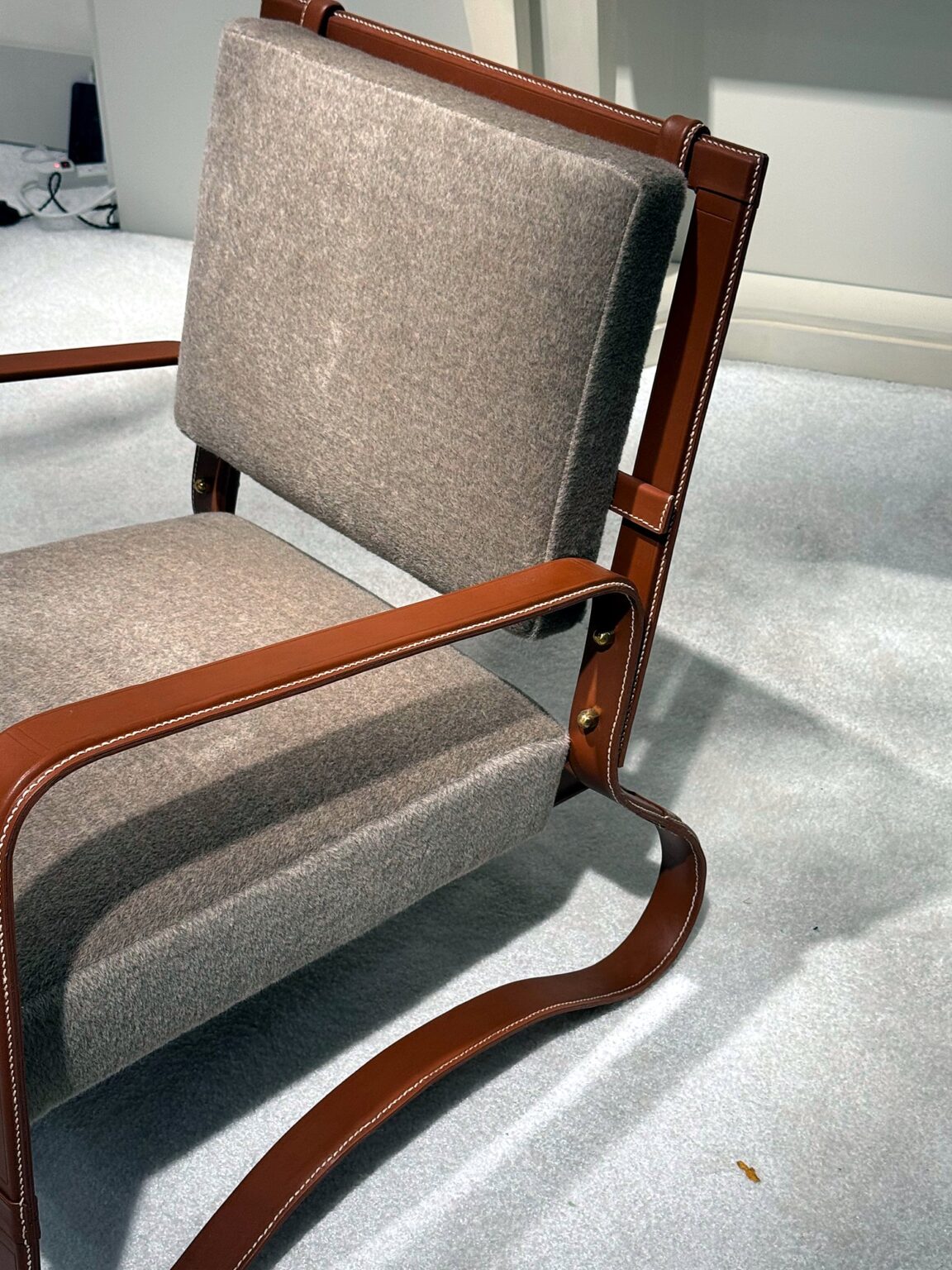
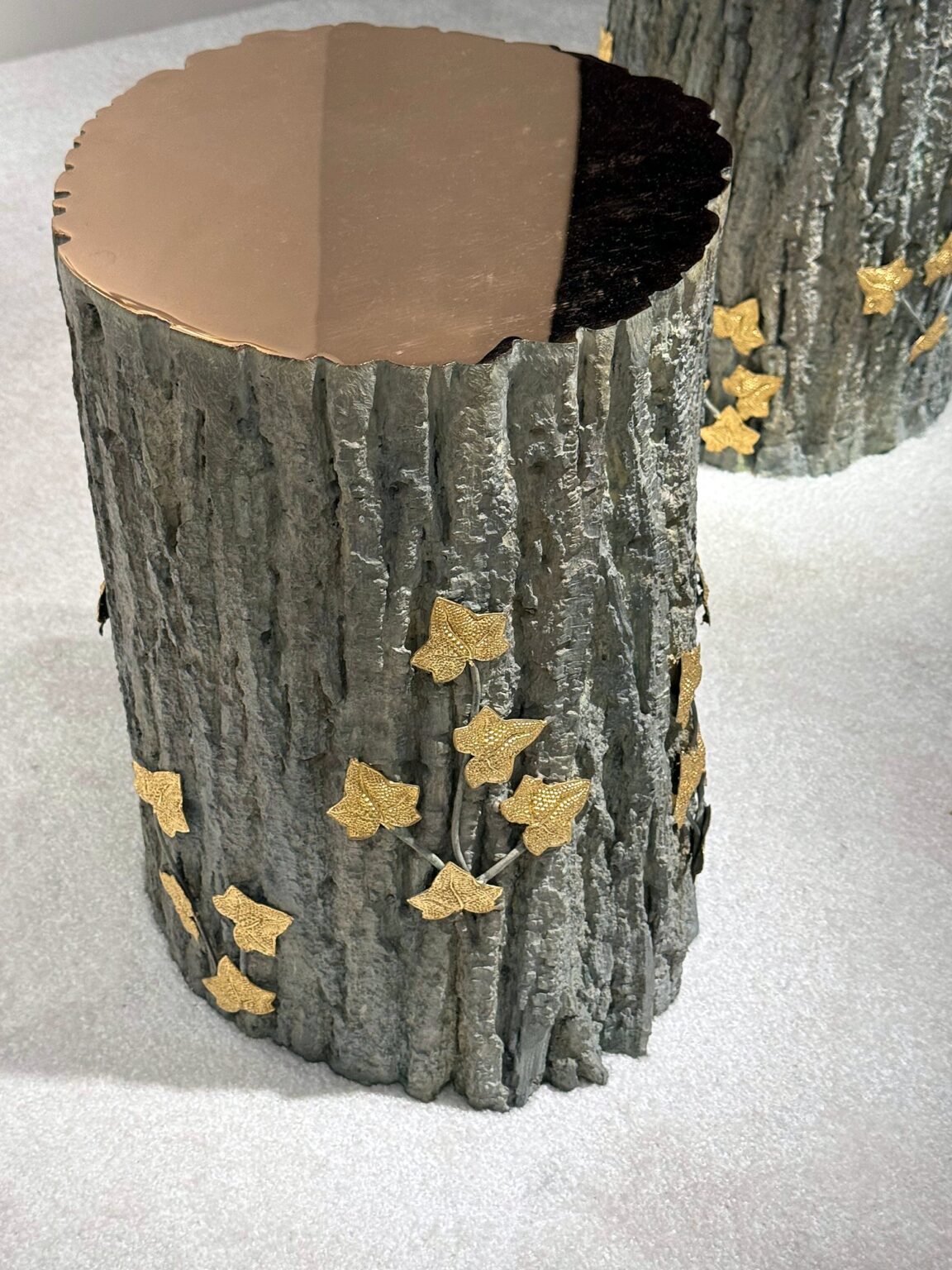
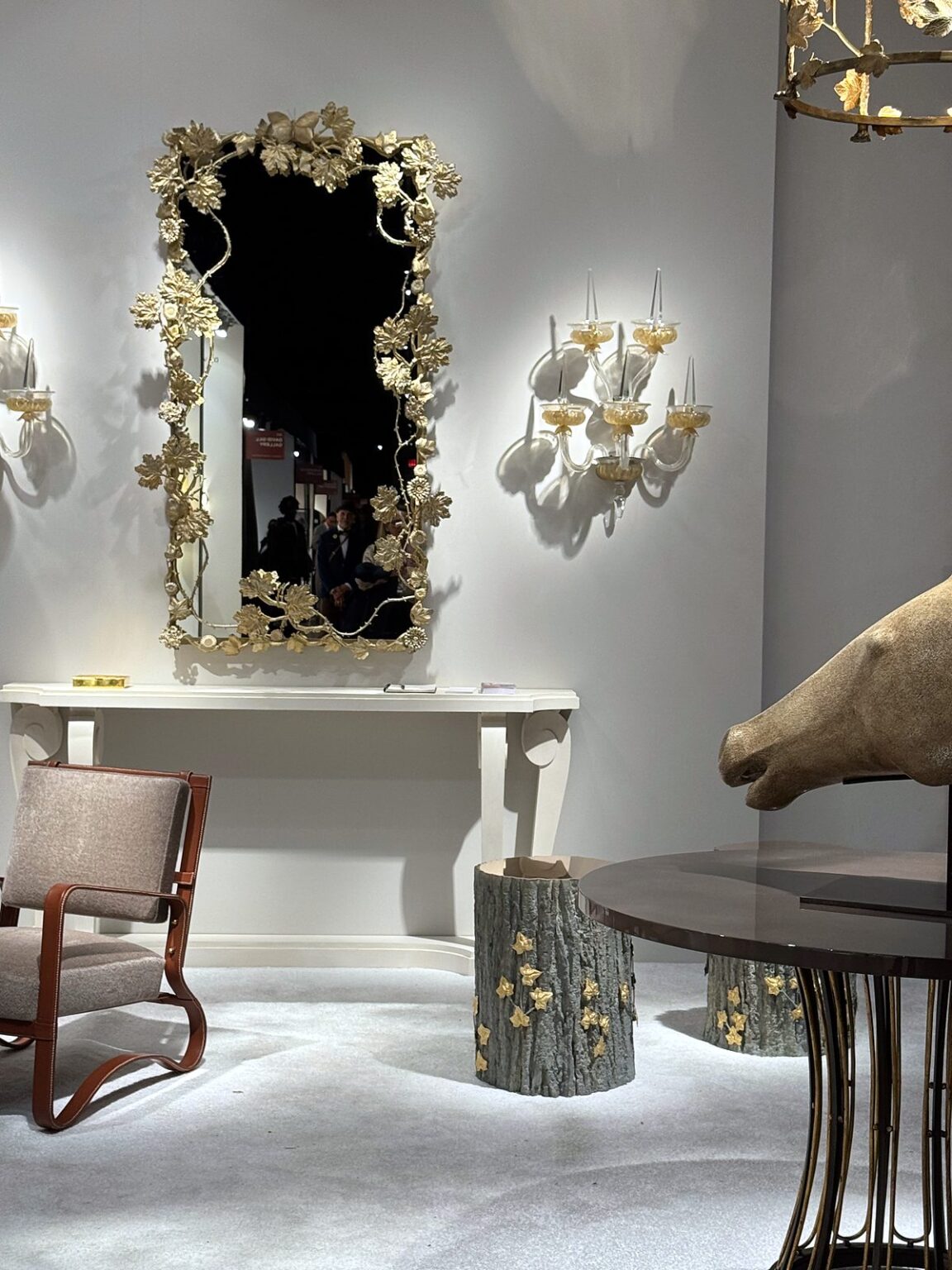
At Galerie Chastel-Maréchal, Jean Dunand’s “Forêt” screen, circa 1920, commands the wall: four leaves of lacquer and silver leaf alive with deer, egrets and birds. Shown at Galerie Georges Petit in 1929 and once owned by Princess Marie Bonaparte, it was restored by the master lacquerer Nicolas Pinon, one hand answering another a century on. Beside it, Jacques Adnet’s 1950s armchairs in hand-stitched saddle leather, and Joy de Rohan Chabot’s new “Sous-Bois d’été,” a bronze trunk whose gilded leaves she sets one by one.
Art Deco at the Source
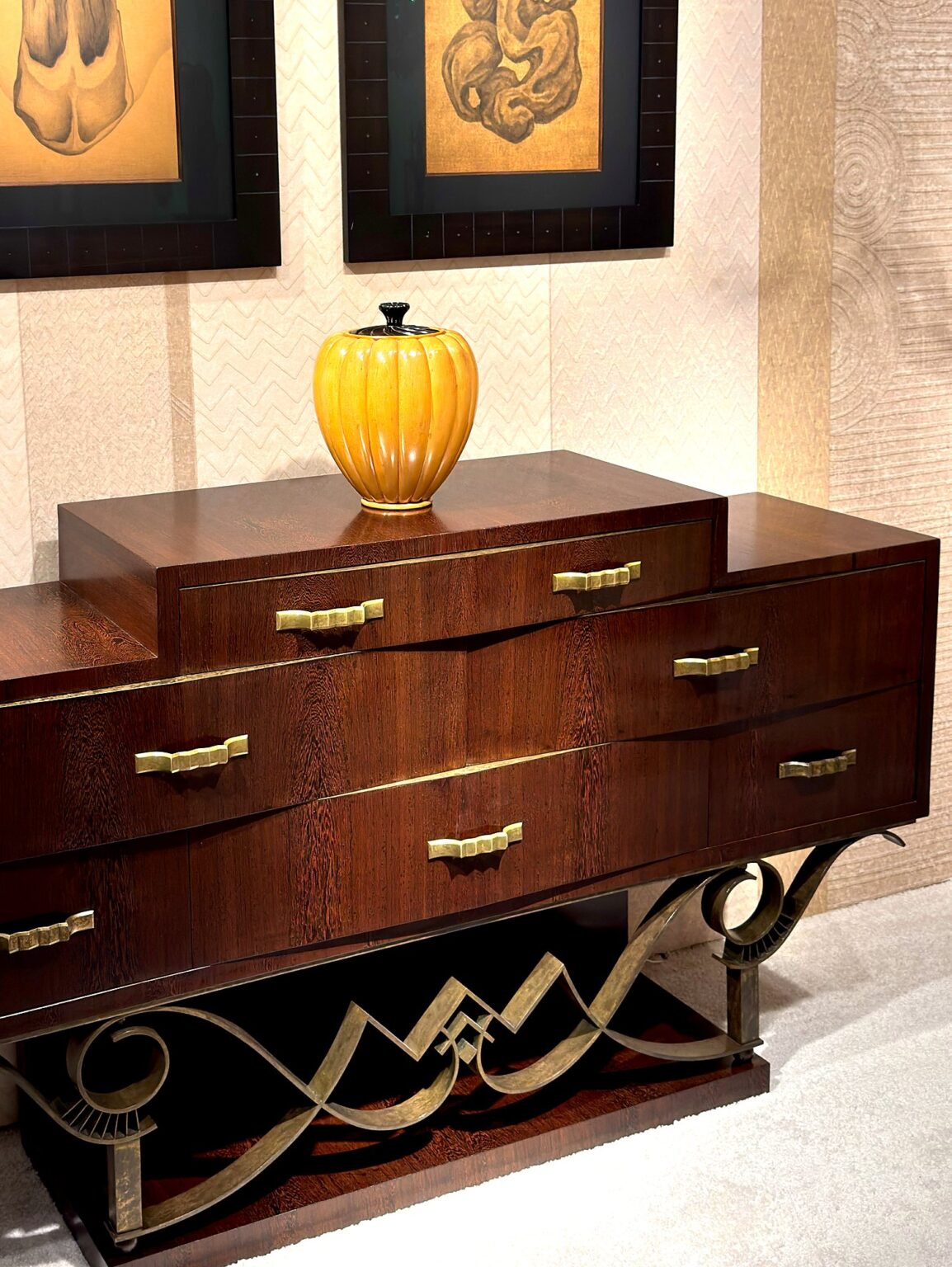
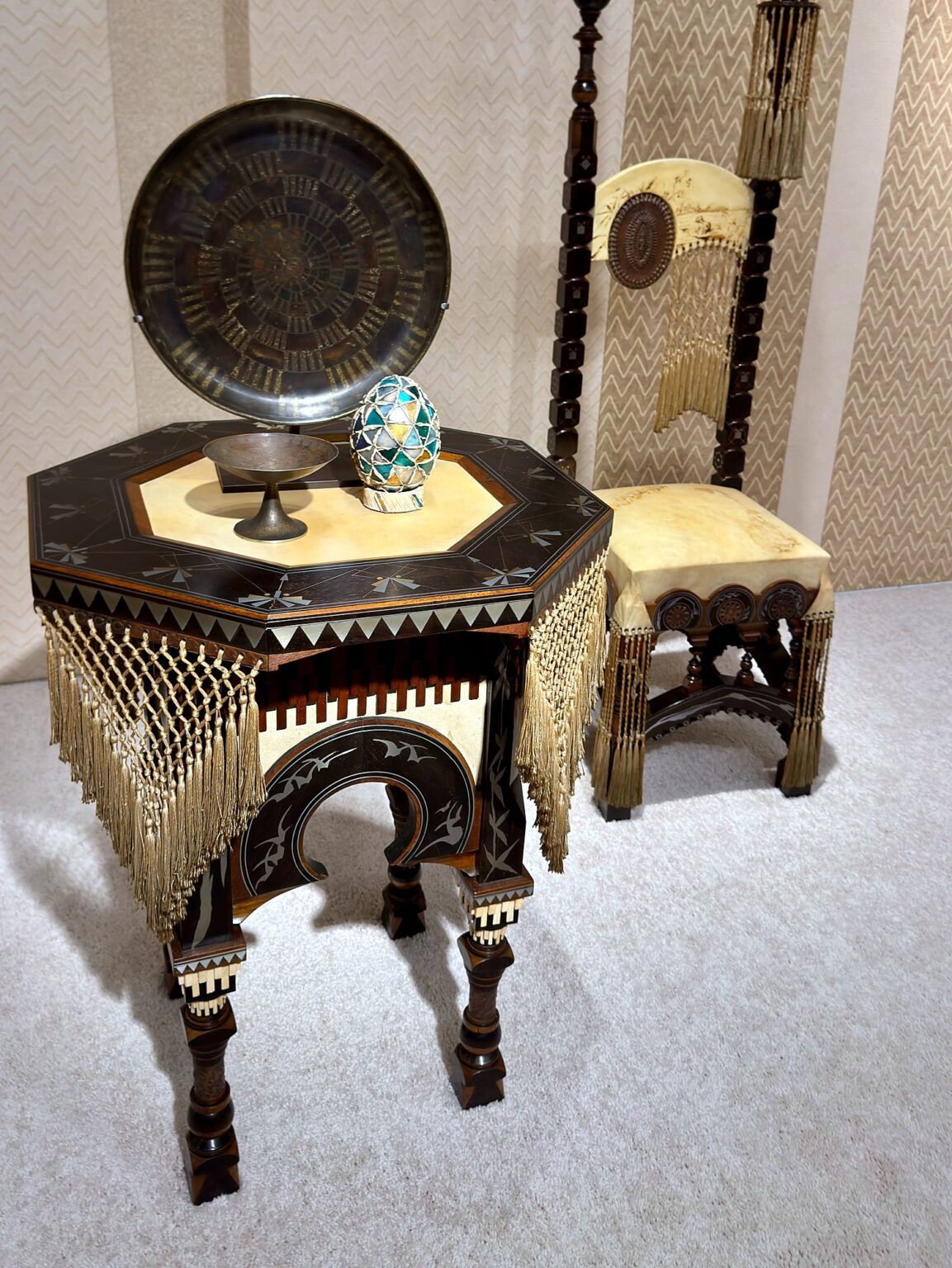
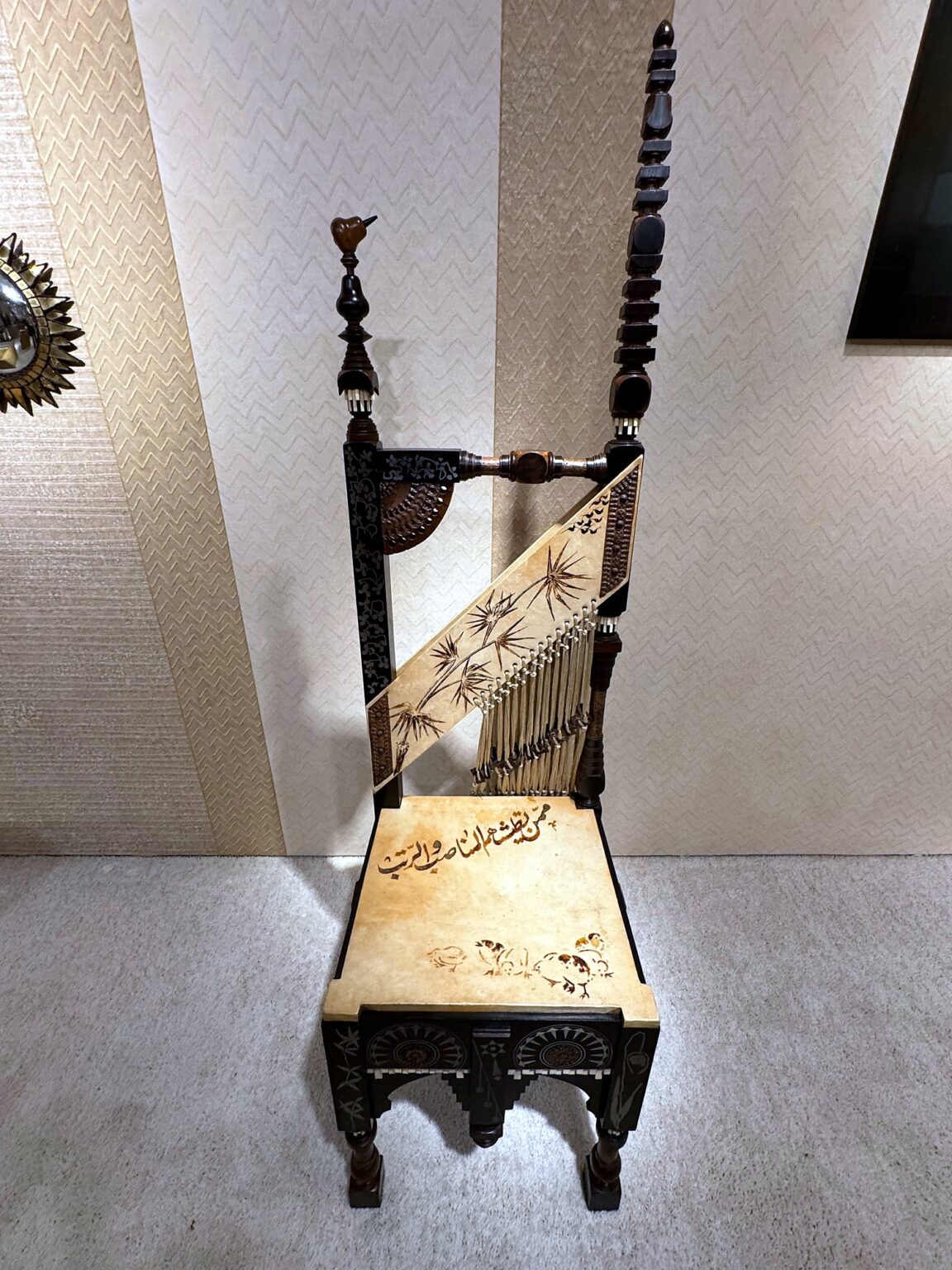
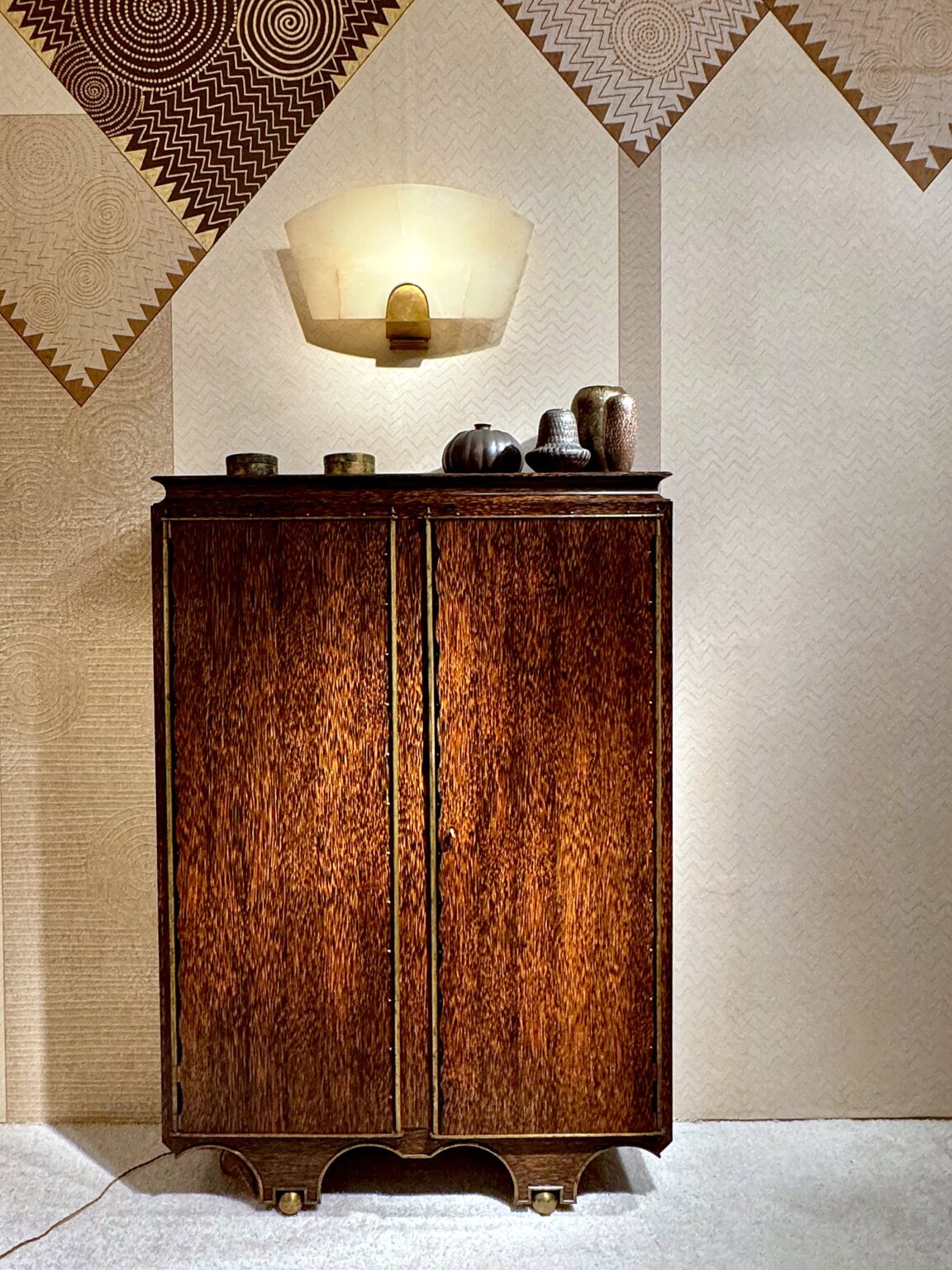
Galerie Marcilhac has been a reference in French decorative arts since 1969; Félix Marcilhac literally wrote the book on Dunand. But the stars of the booth are by Carlo Bugatti. Born in Milan in 1856, father of the carmaker Ettore and the sculptor Rembrandt, he built furniture like no one else: ebonized wood inlaid with metal and bone, painted vellum, pseudo-Arabic script, silk fringe, turned spindles and Moorish arches. His octagonal table and high-back chair read less as furniture than as architecture in miniature. At Turin in 1902 his Snail Room won the Diploma of Honour; two years later he left for Paris. Around them, Art Deco cabinets and an alabaster sconce hold the line against geometric panels.
Royère, Back from Beirut
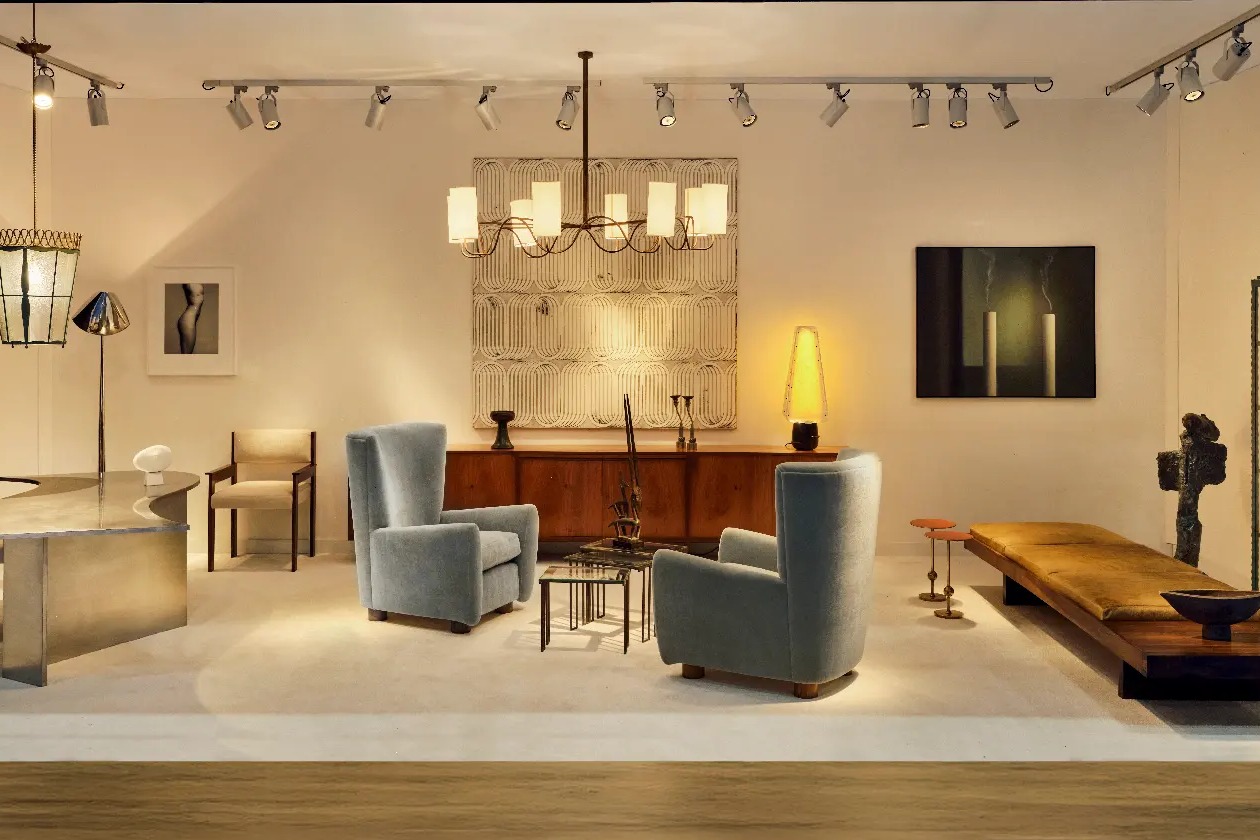
At Galerie Gabriel, a pair of Jean Royère “Copenhague” wingback armchairs from around 1950 sits on turned oak legs in Pierre Frey velvet. They come from a private collection in Lebanon. Royère learned cabinetmaking in the Faubourg Saint-Antoine, then opened offices in Cairo and Beirut and furnished interiors from Syria to Iran. Gio Ponti and the Brazilian modernist Joaquim Tenreiro share the wall.
Pink Walls, Bronze Leaves
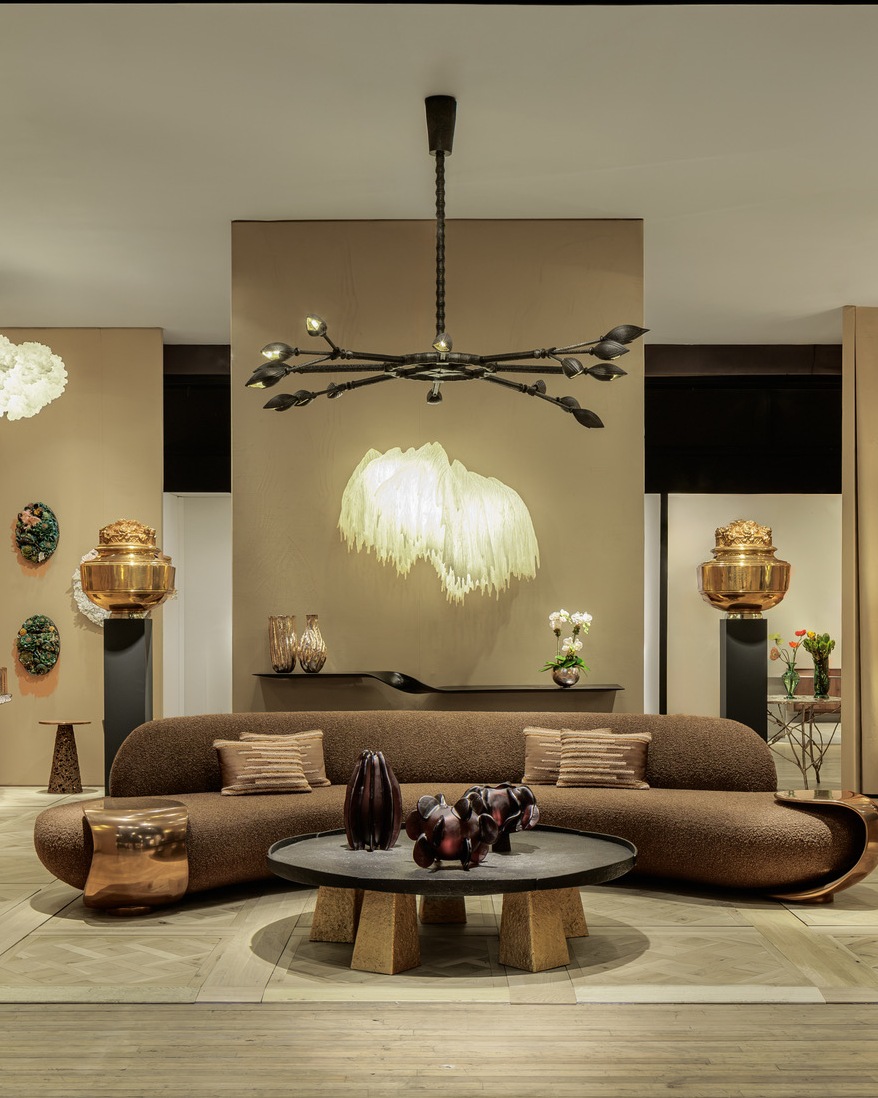
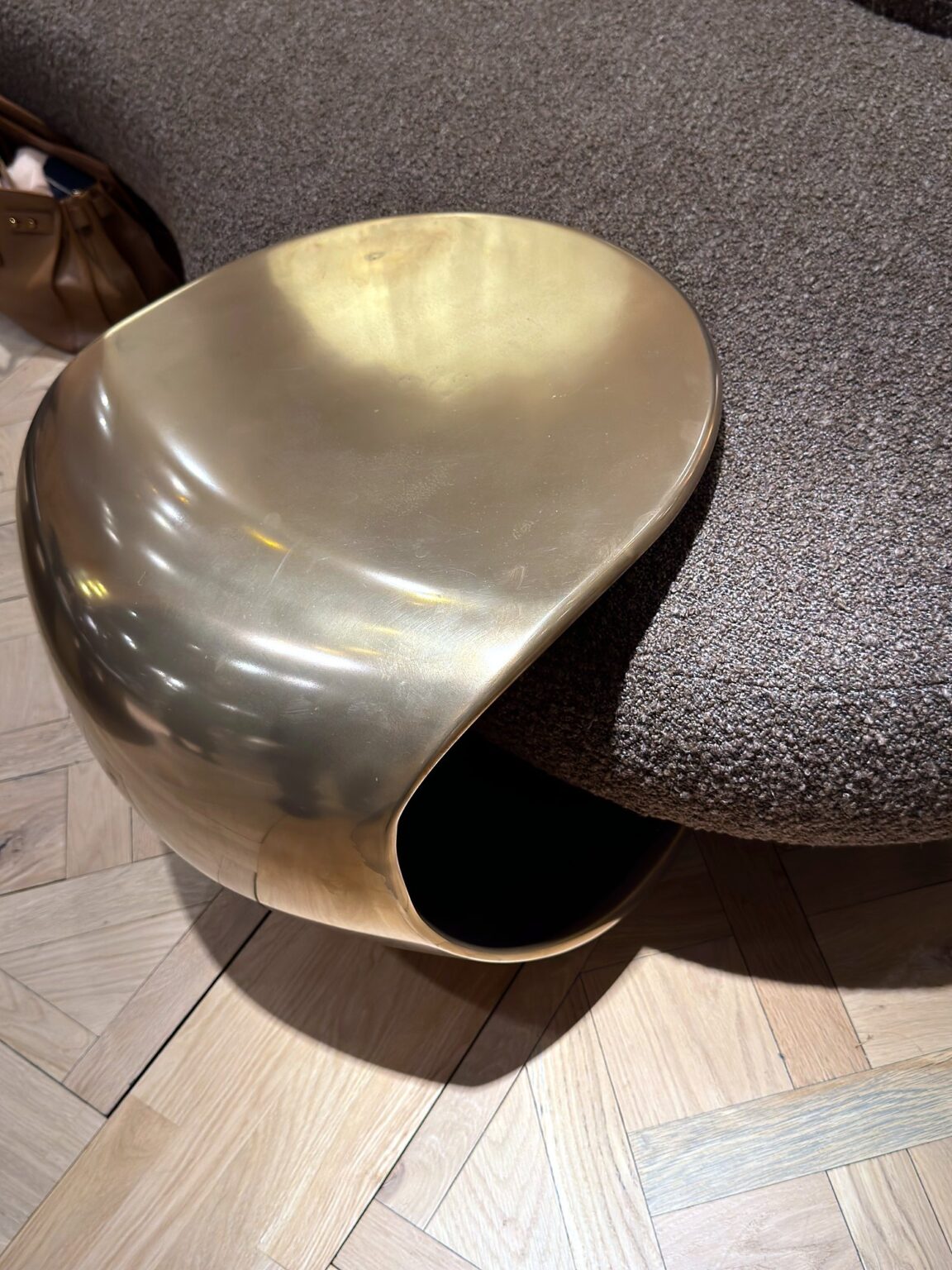
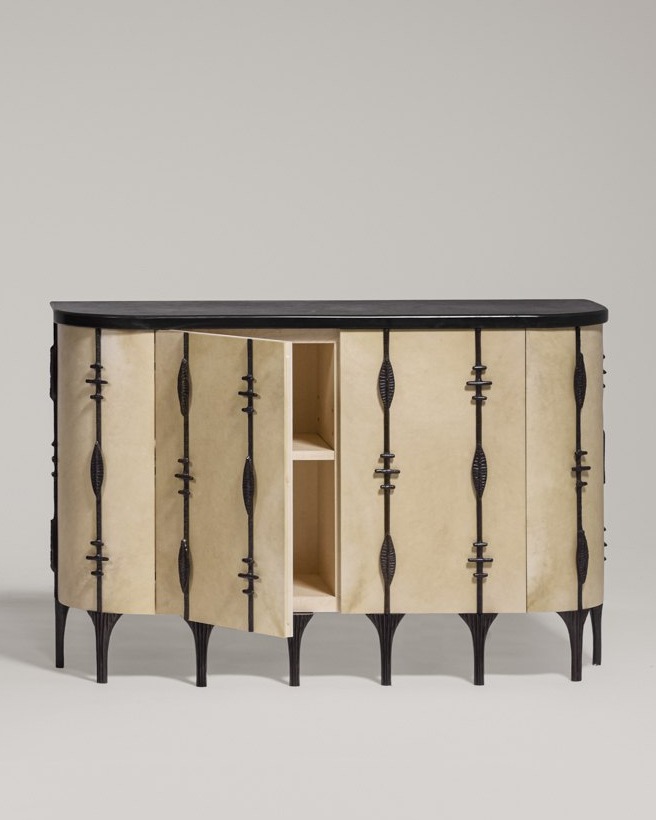
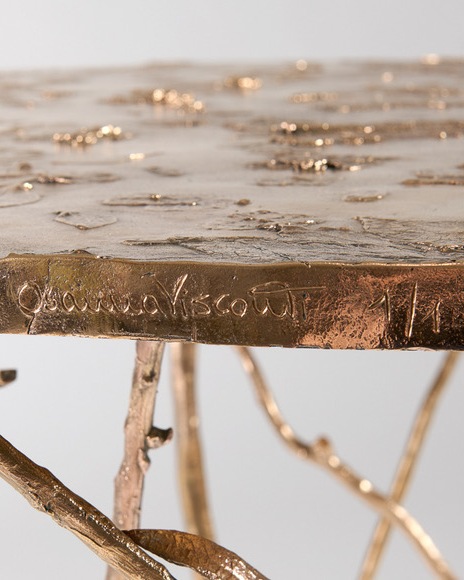
Art Deco specialists since 1974, Maison Gerard frames its pink booth with two Man Ray tapestries, “Legend” and “Orchestra,” drawn in 1916 and woven in 1973. Then come the pieces I loved. Georgis & Mirgorodsky’s “Bombola” sofa curls like a soft parenthesis, its polished bronze side tables tucked into the curve as if poured there. Franck Evennou’s new “M’Benga” cabinets, shown as a pair, are pure elegance: sycamore wrapped in parchment and slate, cinched with sand-cast bronze that nods to African sculpture. And Osanna Visconti, whose work I love, turns bronze into poetry with her “Bambù” table: a top cast with fallen leaves, legs grown like bamboo, signed by hand and numbered 1/1.
The Putman Line
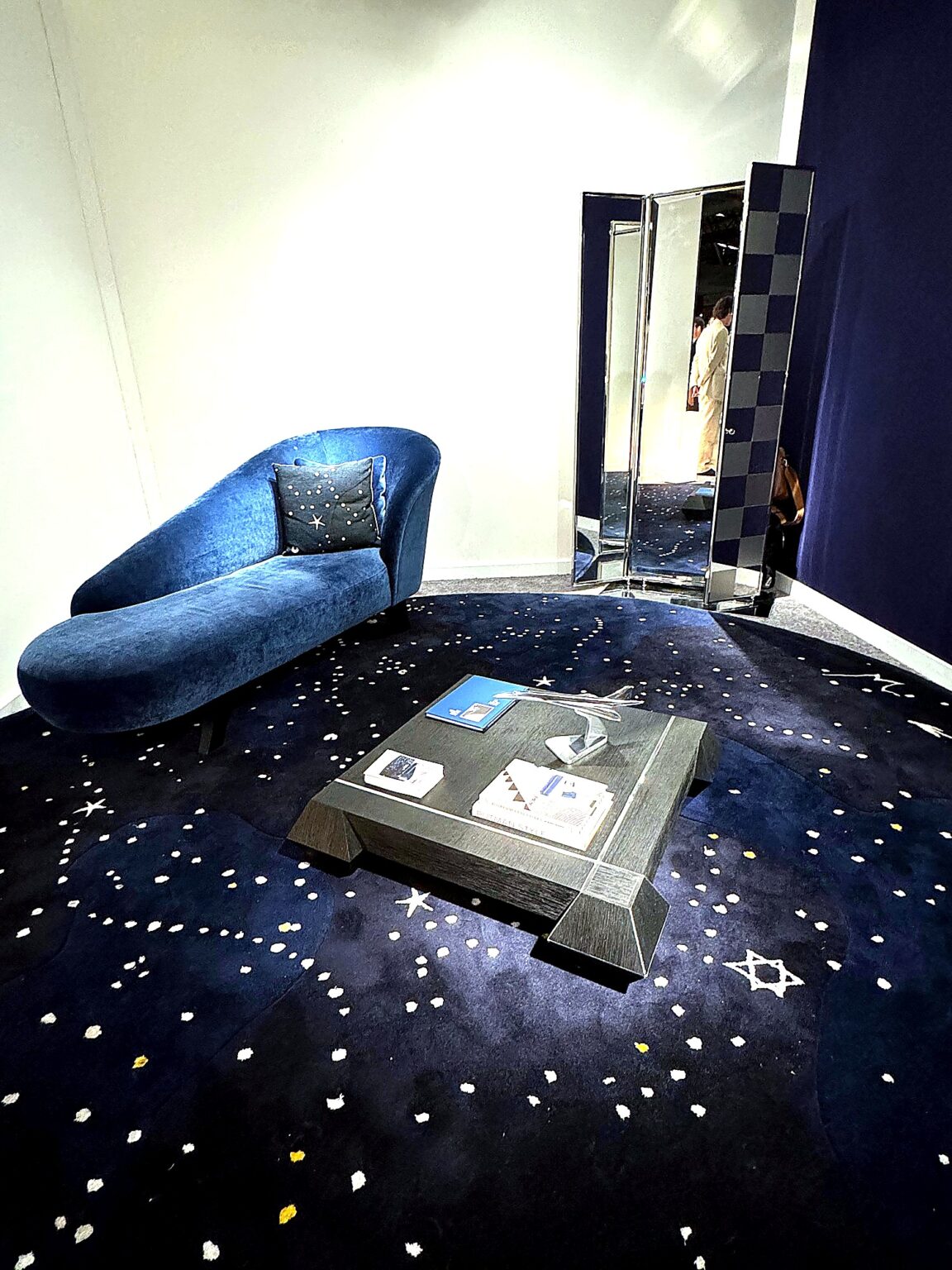
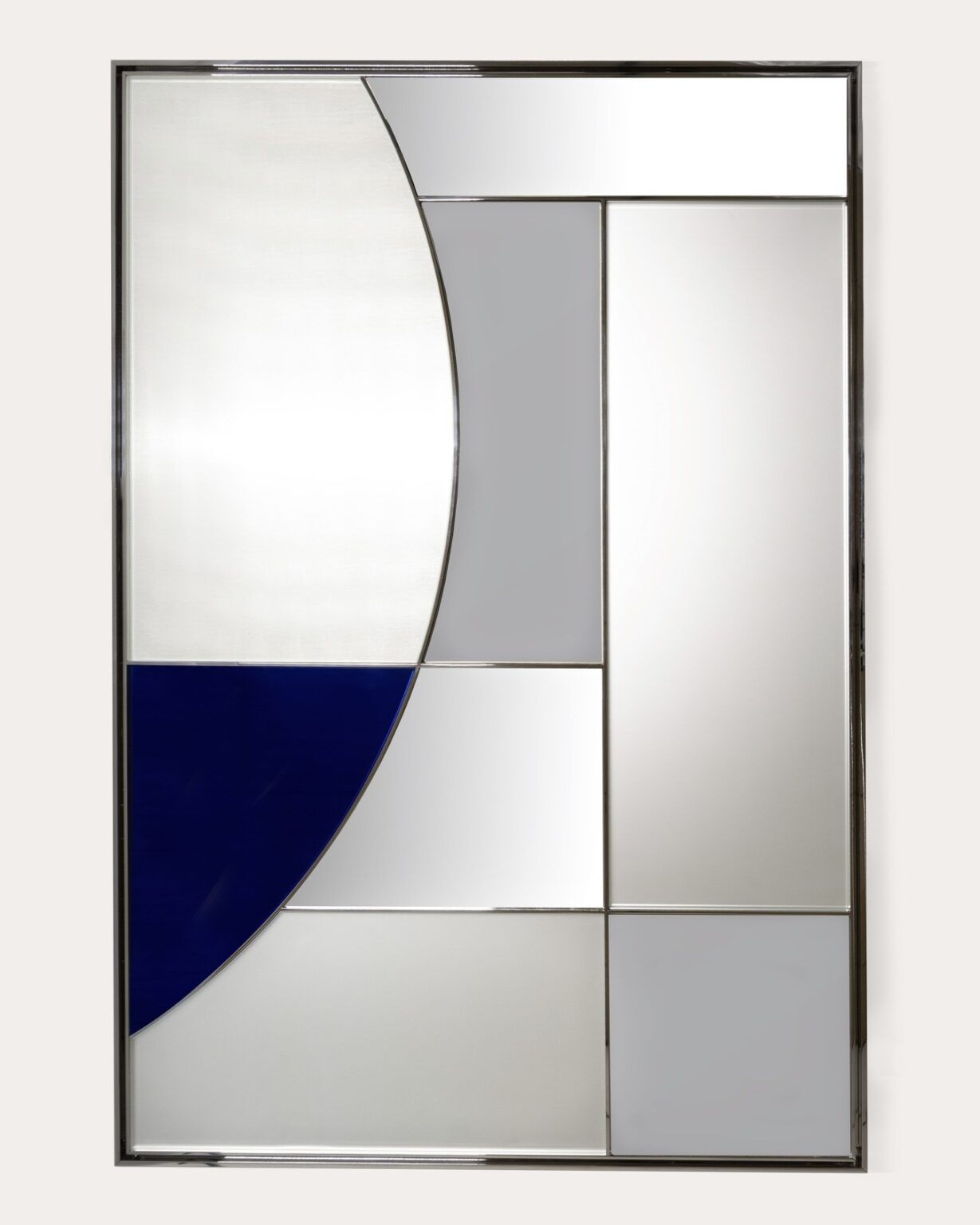
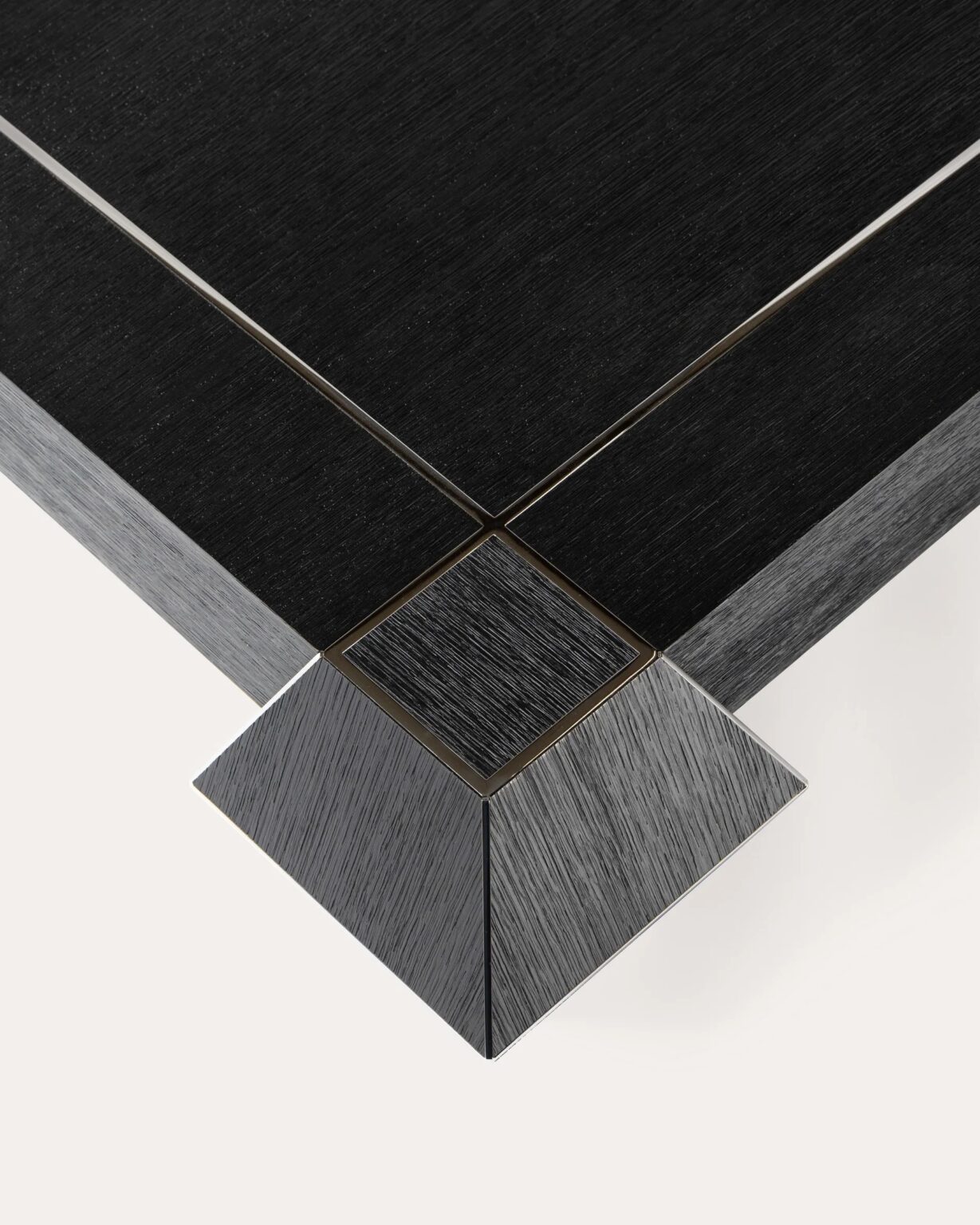
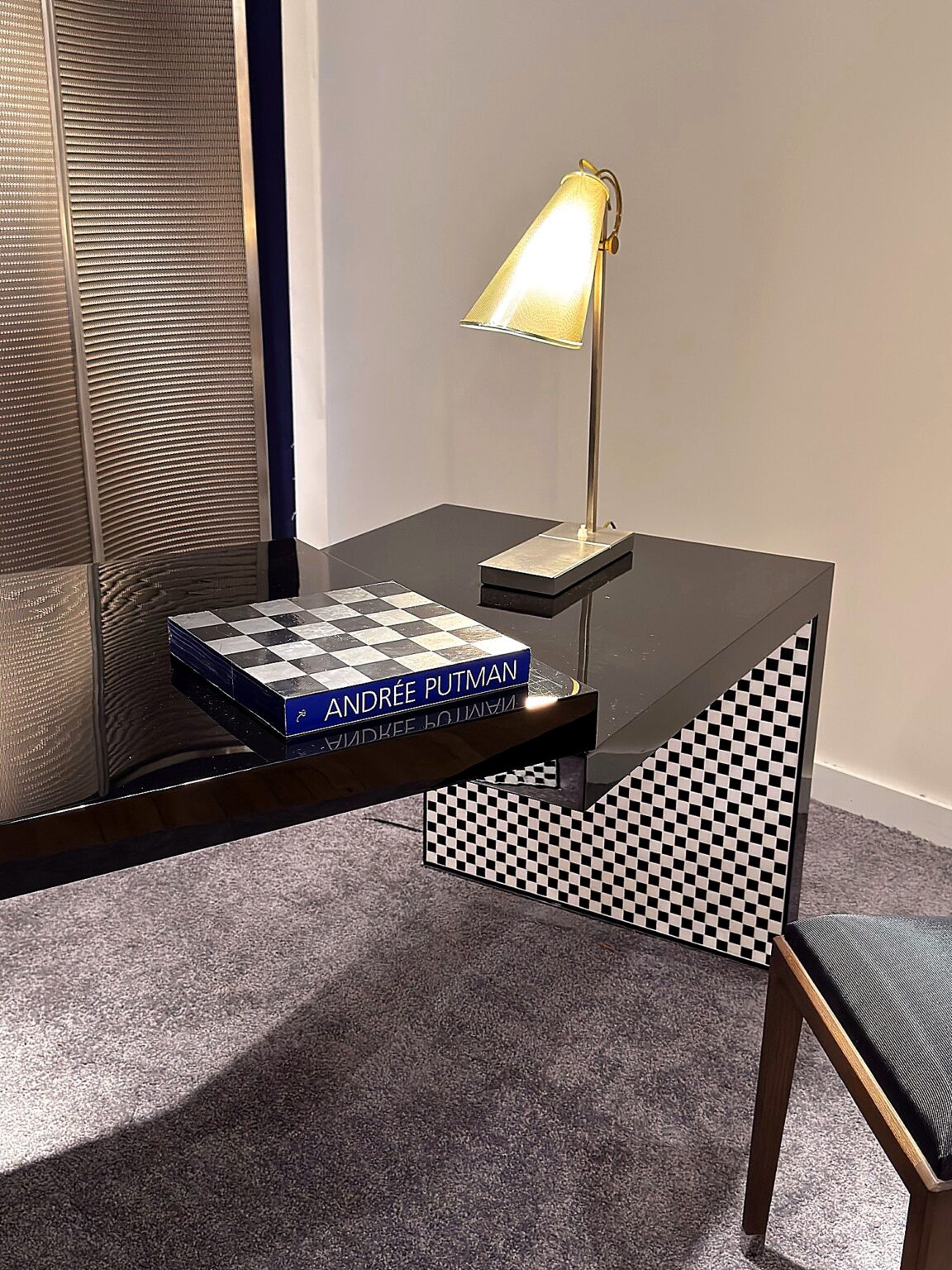
Andrée Putman (1925–2013) remains, for me, the grande dame of French design. A prize-winning pianist from the Paris Conservatoire, she traded scores for style: journalist at Elle, then stylist at Prisunic, where she put good design within everyone’s reach. In 1978 her company Écart rescued the modernists history had misplaced, reissuing Eileen Gray, Pierre Chareau and Mariano Fortuny. Six years later, armed with a tight budget and a black-and-white checkerboard, she turned New York’s Morgans into the blueprint for the boutique hotel; in 1993, she dressed the Concorde. Her daughter, Olivia, now steers the studio, which this year opened a New York home on the Bowery. The star of the booth is Andrée’s Correspondances desk, made with Bisazza in 2008: lacquer black as a grand piano, a checkerboard of tiles beneath, and one gold tile hidden where only the curious will find it. Around it, a blue velvet chaise, a rug scattered with constellations and one of only eight “Reflet cartésien” mirrors.
A Room, Not a Stand
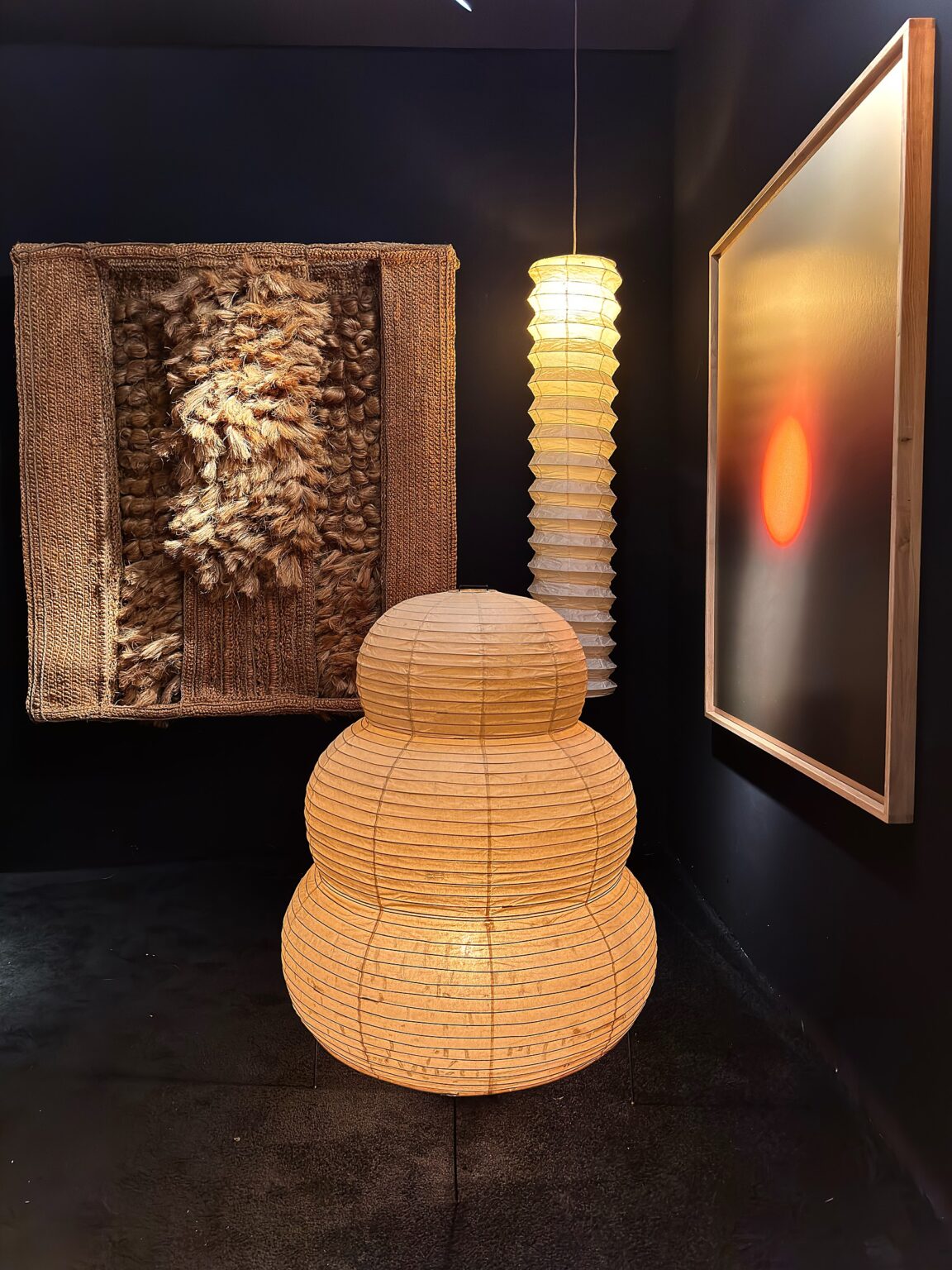
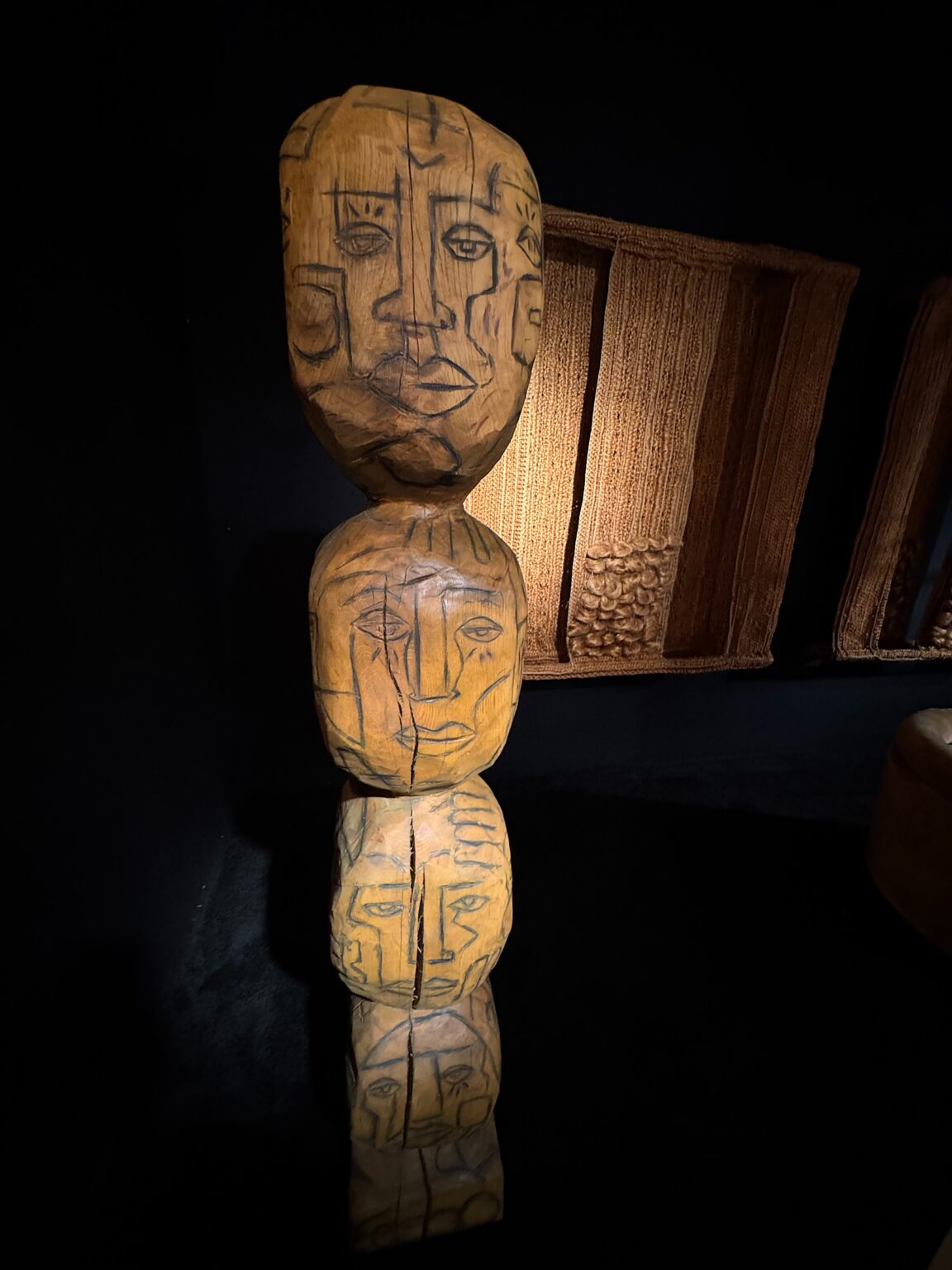
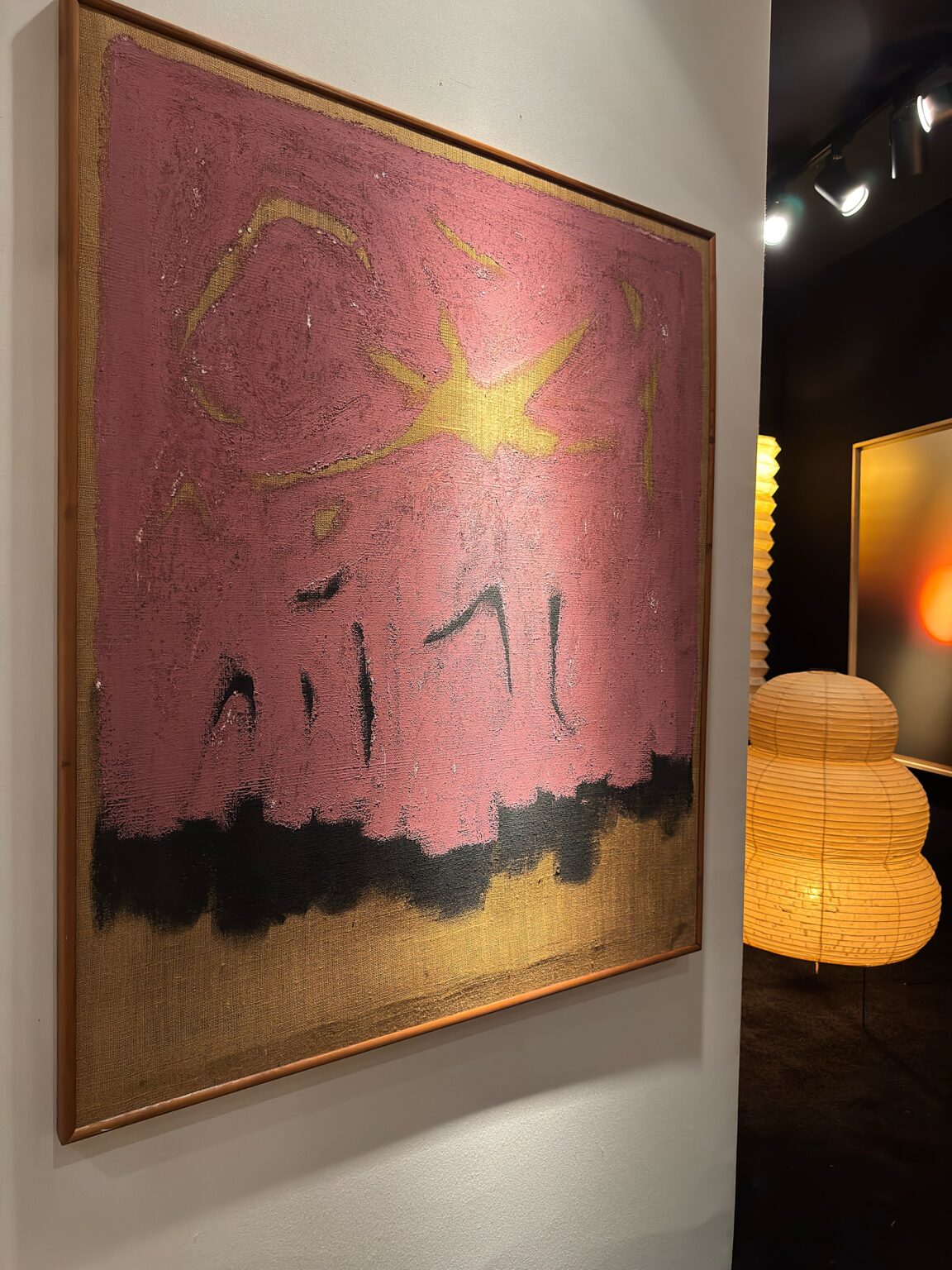
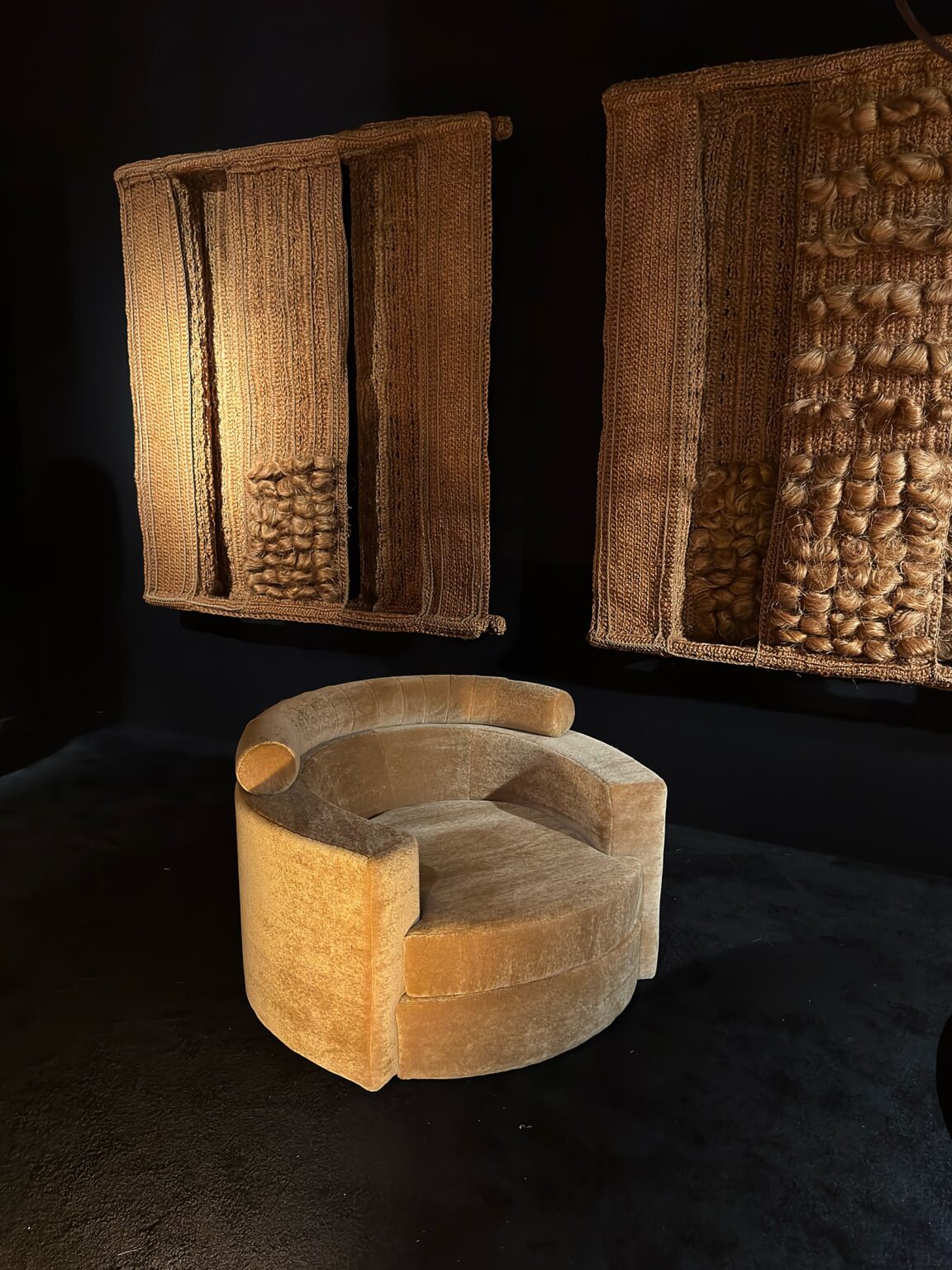
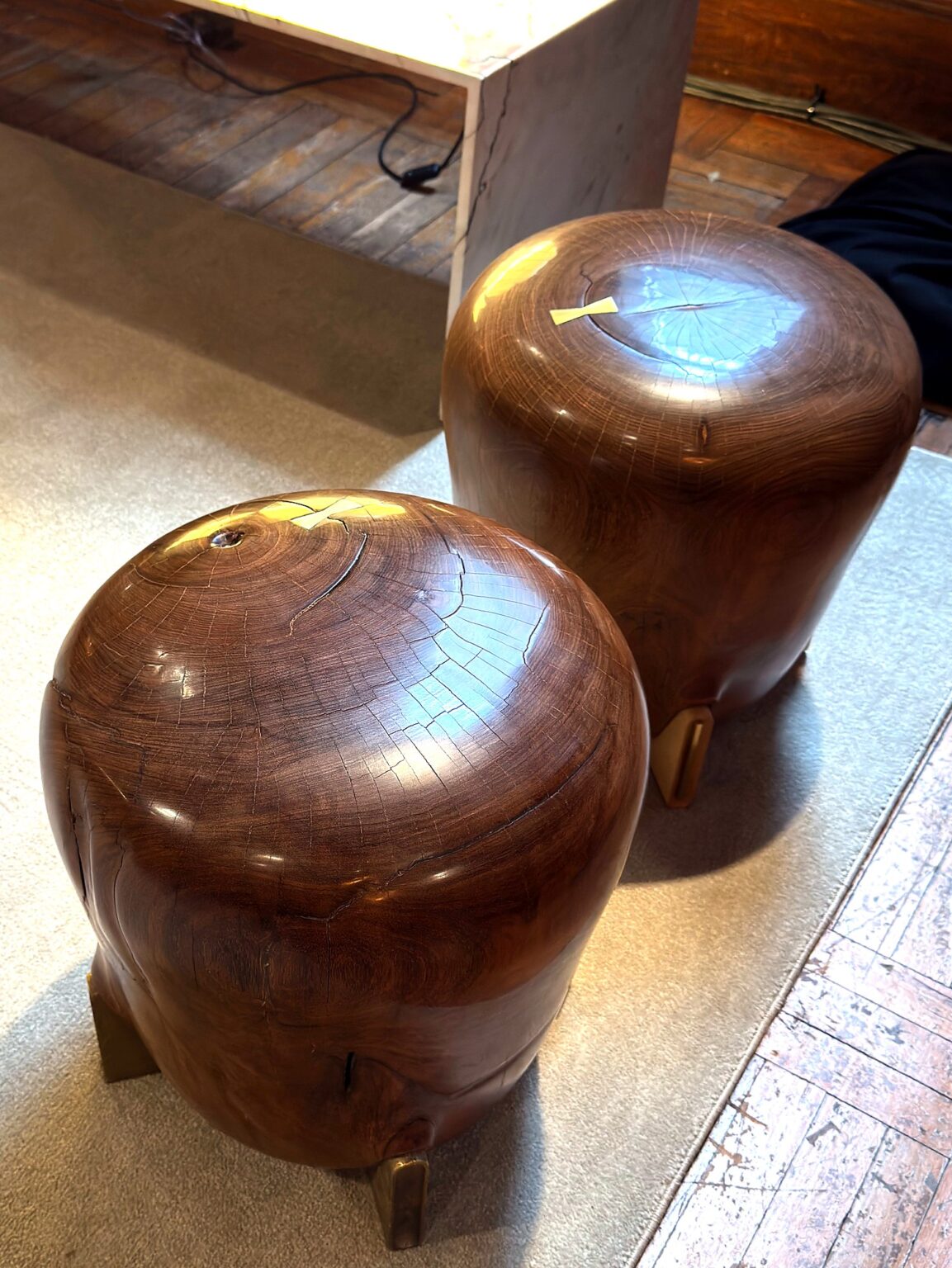
Maisonjaune Studio was my favorite booth of the fair, and no wonder it sold everything on opening night. The Parisian gallery of Élodie and Julien Régnier, now joined by their daughter Jeanne, also took the Galerie award for Best Booth Design. They don’t build a stand; they build a house, bathed in amber light, where twentieth-century masters and living artists hold a conversation. First-edition Akari lanterns by Isamu Noguchi glow beside Timothy Van Oorschot’s carved oak totem. Salvatore Emblema’s jute canvases, colored with earth from Vesuvius, hang near Niki de Saint Phalle’s “Shoot It Yourself,” still marked by nine gunshots. Overhead, Laurent Martin’s bamboo mobile turns on a balance he learned from craftsmen in Thailand, Laos and Vietnam.
The showstopper is Annet Gaaikema’s “Four Seasons,” four sisal tapestries crocheted in deep relief in 1974, each a landscape you could almost walk into. The mood, the materials, the dialogue between every piece: it is pure fantasy, and entirely made by hand.
Made Now
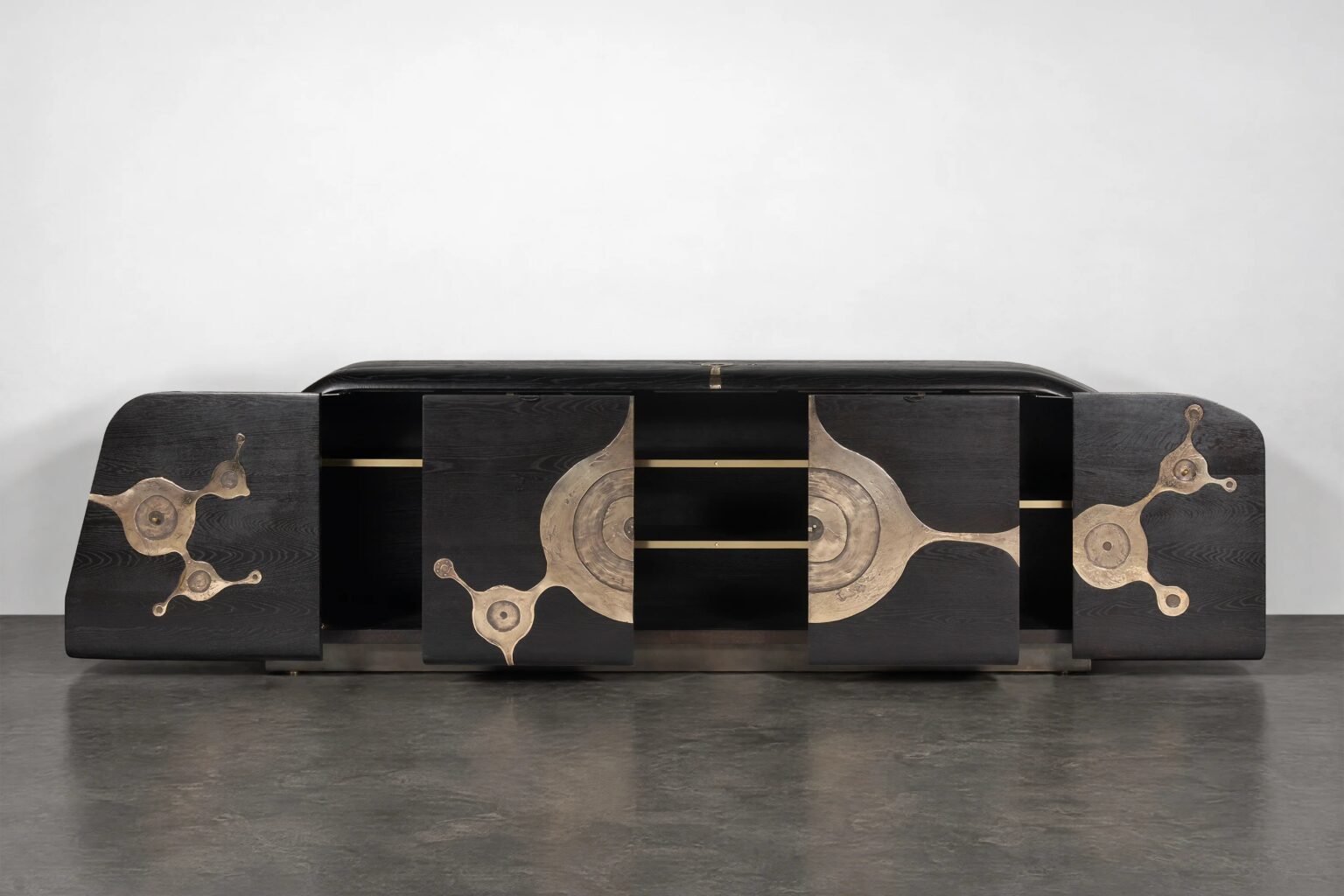
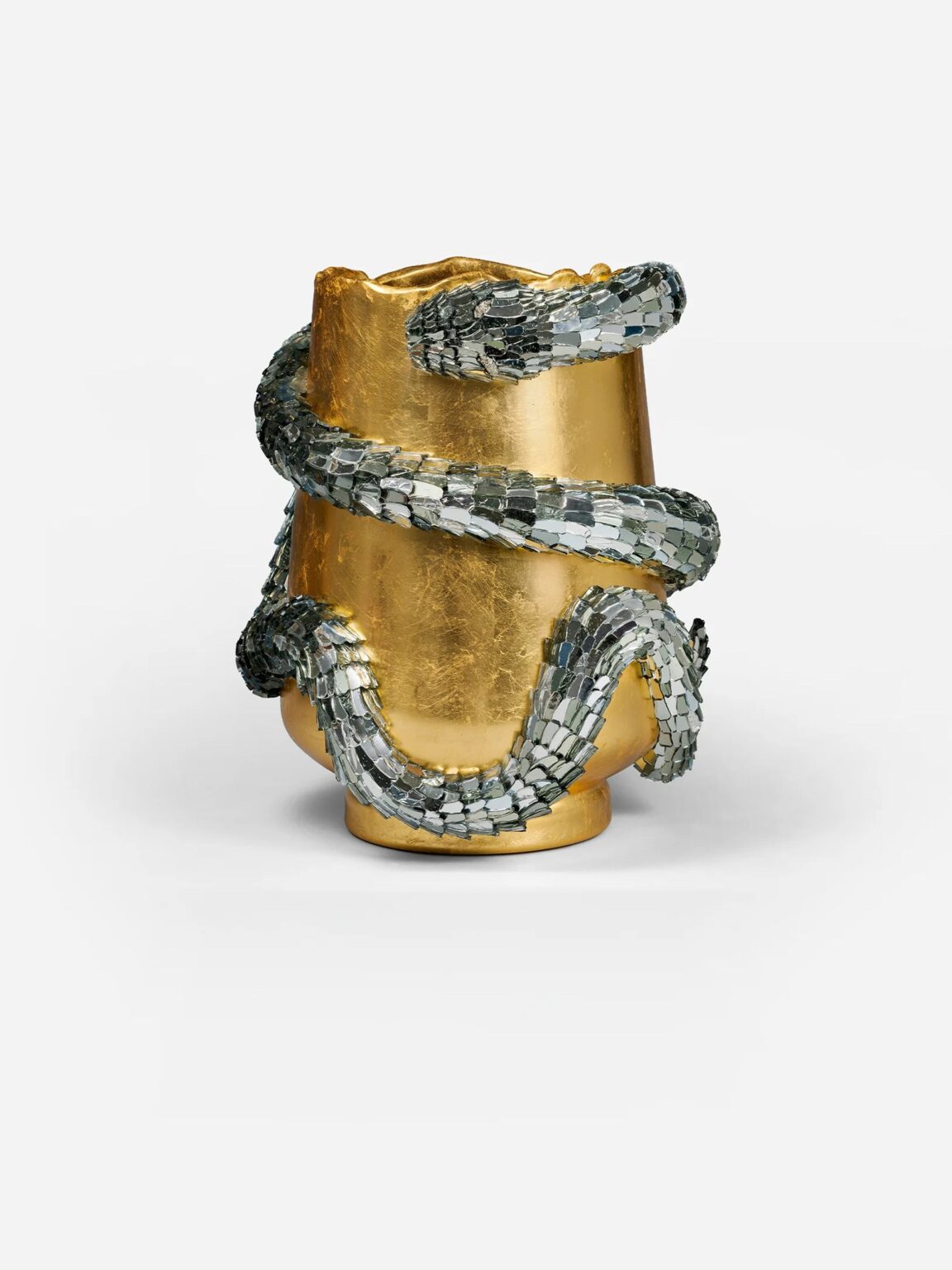
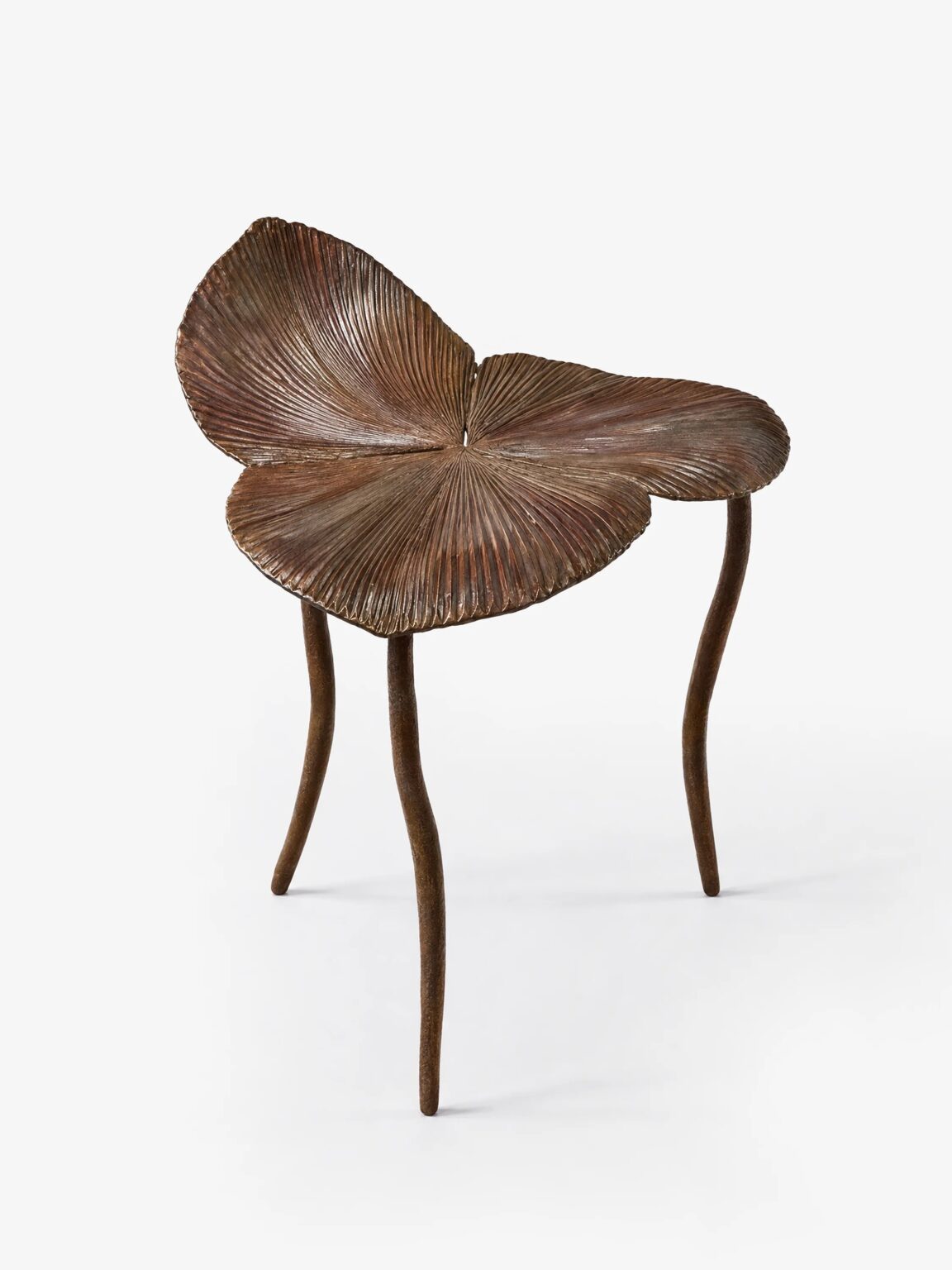
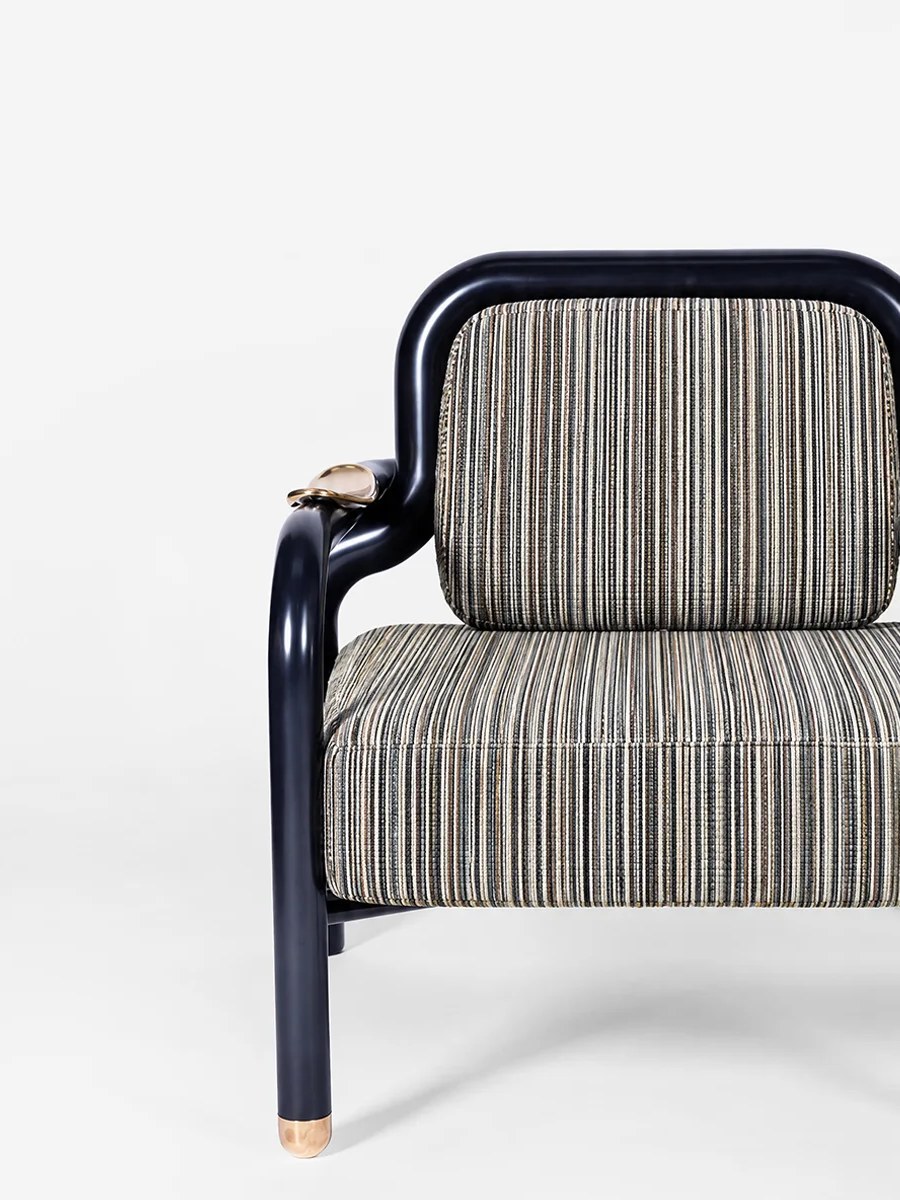
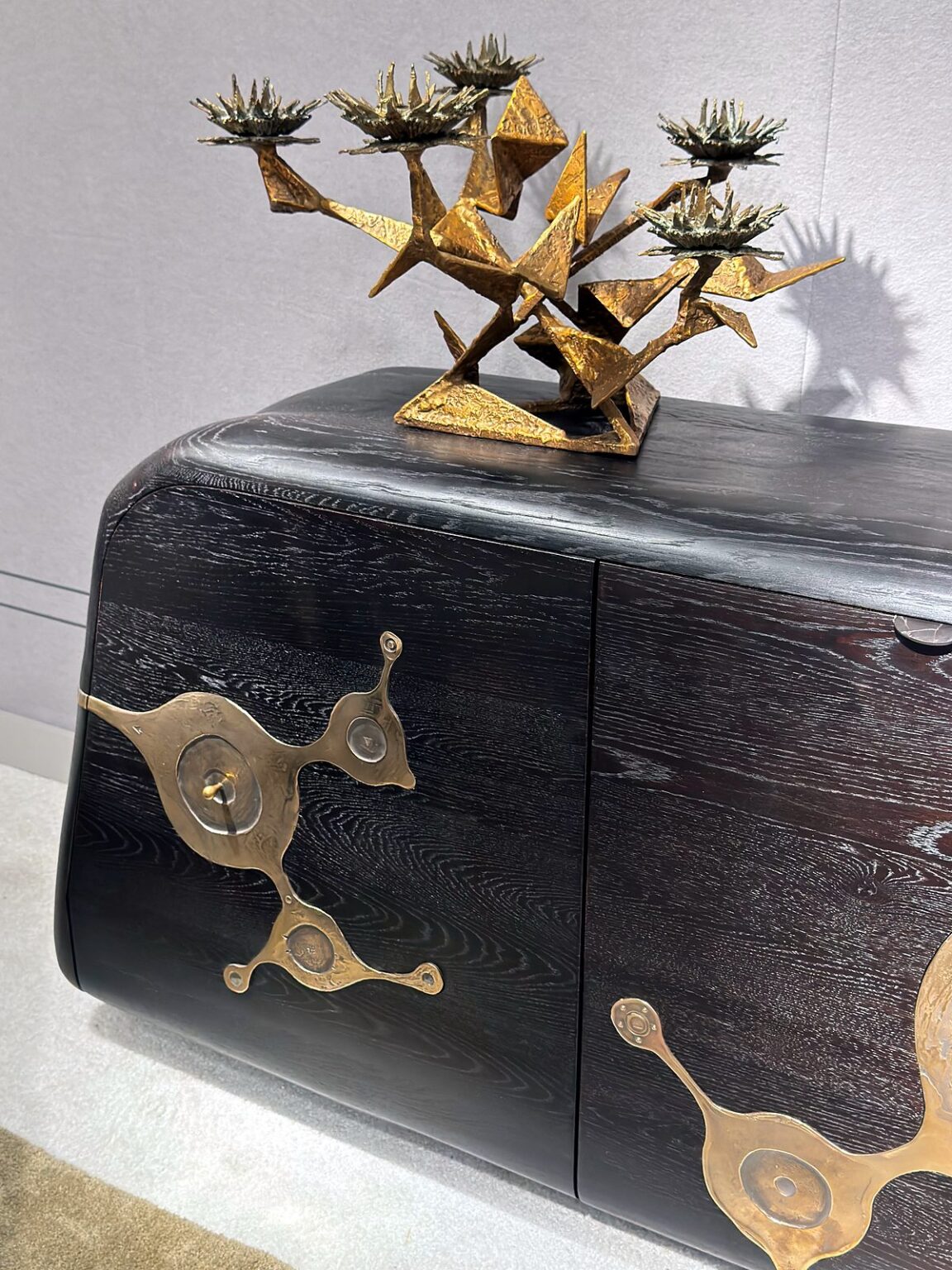
Renaud Vuaillat, who opened Twenty First Gallery in 2007, buys like a collector and stages like a set designer. Here, a leaf becomes a chair: Clotilde Ancarani’s Fan Chair, cast in bronze. Eric Schmitt’s lacquered Canoë armchairs sweep forward, arms first, and those arms are pure seduction. Erwan Boulloud’s charred-oak Nazca credenza wears its metal like jewelry. All made now. All steeped in the quiet elegance of French mid-century design.
Tapestry and Mohair
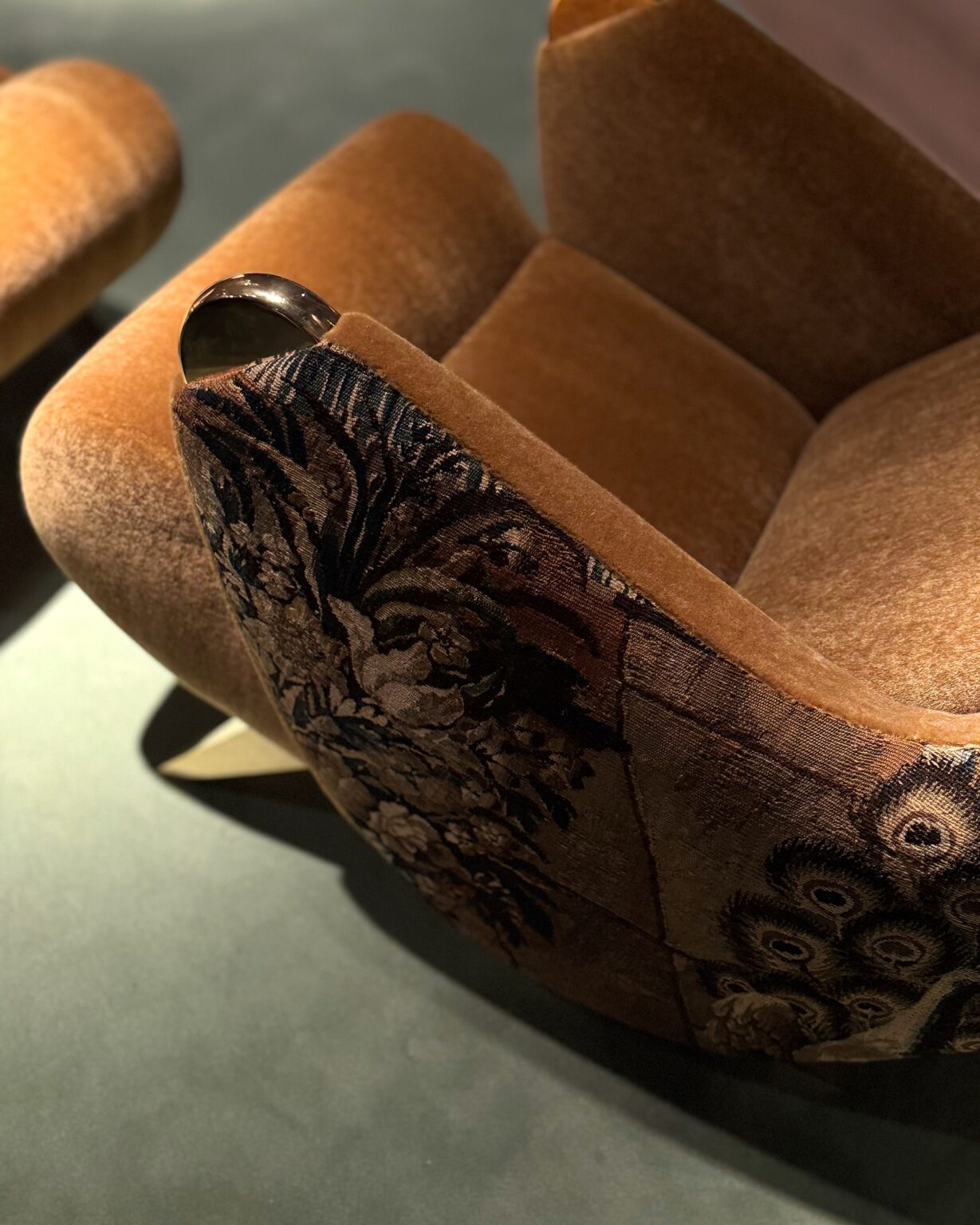
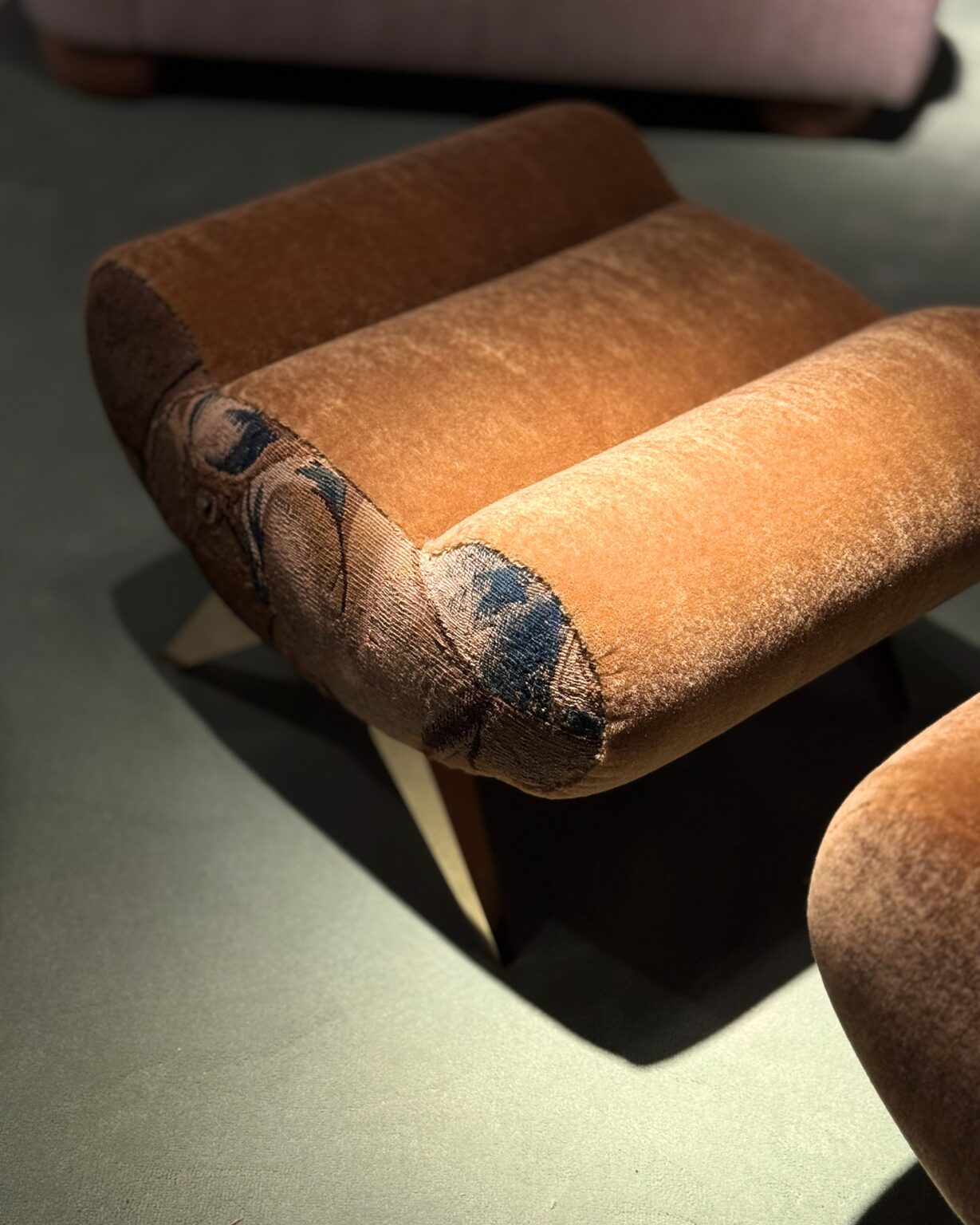
Founded in Paris in 2015 by Pierre Bénard, Augustin Deleuze and Nina Rose, and now with a gallery in SoHo, Pierre Augustin Rose built the moodiest room of the fair. The walls are palm wood, glossed with resin until they glow like lacquer. Against them, understated white sofas keep perfectly still. Then the twist: a one-of-a-kind armchair dressed in tapestry, the contrast you remember on the way home.
Brazil, in Marble
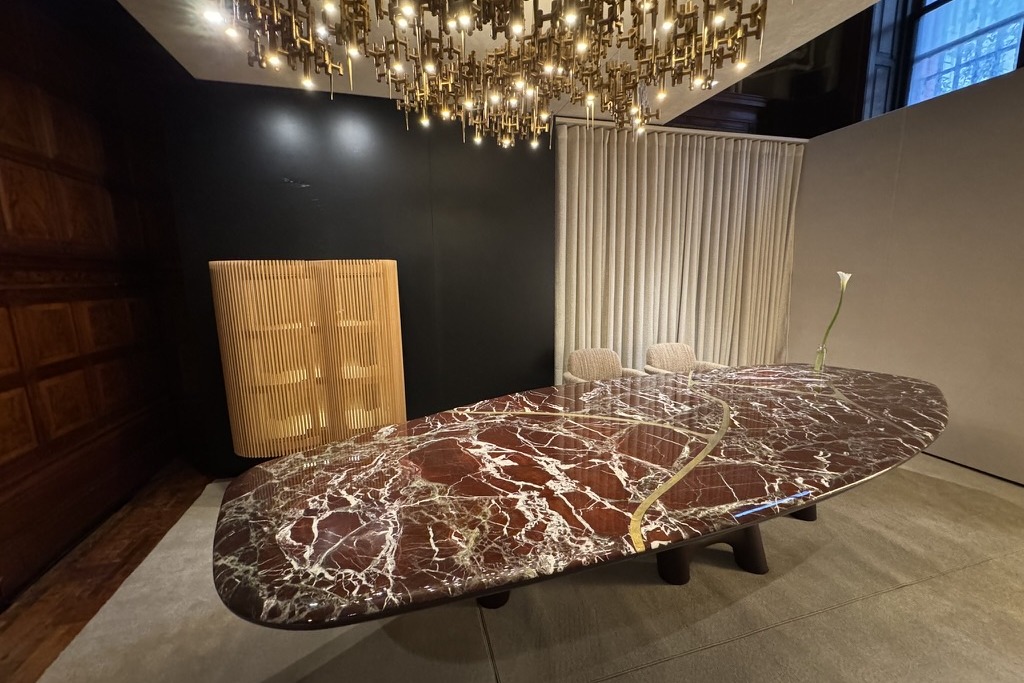
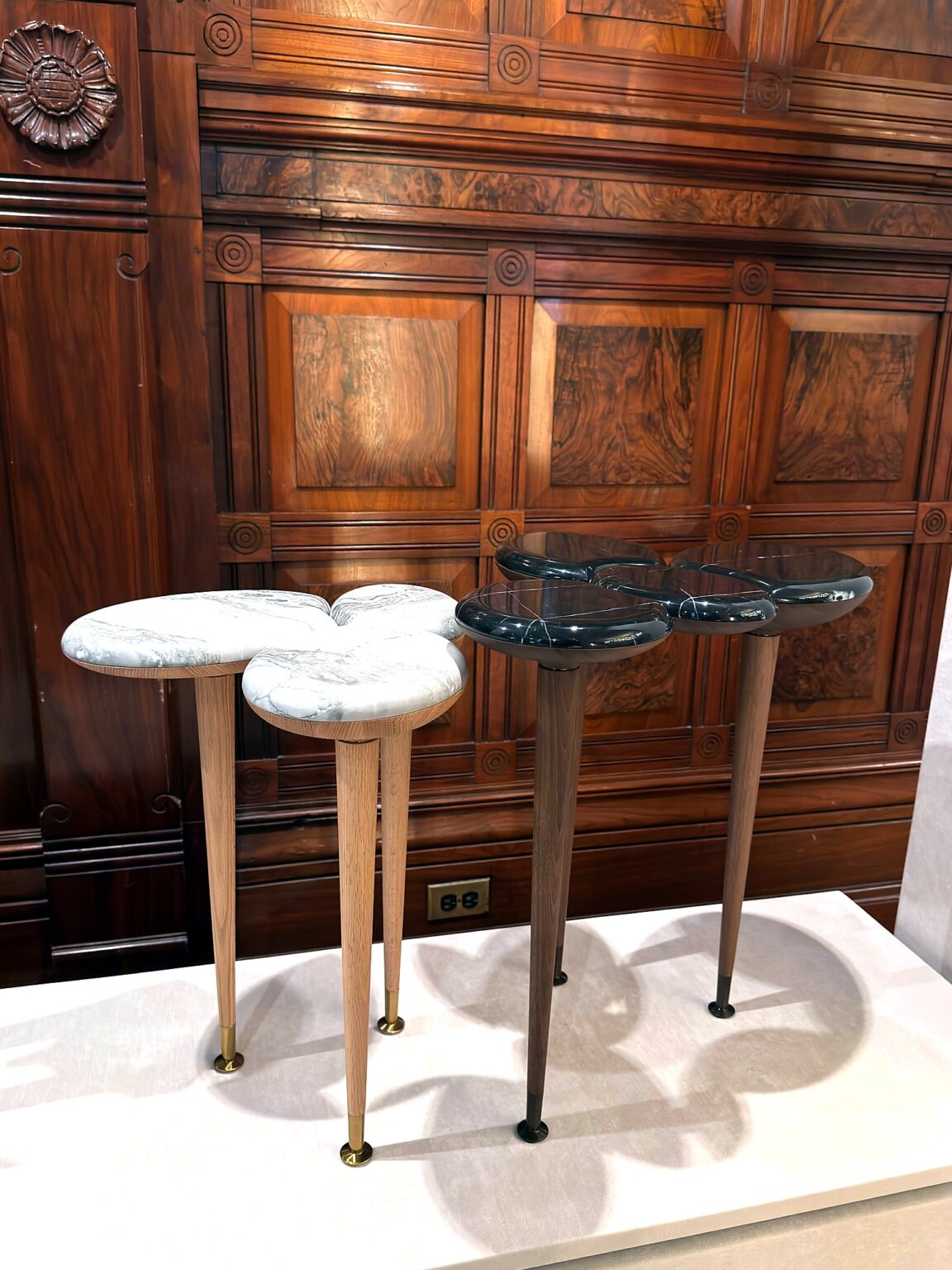
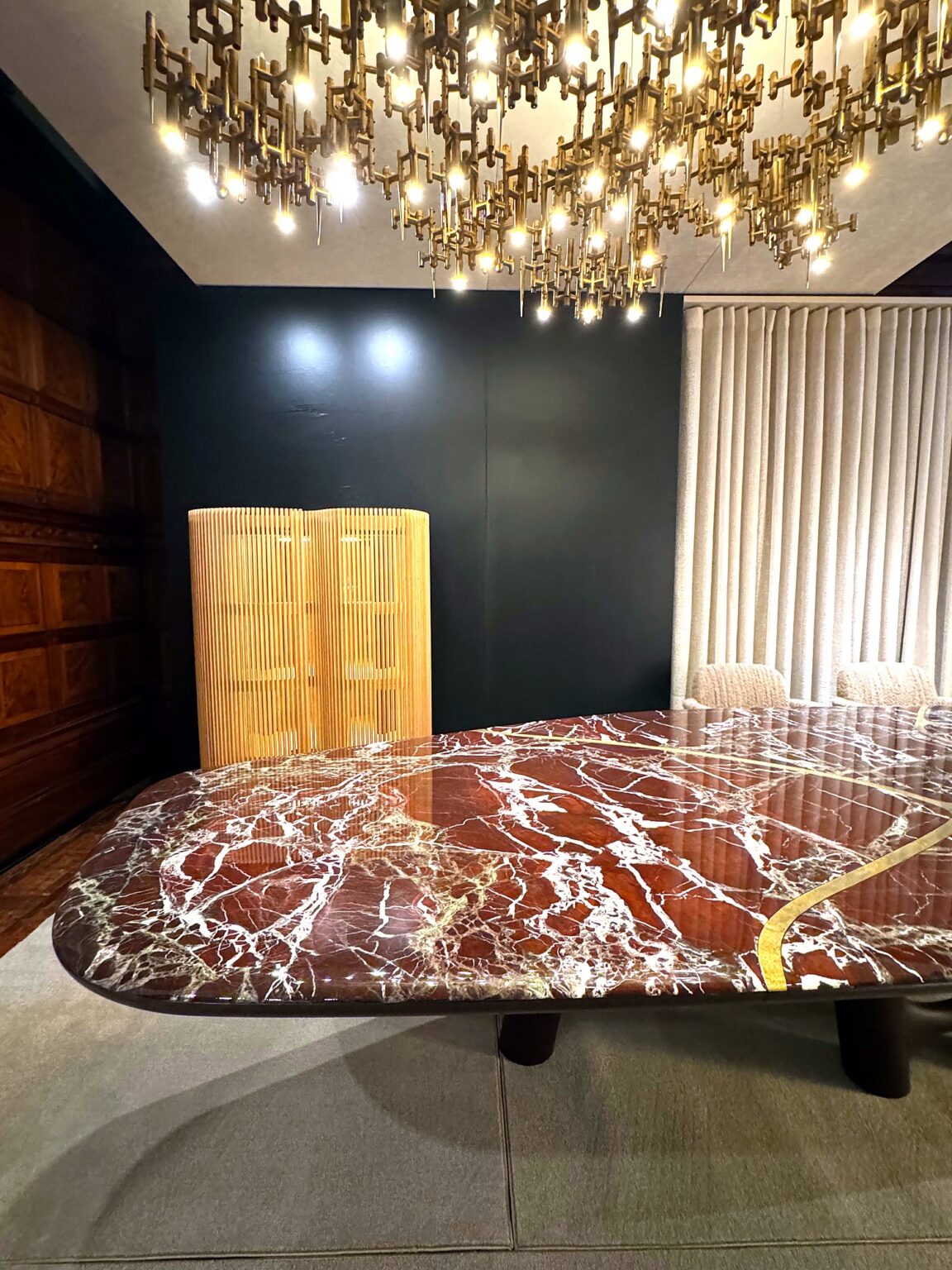
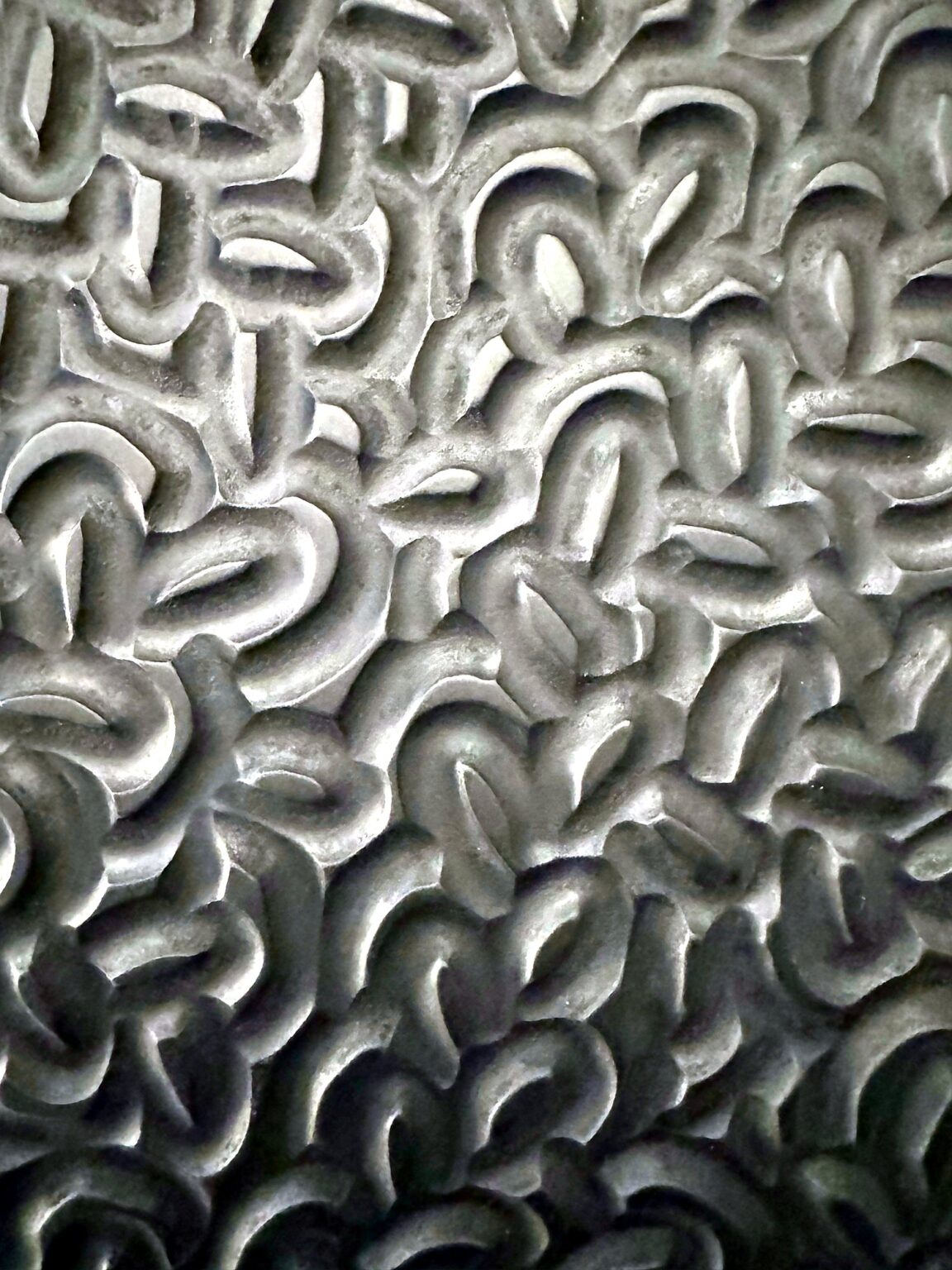
In the Colonels Room, Jader Almeida shows marble side tables, a red marble dining table, wood stools and a carved wall panel. His workshops are in southern Brazil, in western Santa Catarina, a region built by immigrant communities where building a house, working the land and making objects were never separate from life.
His forms are precise, but “no two stones are alike.” It is another culture of making, and a confident one.
Impossible Blooms
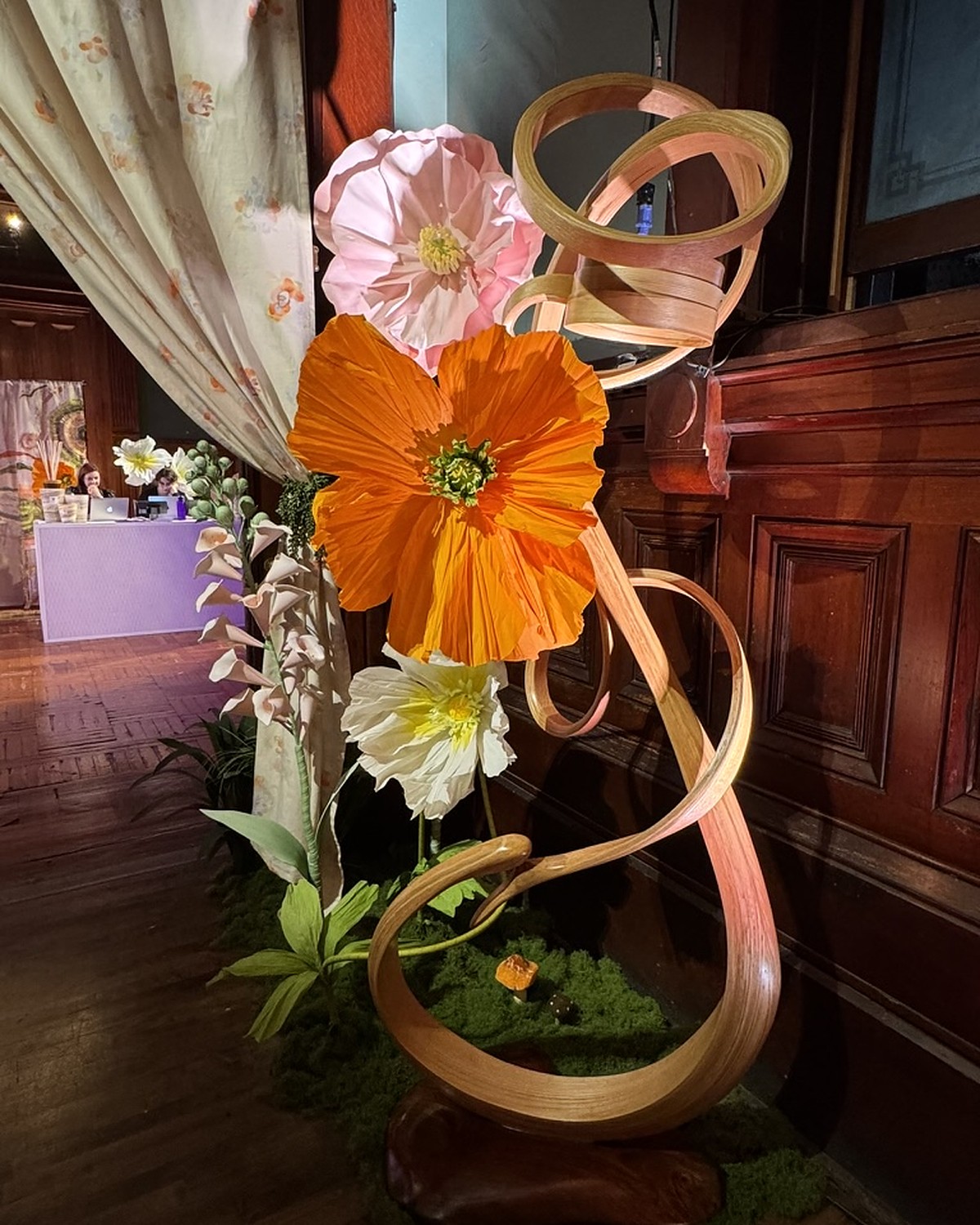
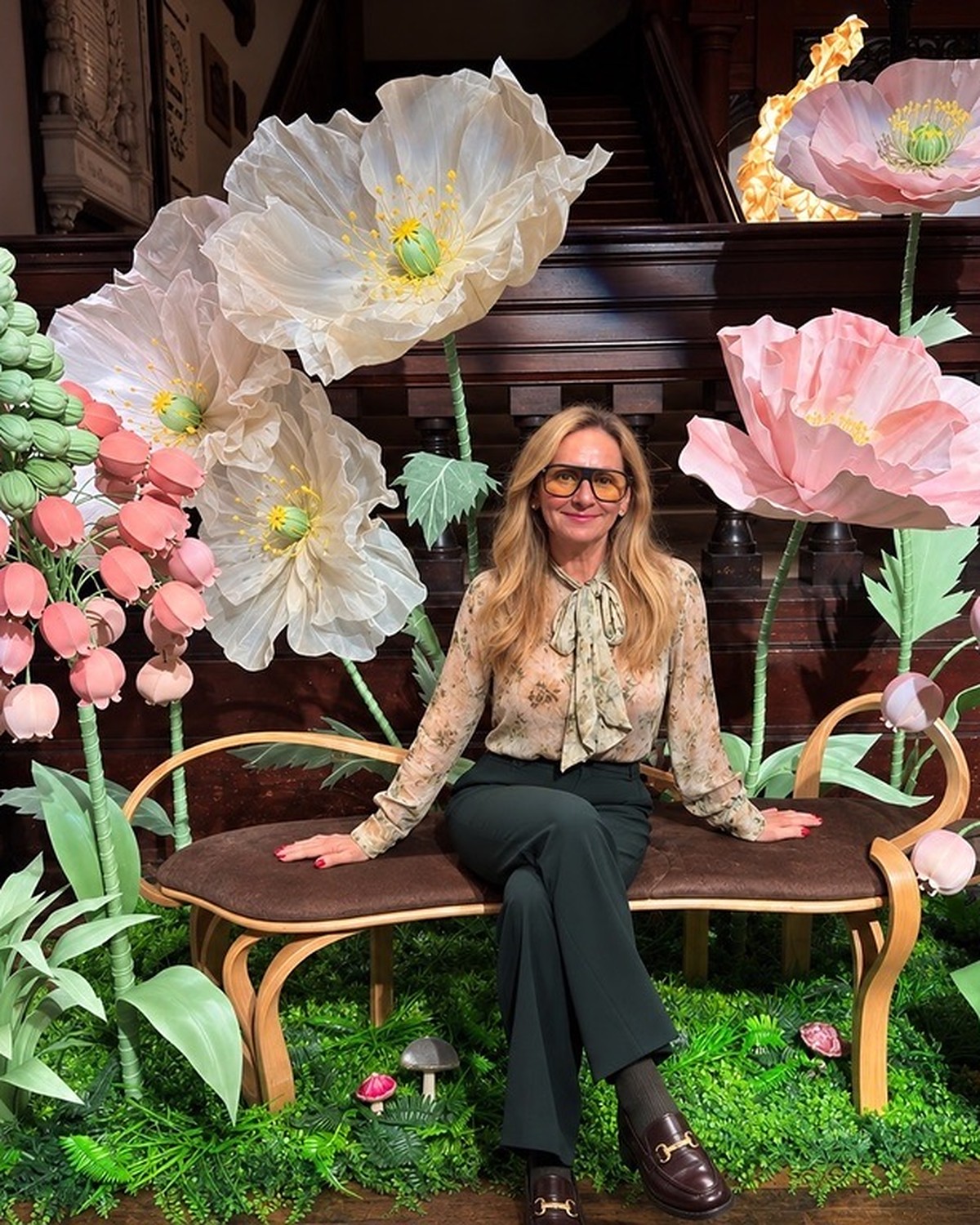
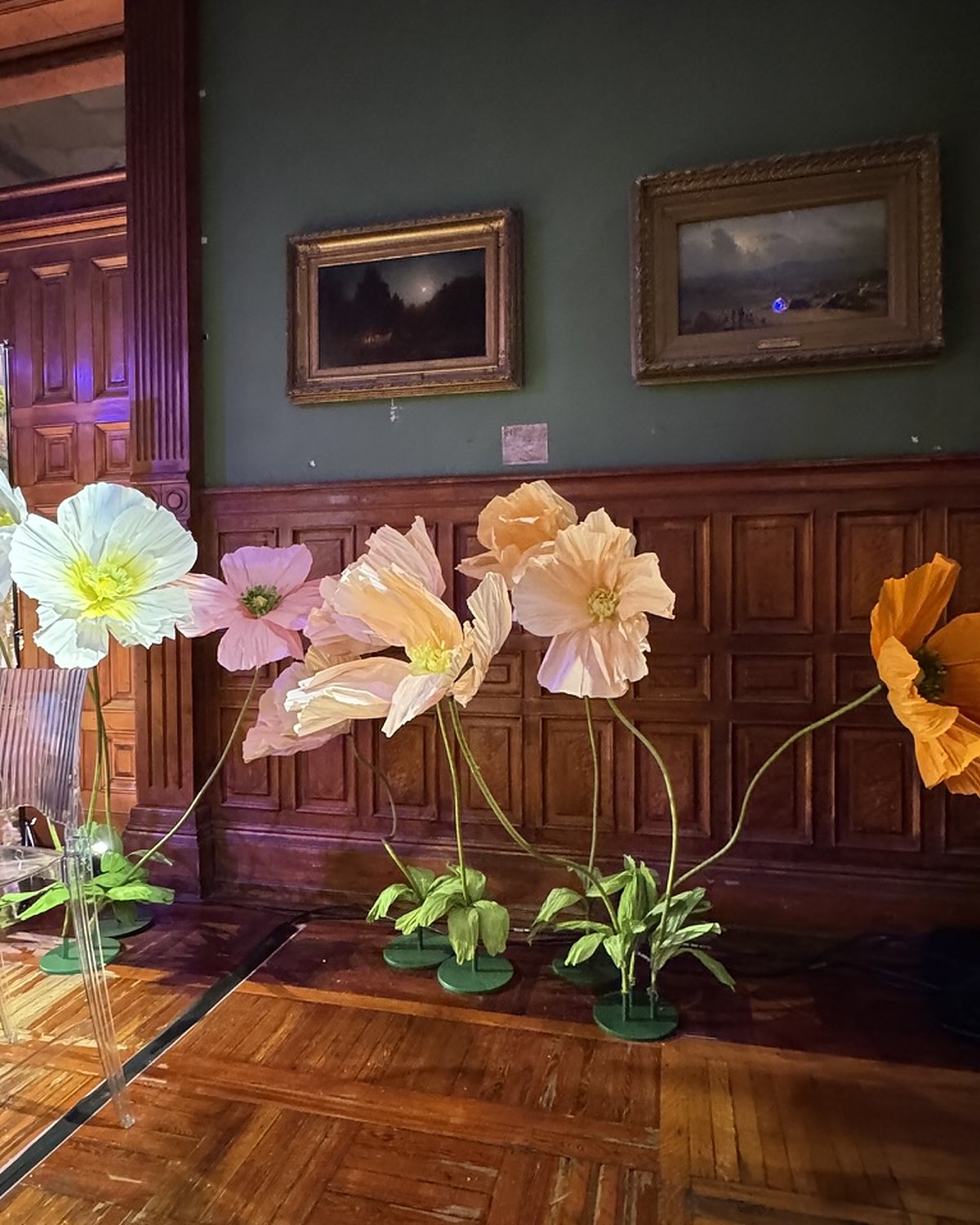
Then, a breath of air. Courtney McLeod, the designer behind the New York studio Right Meets Left, turned the Armory’s wood-paneled period rooms into a garden that should not exist. Poppies taller than a person, foxgloves the size of lamps, lilies of the valley bowing over a bentwood bench: every bloom is paper, folded and pleated by hand by Raka Studio, Maki Yamamoto, Ottra and Voutsa. Against the dark oak and the gilded frames, the color is almost cheeky. I sat down among them and felt like Alice after the wrong bottle, small, delighted and very far from the market report.
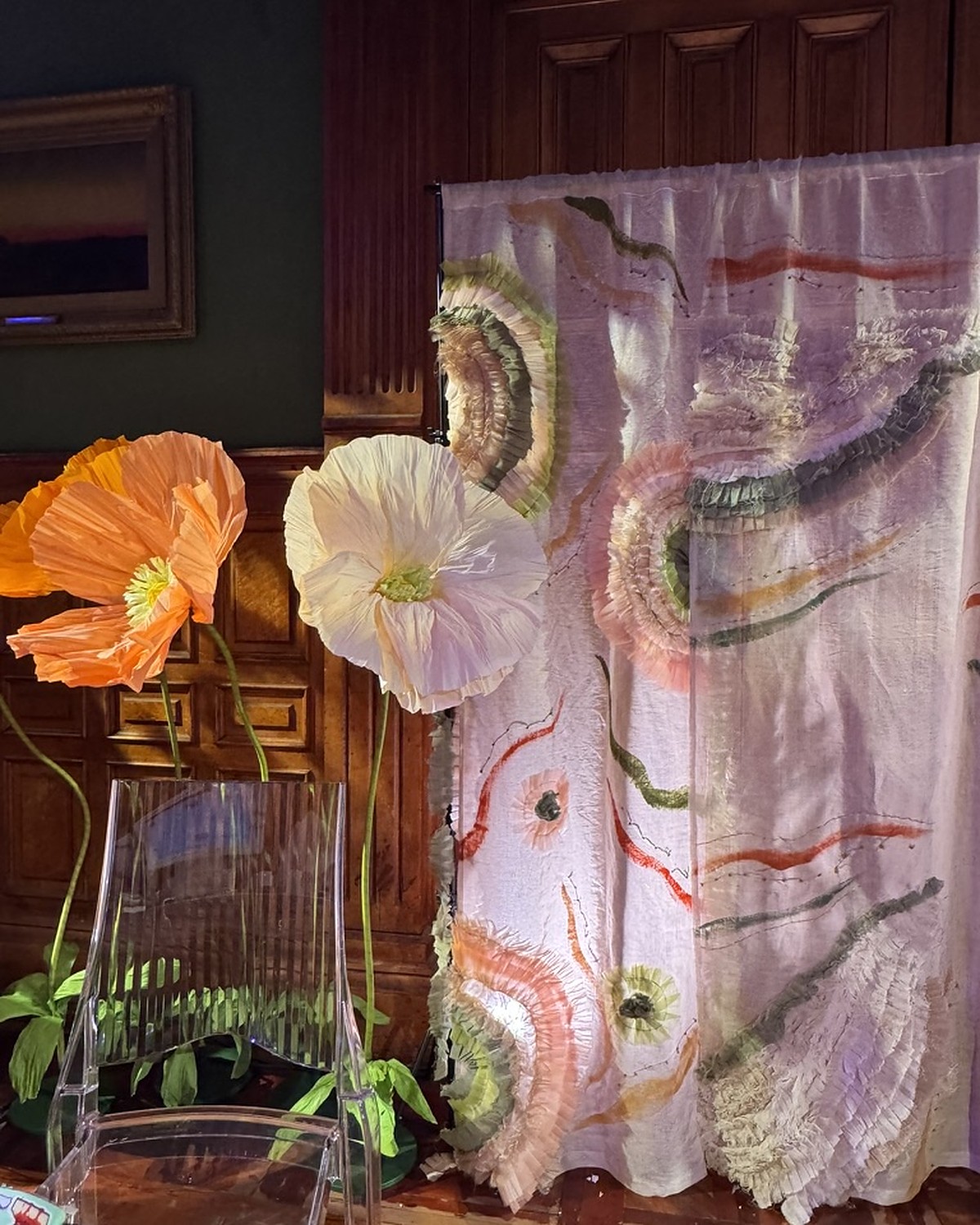
The paper garden was never for sale. It was the mood, the reminder of what all the rest was about. Strip away the dates, the provenance, the prices no one says out loud, and every booth told the same story: a person, a material, and the time between them. Lacquer laid coat after coat. Leather stitched by eye. Bronze poured, chased, patinated. In a world where a machine can generate a chair before you finish your coffee, that time has become the true luxury. It is what you feel when you run a hand along an edge and know someone else was there first. That is why we collect.
Photos: Joelle Maslaton Oster; additional images courtesy of the galleries
Fair: Salon Art + Design, Park Avenue Armory, November 4–8, 2026
Gallery: Galerie Chastel-Maréchal
Gallery: Twenty First Gallery
Gallery: Galerie Marcilhac
Gallery: Galerie Gabriel
Gallery: Maisonjaune Studio
Gallery: Maison Gerard
Gallery: Pierre Augustin Rose
Gallery: Andrée Putman Studio
Gallery: Jader Almeida
Gallery: Right Meets Left

Joelle Maslaton Oster
Founder of Joelle Magazine and Studio Joelle, an interior design practice in New York. She writes on art, design and the places in between.
DISCOVER THE CURATION
Read our Privacy PolicyAlso on Substack: Where Is Joelle?
This website uses cookies to improve your experience. We'll assume you're ok with this, but you can opt-out if you wish. Accept Read More